NCD Epidemiology Research Center, Shiga University of Medical Science, Otsu, Japan
Systematic Review Workshop Peer Support Group (SRWS-PSG), Osaka, Japan.
BMJ Open Diabetes Res Care. 2022 Feb;10(1). doi: 10.1136/bmjdrc-2021-002534.
This systematic review investigated the efficacy of a meal sequence, the carbohydrate-later meal pattern (CL), on type 2 diabetes mellitus (T2DM).
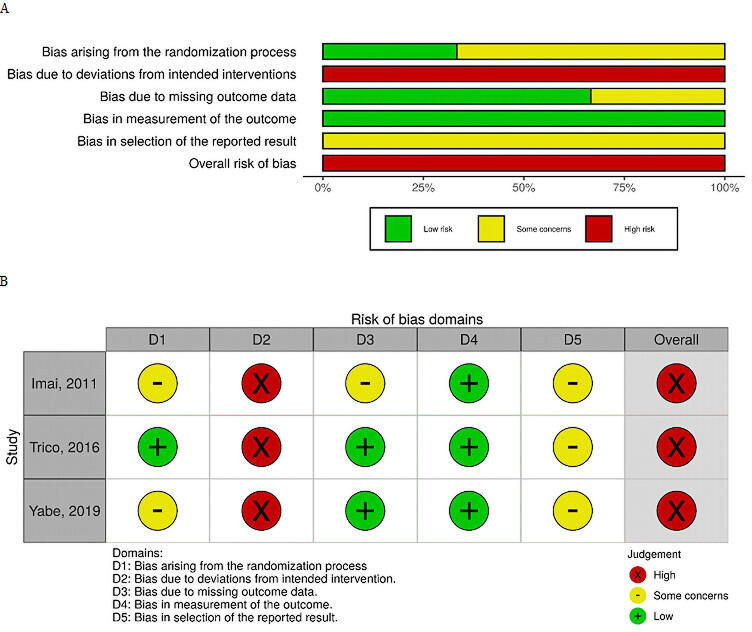
We searched the Cochrane Central Register of Controlled Trials, MEDLINE, Embase, WHO International Clinical Trials Registry Platform, and ClinicalTrials.gov until April 2020 to perform meta-analyses using random-effects models. Primary outcomes were hemoglobin A1c (HbA1c) and quality of life. Secondary outcomes were plasma concentrations of glucose, insulin and incretin 120 min after a meal, and any adverse outcomes. The revised Cochrane risk-of-bias tool and Grading of Recommendations, Assessment, Development, and Evaluation approach were used to assess the quality of individual studies and the body of evidence, respectively. The present study was registered in the UMIN Clinical Trials Registry.
We included 230 participants in eight trials, including both trials that examined long-term changes (more than 2 months and less than 2 years) and short-term changes (in 2-hour postprandial values). CL resulted in a slight to no difference in HbA1c (mean difference (MD), -0.21% in the intervention group; 95% CI -0.44% to+0.03%), plasma glucose (MD,+4.94 mg/dL; 95% CI -8.34 mg/dL to +18.22 mg/dL), plasma insulin (MD, -3.63 μIU/mL; 95% CI -11.88 μIU/mL to +4.61 μIU/mL), plasma GLP-1 (MD, +0.43 pmol/L; 95% CI -0.69 pmol/L to +1.56 pmol/L), and plasma GIP (MD, -2.02 pmol/L; 95% CI -12.34 pmol/L to +8.31 pmol/L). All of these outcomes were of low-certainty evidence or very low-certainty evidence. None of the trials evaluated quality of life or adverse events.
There was no evidence for the potential efficacy of recommending CL beyond standard dietary advice on T2DM.
UMIN000039979.
本系统评价研究了饮食顺序,即碳水化合物后进食模式(CL),对 2 型糖尿病(T2DM)的疗效。
我们检索了 Cochrane 对照试验中心注册库、MEDLINE、Embase、世界卫生组织国际临床试验注册平台和 ClinicalTrials.gov,截至 2020 年 4 月,使用随机效应模型进行荟萃分析。主要结局指标为糖化血红蛋白(HbA1c)和生活质量。次要结局指标为餐后 120 分钟时血糖、胰岛素和肠降血糖素 1 的血浆浓度,以及任何不良结局。使用修订后的 Cochrane 偏倚风险工具和推荐评估、制定与评价方法分别评估单个研究和证据总体的质量。本研究在 UMIN 临床试验注册平台注册。
我们纳入了八项试验的 230 名参与者,其中包括长期(超过 2 个月且少于 2 年)和短期(餐后 2 小时)改变的试验。CL 对 HbA1c(干预组平均差值-0.21%;95%CI-0.44%至+0.03%)、血浆葡萄糖(MD,+4.94mg/dL;95%CI-8.34mg/dL 至+18.22mg/dL)、血浆胰岛素(MD,-3.63μIU/mL;95%CI-11.88μIU/mL 至+4.61μIU/mL)、血浆 GLP-1(MD,+0.43pmol/L;95%CI-0.69pmol/L 至+1.56pmol/L)和血浆 GIP(MD,-2.02pmol/L;95%CI-12.34pmol/L 至+8.31pmol/L)的影响均无显著差异。所有这些结果均为低确定性证据或极低确定性证据。没有试验评估生活质量或不良事件。
目前尚无证据表明,推荐 CL 比标准饮食建议更有益于 T2DM。
UMIN000039979。