Chen Liyu, Wang Hao-Fan, Li Caixia, Xu Qiang
AIST-Kyoto University Chemical Energy Materials Open Innovation Laboratory (ChEM-OIL), National Institute of Advanced Industrial Science and Technology (AIST) Yoshida, Sakyo-ku Kyoto 606-8501 Japan
School of Chemistry and Chemical Engineering, Yangzhou University Yangzhou 225002 China
Chem Sci. 2020 Apr 28;11(21):5369-5403. doi: 10.1039/d0sc01432j.
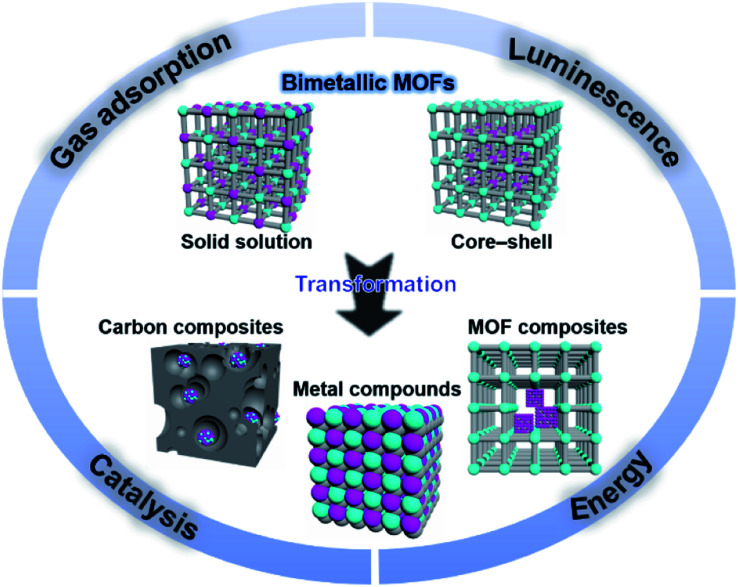
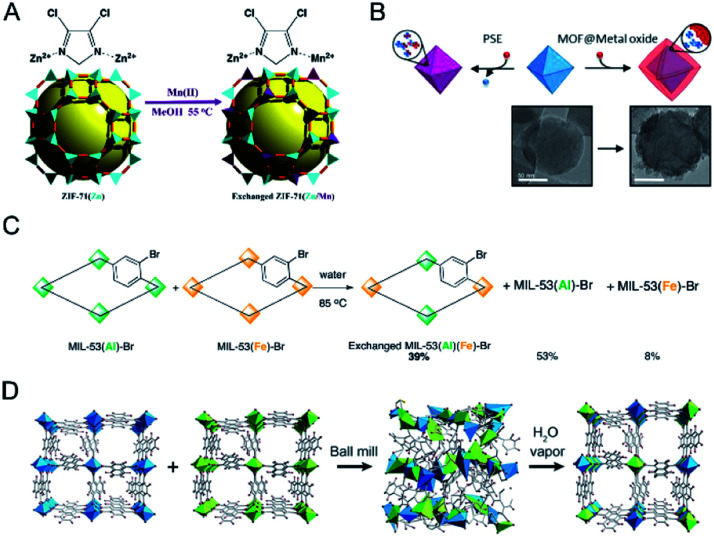
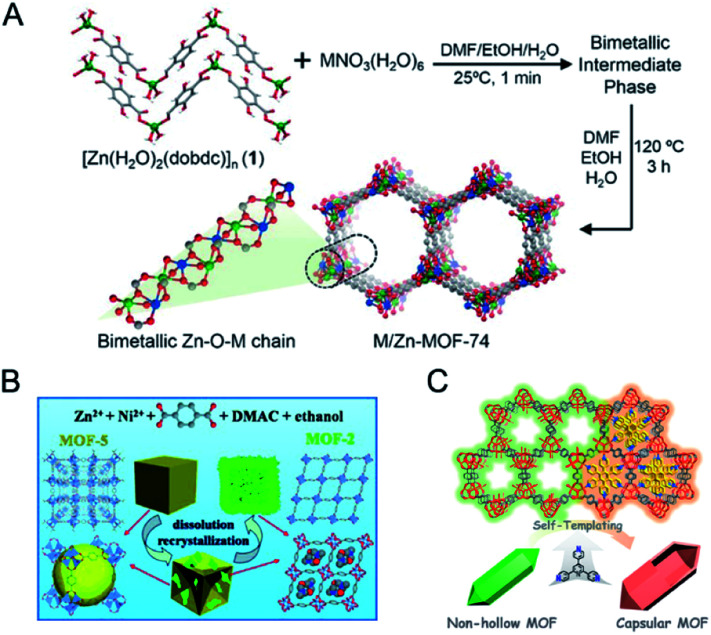
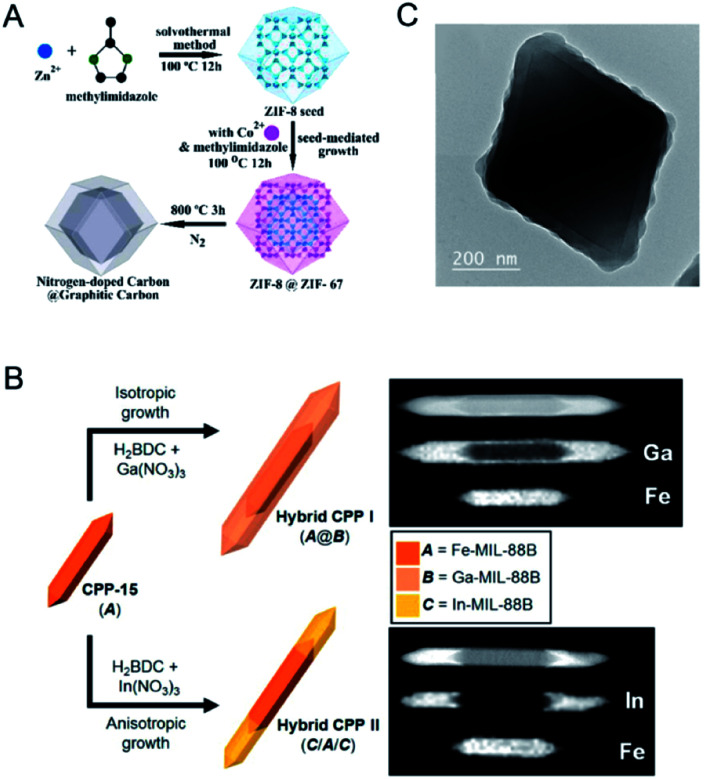
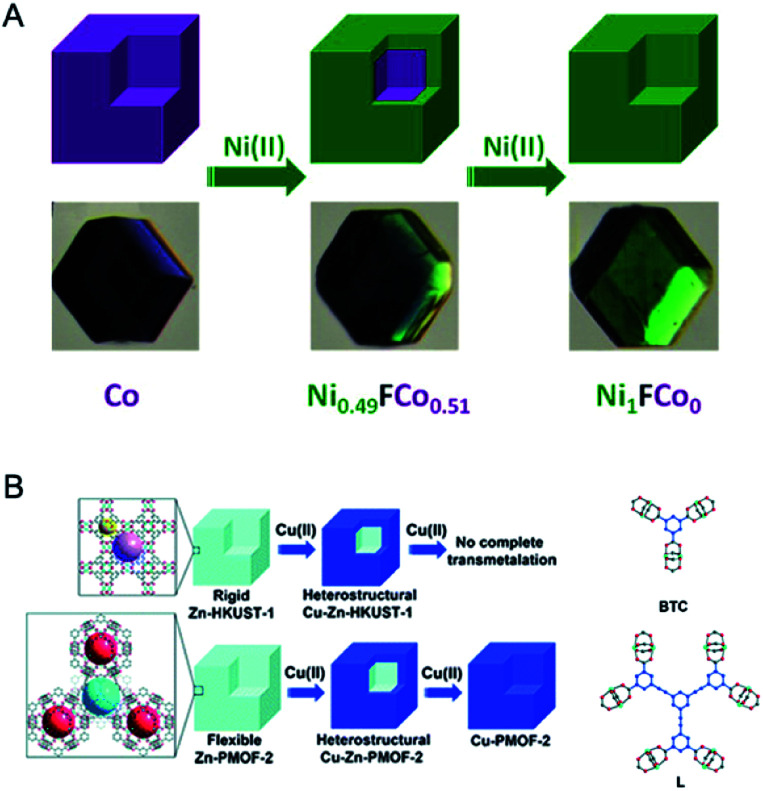
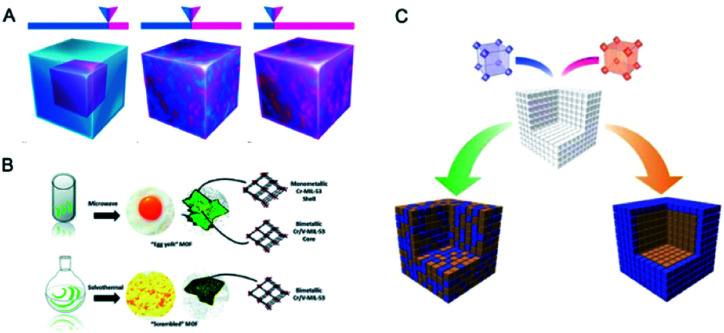
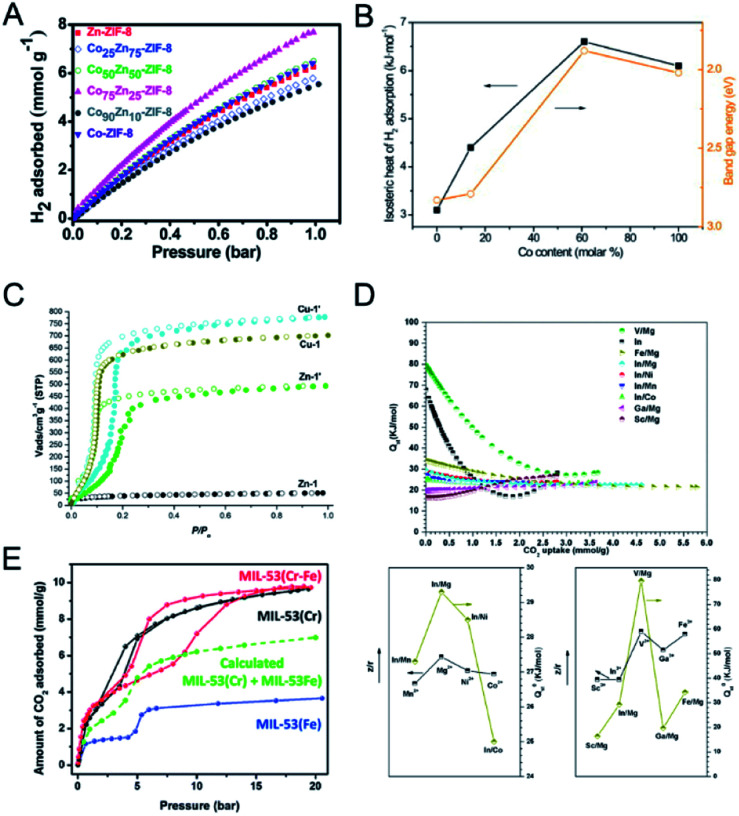
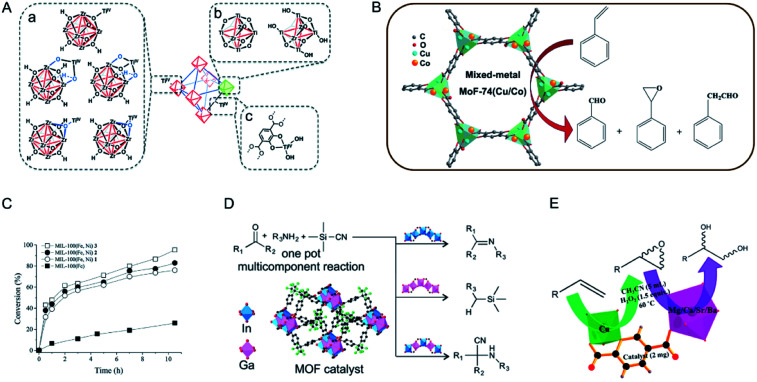
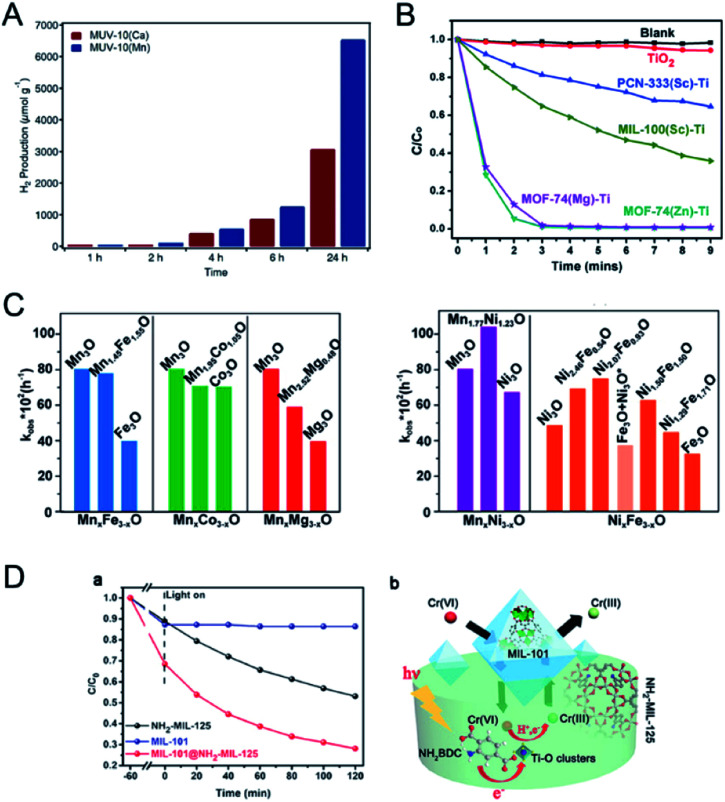
Bimetallic metal-organic frameworks (MOFs) have two different metal ions in the inorganic nodes. According to the metal distribution, the architecture of bimetallic MOFs can be classified into two main categories namely solid solution and core-shell structures. Various strategies have been developed to prepare bimetallic MOFs with controlled compositions and structures. Bimetallic MOFs show a synergistic effect and enhanced properties compared to their monometallic counterparts and have found many applications in the fields of gas adsorption, catalysis, energy storage and conversion, and luminescence sensing. Moreover, bimetallic MOFs can serve as excellent precursors/templates for the synthesis of functional nanomaterials with controlled sizes, compositions, and structures. Bimetallic MOF derivatives show exposed active sites, good stability and conductivity, enabling them to extend their applications to the catalysis of more challenging reactions and electrochemical energy storage and conversion. This review provides an overview of the significant advances in the development of bimetallic MOFs and their derivatives with special emphases on their preparation and applications.
双金属金属有机框架材料(MOFs)在无机节点中含有两种不同的金属离子。根据金属分布情况,双金属MOFs的结构可主要分为固溶体和核壳结构两大类。人们已开发出各种策略来制备具有可控组成和结构的双金属MOFs。与单金属MOFs相比,双金属MOFs表现出协同效应和增强的性能,并已在气体吸附、催化、能量存储与转换以及发光传感等领域得到了诸多应用。此外,双金属MOFs可作为合成具有可控尺寸、组成和结构的功能纳米材料的优良前驱体/模板。双金属MOF衍生物具有暴露的活性位点、良好的稳定性和导电性,使其能够将应用扩展到更具挑战性的反应催化以及电化学能量存储与转换领域。本综述概述了双金属MOFs及其衍生物开发方面的重大进展,特别强调了它们的制备和应用。