Kumar Pradeep, Singh A B, Singh Rajeev
Department of Environmental Studies, Satyawati College, University of Delhi, Delhi, India.
CSIR- Institute of Genomics and Integrative Biology (IGIB), Delhi University Campus, Delhi, India.
PLoS One. 2022 Feb 25;17(2):e0264226. doi: 10.1371/journal.pone.0264226. eCollection 2022.
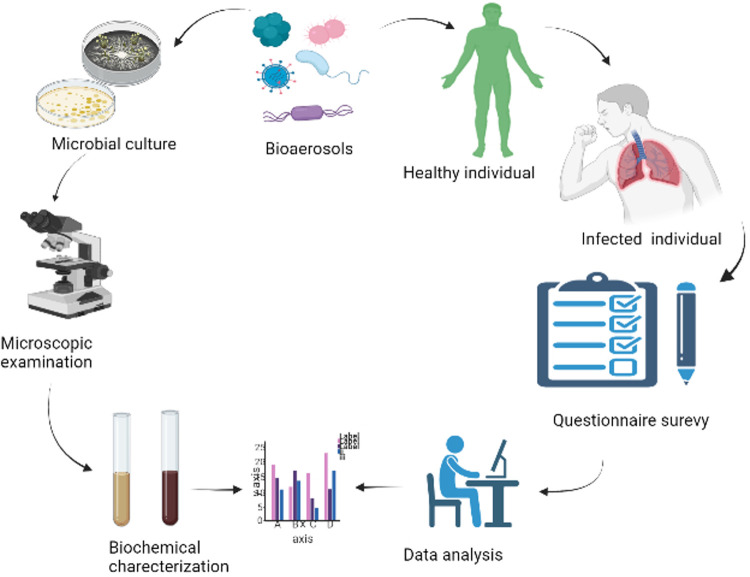
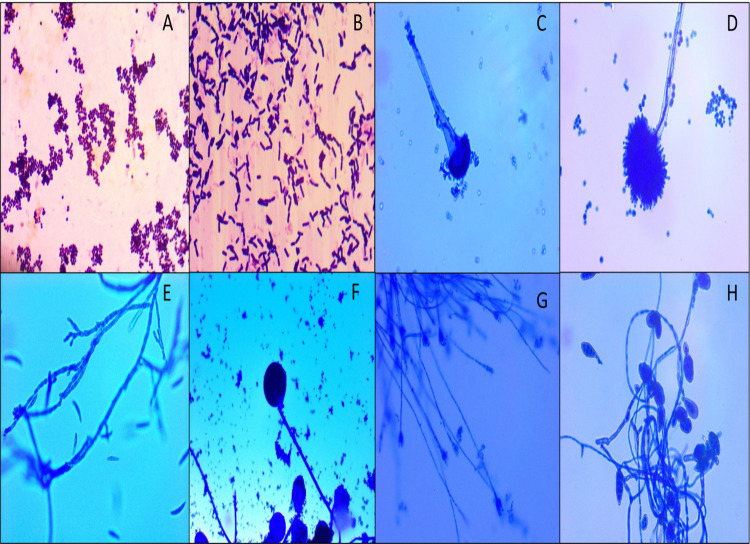
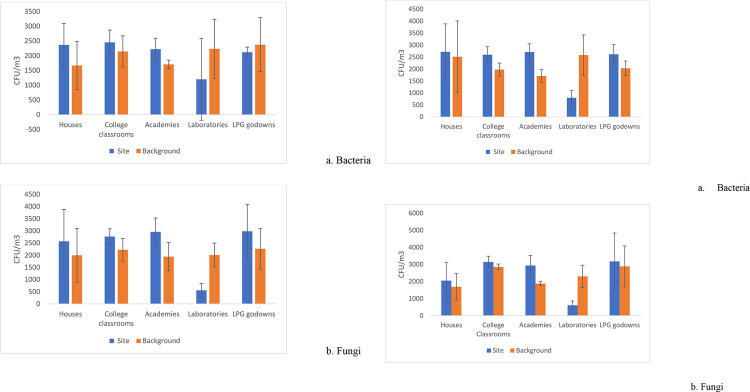
The higher airborne microbial concentration in indoor areas might be responsible for the adverse indoor air quality, which relates well with poor respiratory and general health effects in the form of Sick building syndromes. The current study aimed to isolate and characterize the seasonal (winter and spring) levels of culturable bio-aerosols from indoor air, implicating human health by using an epidemiological health survey. Microorganisms were identified by standard macro and microbiological methods, followed by biochemical testing and molecular techniques. Sampling results revealed the bacterial and fungal aerosol concentrations ranging between (300-3650 CFU/m3) and (300-4150 CFU/m3) respectively, in different microenvironments during the winter season (December-February). However, in spring (March-May), bacterial and fungal aerosol concentrations were monitored, ranging between (450-5150 CFU/m3) and (350-5070 CFU/m3) respectively. Interestingly, Aspergillus and Cladosporium were the majorly recorded fungi whereas, Staphylococcus, Streptobacillus, and Micrococcus found predominant bacterial genera among all the sites. Taken together, the elevated levels of bioaerosols are the foremost risk factor that can lead to various respiratory and general health issues in additional analysis, the questionnaire survey indicated the headache (28%) and allergy (20%) were significant indoor health concerns. This type of approach will serve as a foundation for assisting residents in taking preventative measures to avoid exposure to dangerous bioaerosols.
室内空气中较高的微生物浓度可能是室内空气质量不佳的原因,这与不良建筑综合征形式的呼吸和整体健康影响密切相关。当前的研究旨在分离并表征室内空气中可培养生物气溶胶的季节性(冬季和春季)水平,并通过流行病学健康调查来探究其对人类健康的影响。通过标准的宏观和微生物学方法鉴定微生物,随后进行生化测试和分子技术分析。采样结果显示,在冬季(12月至2月)的不同微环境中,细菌和气溶胶浓度分别在(300 - 3650 CFU/m³)和(300 - 4150 CFU/m³)之间。然而,在春季(3月至5月),监测到细菌和气溶胶浓度分别在(450 - 5150 CFU/m³)和(350 - 5070 CFU/m³)之间。有趣的是,曲霉属和枝孢属是记录最多的真菌,而葡萄球菌属、链杆菌属和微球菌属是所有采样点中主要的细菌属。综合来看,生物气溶胶水平升高是导致各种呼吸和整体健康问题的首要风险因素。在进一步分析中,问卷调查表明头痛(28%)和过敏(20%)是室内显著的健康问题。这种方法将为帮助居民采取预防措施以避免接触危险生物气溶胶奠定基础。