Al Kayal Tamer, Buscemi Marianna, Cavallo Aida, Foffa Ilenia, Soldani Giorgio, Losi Paola
Institute of Clinical Physiology, National Research Council (CNR), 54100 Massa, Italy.
Institute of Life Sciences, Scuola Superiore Sant'Anna, 56127 Pisa, Italy.
Pharmaceutics. 2022 Jan 21;14(2):251. doi: 10.3390/pharmaceutics14020251.
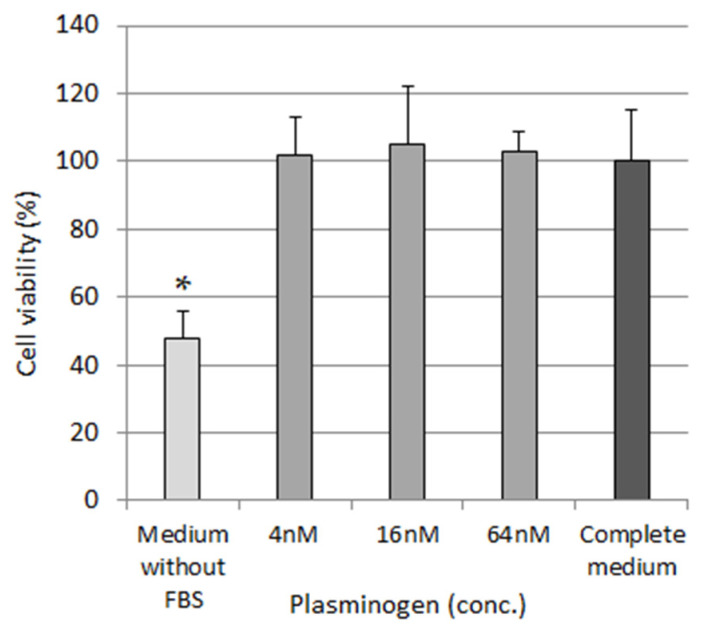
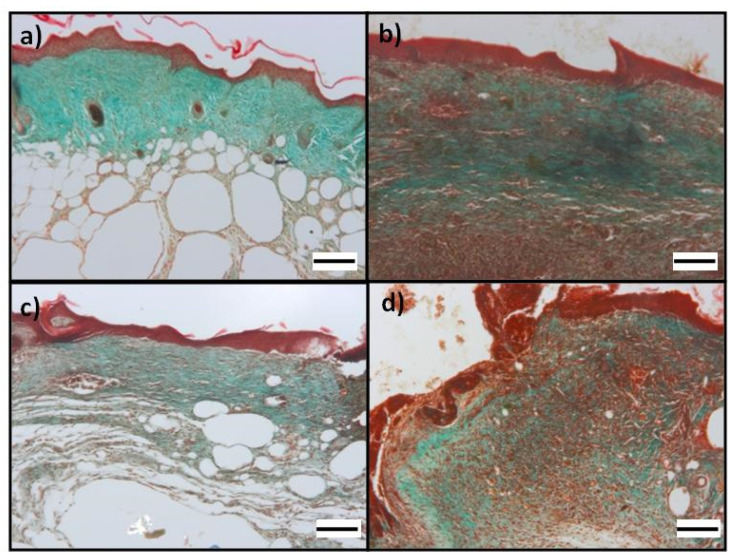
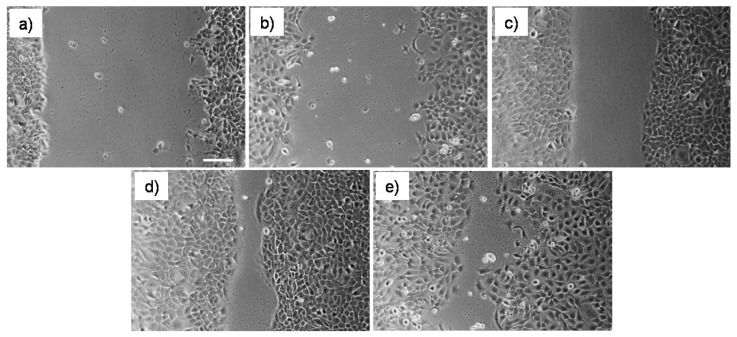
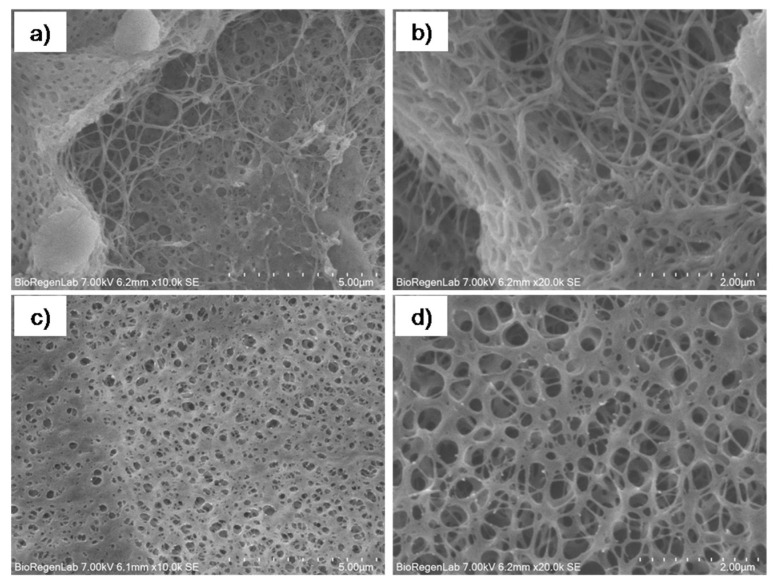
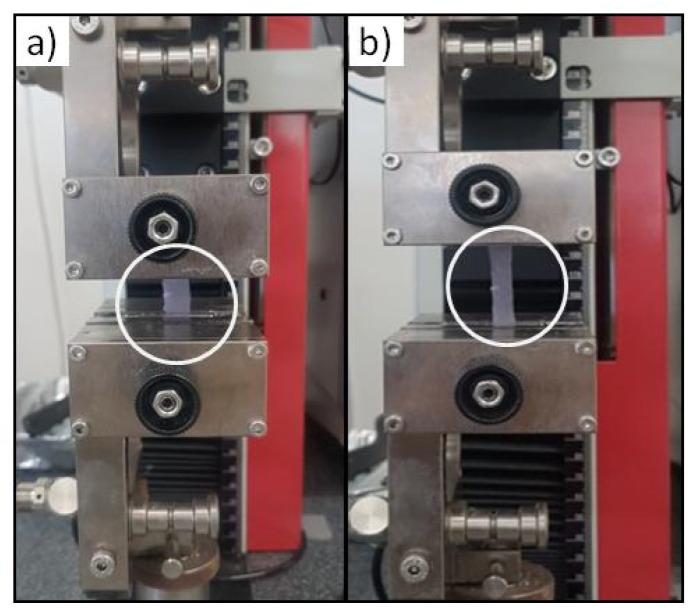
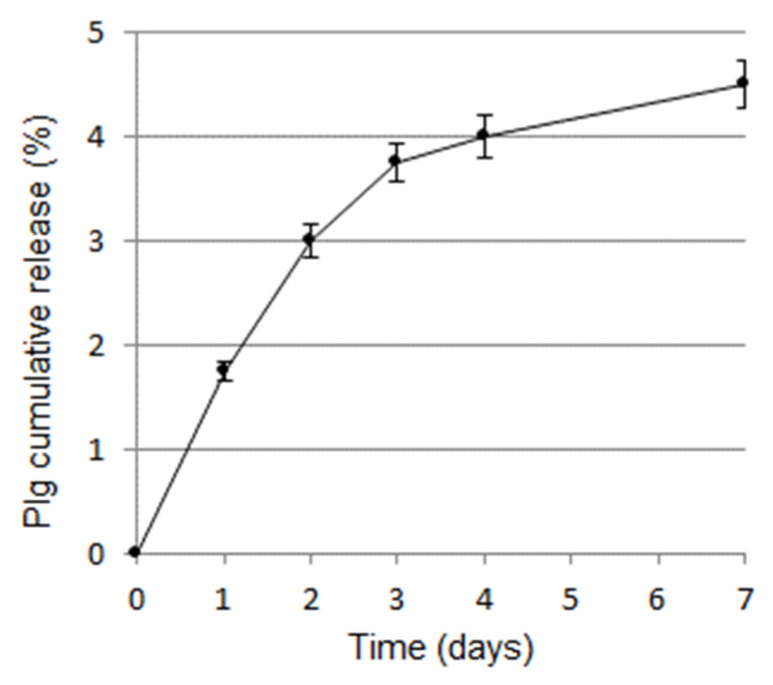
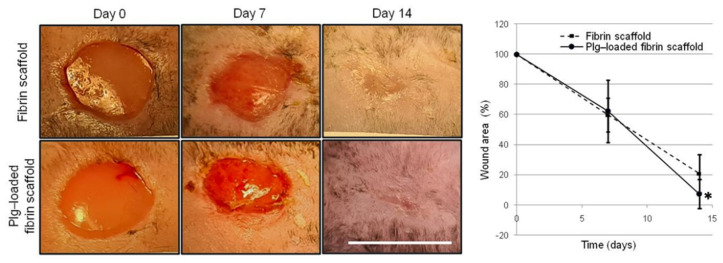
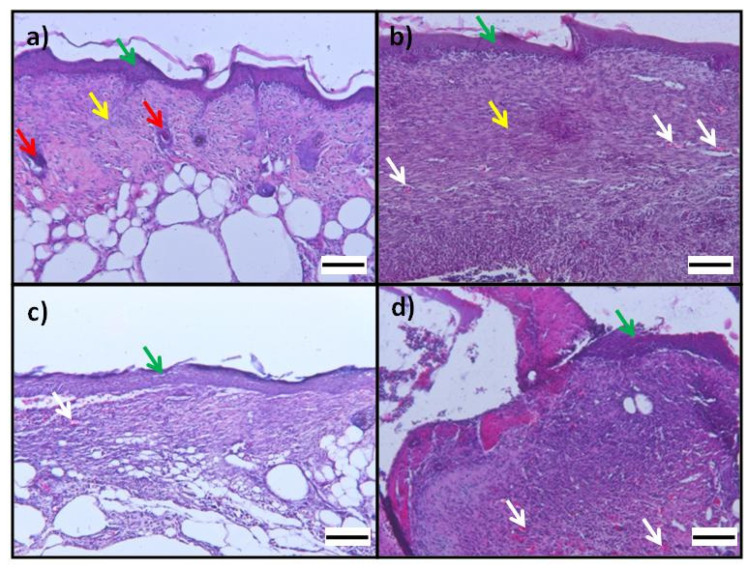
Plasminogen is a protein involved in intravascular and extravascular fibrinolysis, as well as in wound healing, cell migration, tissue formation and angiogenesis. In recent years its role in healing of tympanic perforations has been demonstrated in plasminogen deficient mice. The aim of this work was to fabricate a fibrin-based drug delivery system able to provide a local and sustained release of plasminogen at the wound site. Initially, the biological activity of plasminogen was evaluated by in vitro experiments on cell cultures. A metabolic assay (MTT) was carried out on L929 mouse fibroblast to determine the concentration that does not affect cell viability, which turned out to be 64 nM. The effect of plasminogen on cell migration was evaluated through a scratch test on human keratinocytes: cells treated with 64 nM plasminogen showed faster scratch closure than in complete medium. Fibrin scaffold loaded with plasminogen was fabricated by a spray process. SEM analysis showed the typical nano-fibrillar structure of a fibrin scaffold. Tensile tests highlighted significantly higher value of the ultimate stress and strain of fibrin scaffold with respect to fibrin clot. The in-vitro release kinetic showed an initial plasminogen burst, after that the release slowed, reaching a plateau at 7 days. Plasminogen-loaded fibrin scaffold applied in full-thickness diabetic mouse lesions showed a significantly higher closure rate at 14 days than scaffold used as a reference material. Histological analysis demonstrated an improved reepithelization and collagen deposition in granulation tissue in mouse treated with plasminogen-loaded fibrin scaffold in comparison to unloaded fibrin scaffold. The obtained results demonstrated the suitability of the fibrin scaffold loaded with plasminogen as drug delivery system and suggest its use in wound healing applications, such as for the treatment of chronic diabeticulcers.
纤溶酶原是一种参与血管内和血管外纤维蛋白溶解以及伤口愈合、细胞迁移、组织形成和血管生成的蛋白质。近年来,在纤溶酶原缺陷小鼠中已证明其在鼓膜穿孔愈合中的作用。这项工作的目的是制造一种基于纤维蛋白的药物递送系统,能够在伤口部位局部持续释放纤溶酶原。最初,通过细胞培养的体外实验评估纤溶酶原的生物活性。对L929小鼠成纤维细胞进行代谢测定(MTT)以确定不影响细胞活力的浓度,结果为64 nM。通过对人角质形成细胞的划痕试验评估纤溶酶原对细胞迁移的影响:用64 nM纤溶酶原处理的细胞显示出比在完全培养基中更快的划痕闭合。通过喷雾工艺制备负载纤溶酶原的纤维蛋白支架。扫描电子显微镜(SEM)分析显示了纤维蛋白支架典型的纳米纤维结构。拉伸试验突出了纤维蛋白支架相对于纤维蛋白凝块的极限应力和应变值显著更高。体外释放动力学显示纤溶酶原最初有一个爆发期,之后释放减慢,在7天时达到平台期。应用于全层糖尿病小鼠伤口的负载纤溶酶原的纤维蛋白支架在14天时的闭合率明显高于用作参考材料的支架。组织学分析表明,与未负载的纤维蛋白支架相比,用负载纤溶酶原的纤维蛋白支架处理的小鼠肉芽组织中的再上皮化和胶原沉积得到改善。所得结果证明了负载纤溶酶原的纤维蛋白支架作为药物递送系统的适用性,并建议将其用于伤口愈合应用,如治疗慢性糖尿病溃疡。