Department of Biochemistry and Biophysics, University of North Carolina at Chapel Hill, Chapel Hill, NC 27599.
Department of Biology, University of North Carolina at Chapel Hill, Chapel Hill, NC 27599.
Proc Natl Acad Sci U S A. 2022 Mar 1;119(9). doi: 10.1073/pnas.2123163119.
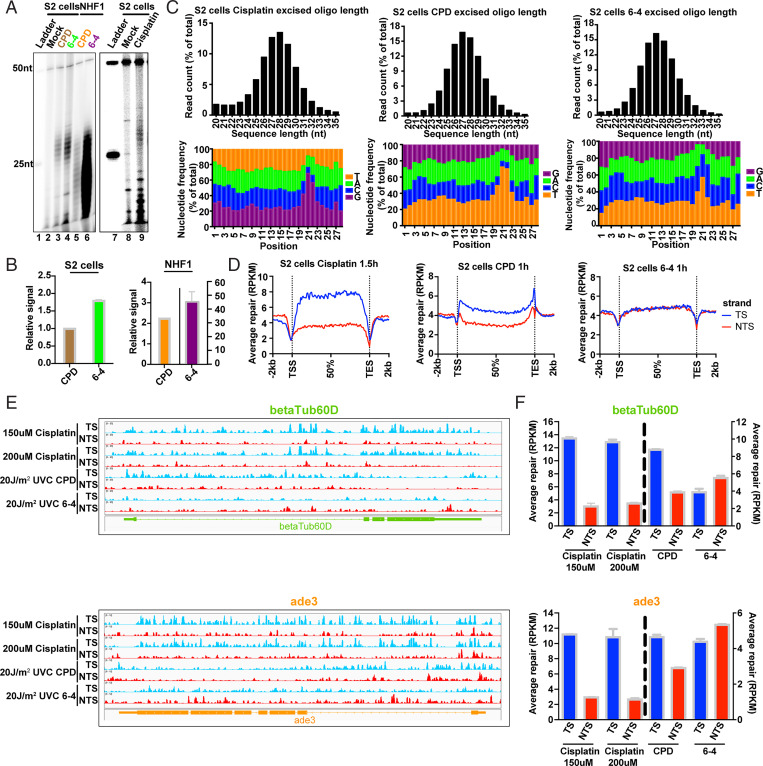
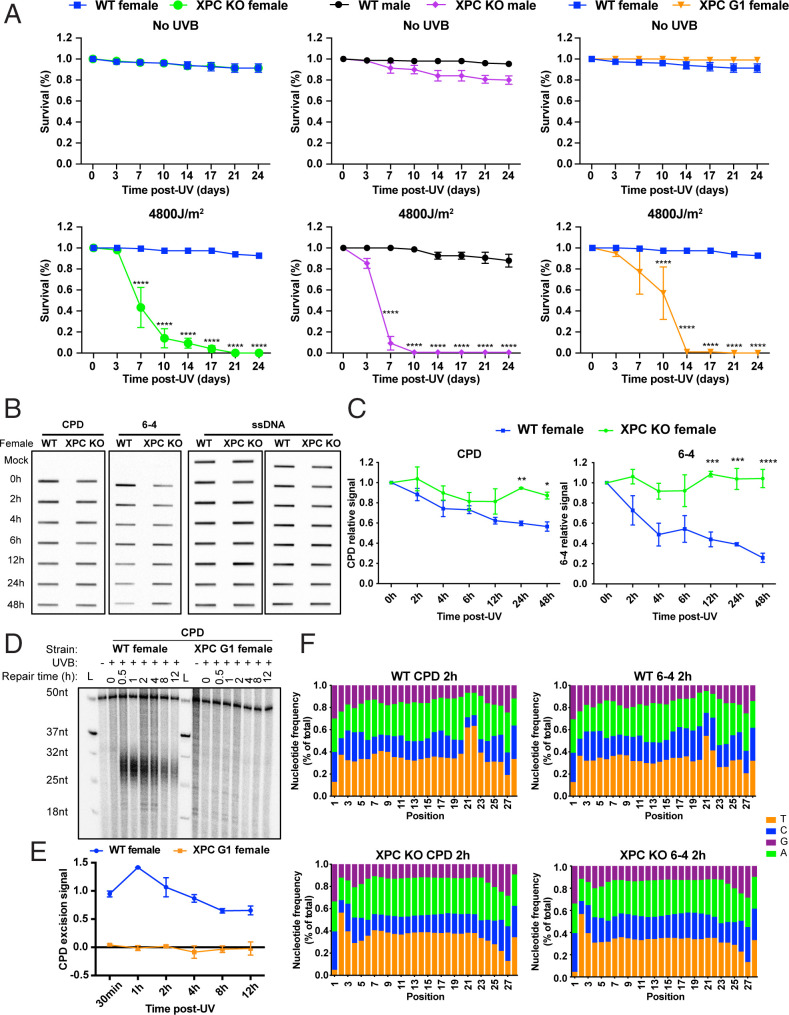
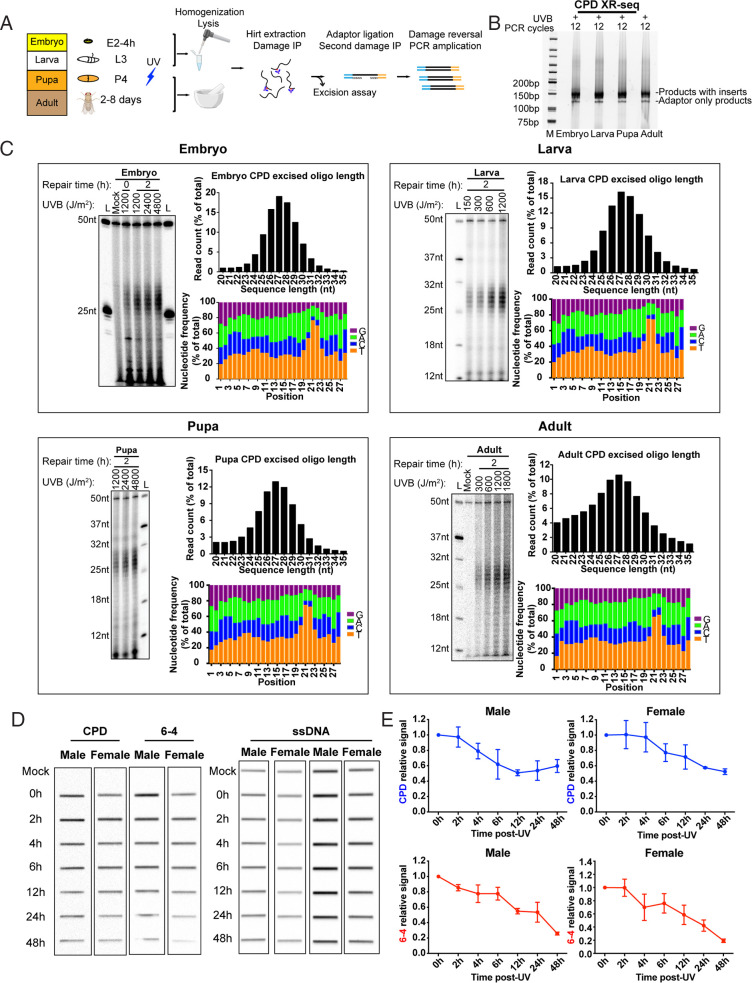
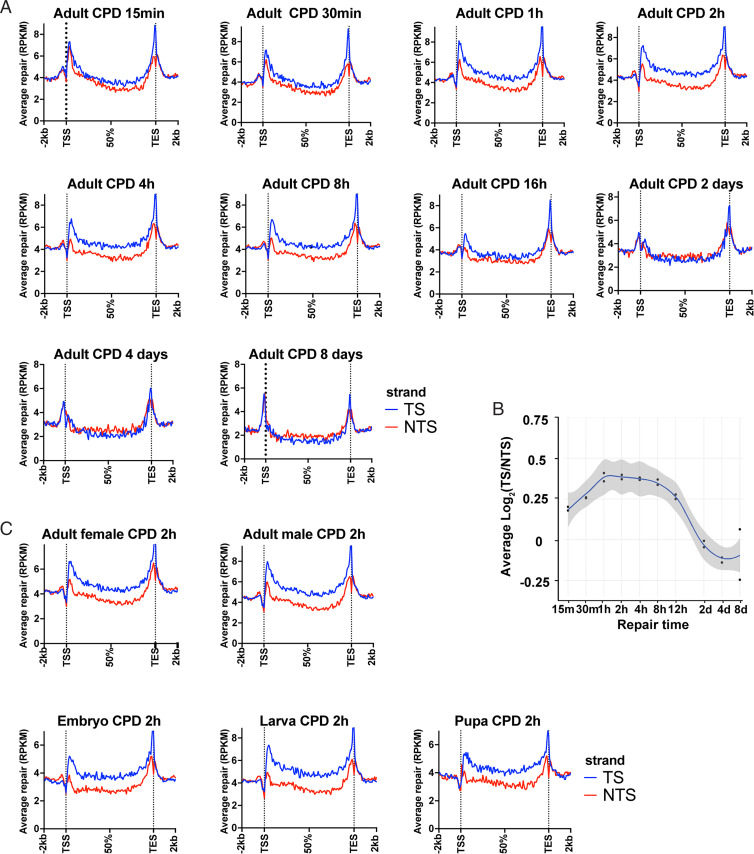
has been extensively used as a model system to study ionizing radiation and chemical-induced mutagenesis, double-strand break repair, and recombination. However, there are only limited studies on nucleotide excision repair in this important model organism. An early study reported that lacks the transcription-coupled repair (TCR) form of nucleotide excision repair. This conclusion was seemingly supported by the genome sequencing project, which revealed that lacks a homolog to CSB, which is known to be required for TCR in mammals and yeasts. However, by using excision repair sequencing (XR-seq) genome-wide repair mapping technology, we recently found that the S2 cell line performs TCR comparable to human cells. Here, we have extended this work to at all its developmental stages. We find TCR takes place throughout the life cycle of the organism. Moreover, we find that in contrast to humans and other multicellular organisms previously studied, the XPC repair factor is required for both global and transcription-coupled repair in .
已被广泛用作研究电离辐射和化学诱导突变、双链断裂修复和重组的模型系统。然而,在这个重要的模式生物中,核苷酸切除修复的研究非常有限。一项早期的研究报告称,缺乏转录偶联修复(TCR)形式的核苷酸切除修复。这一结论似乎得到了基因组测序项目的支持,该项目表明缺乏 CSB 的同源物,CSB 被认为是哺乳动物和酵母中 TCR 所必需的。然而,通过使用切除修复测序(XR-seq)全基因组修复图谱技术,我们最近发现 S2 细胞系的 TCR 与人类细胞相当。在这里,我们将这项工作扩展到 的所有发育阶段。我们发现 TCR 发生在生物体的整个生命周期中。此外,我们发现与之前研究过的人类和其他多细胞生物不同,XPC 修复因子对于 和转录偶联修复都是必需的。