Department of Brain and Cognitive Engineering, Korea University, Seoul, Republic of Korea.
Coma Science Group, GIGA-Consciousness, GIGA Research Center, University of Liège, Liège, Belgium.
Nat Commun. 2022 Feb 25;13(1):1064. doi: 10.1038/s41467-022-28451-0.
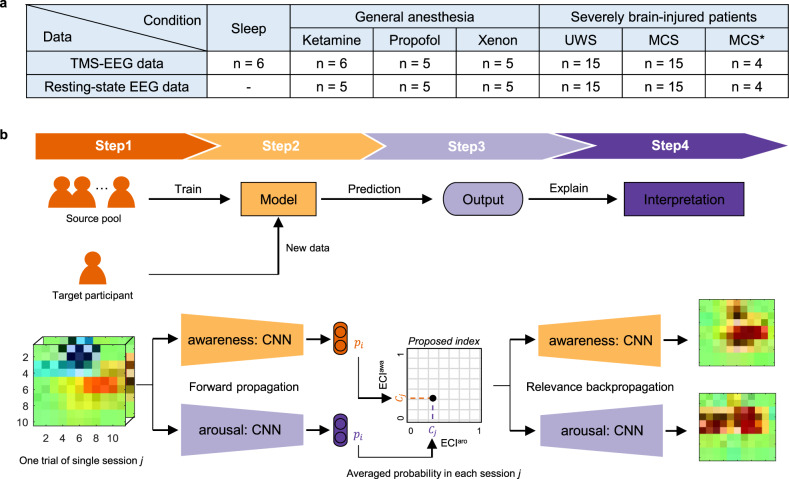
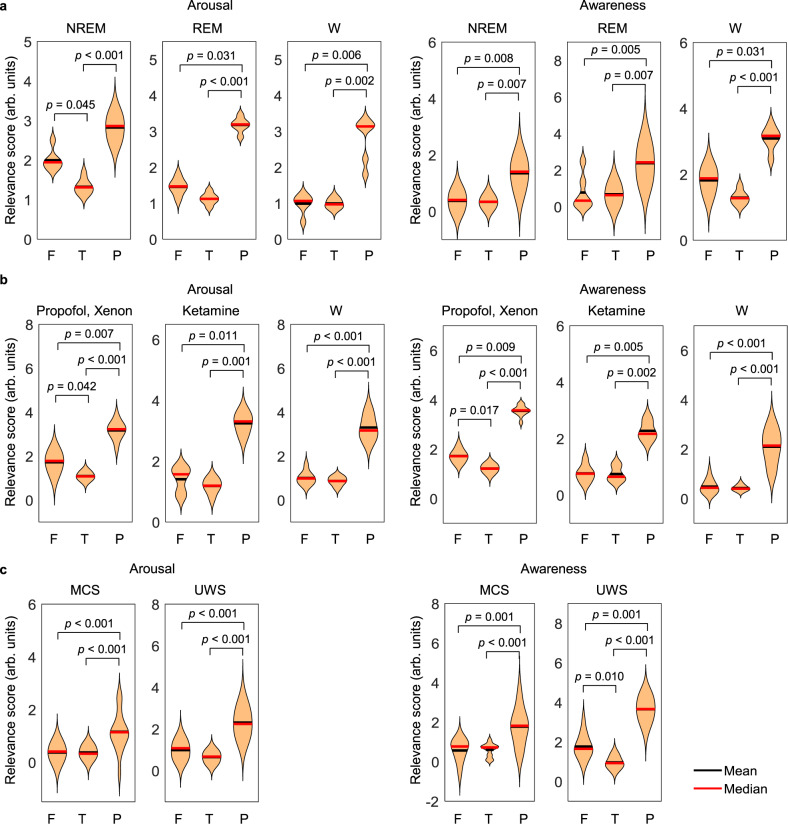
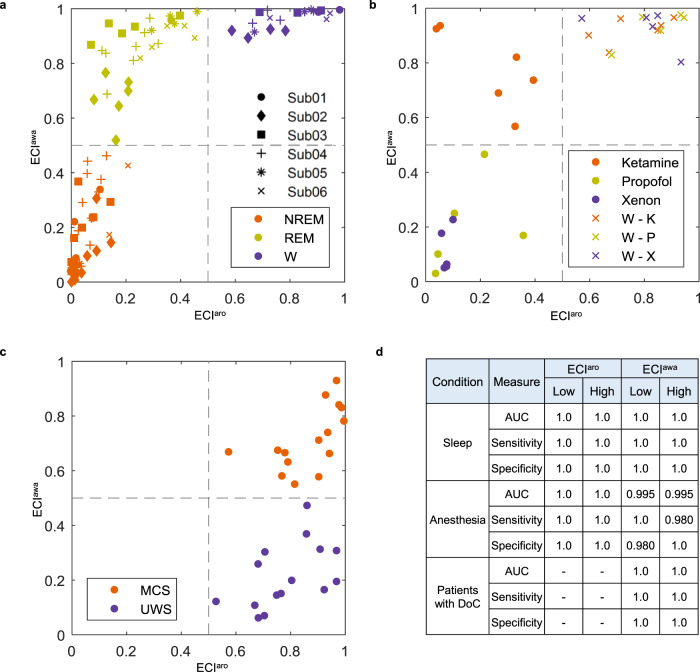
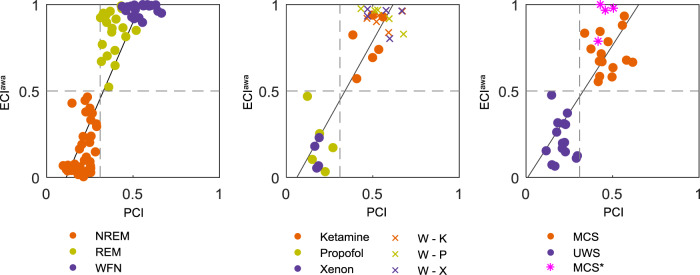
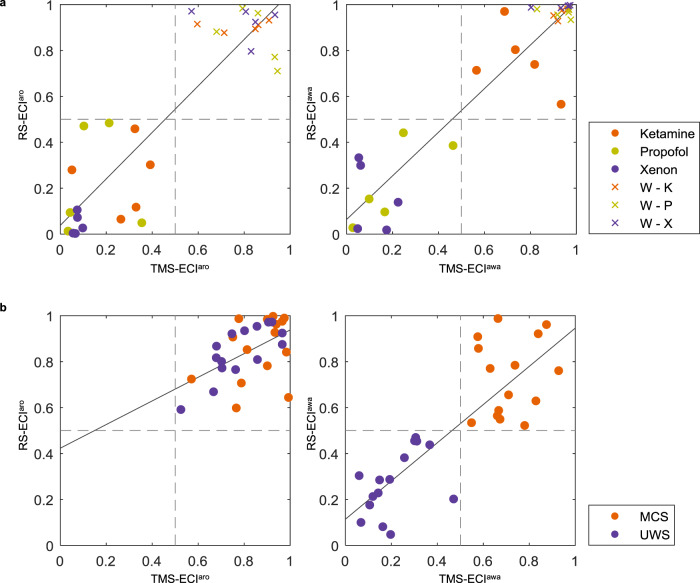
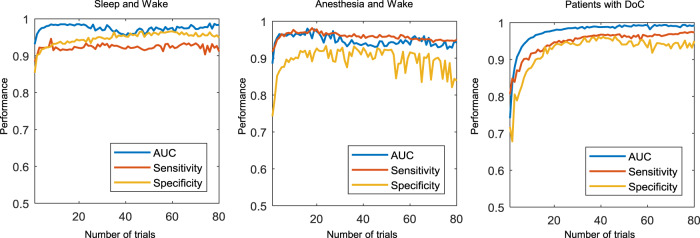
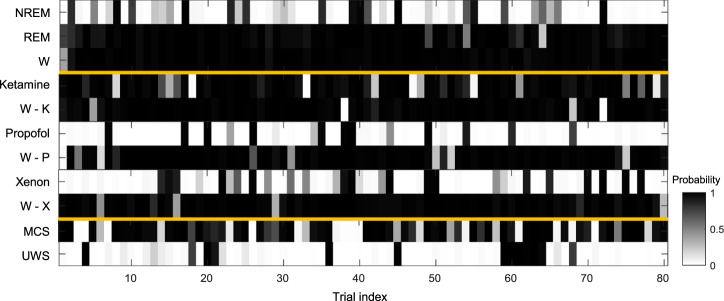
Consciousness can be defined by two components: arousal (wakefulness) and awareness (subjective experience). However, neurophysiological consciousness metrics able to disentangle between these components have not been reported. Here, we propose an explainable consciousness indicator (ECI) using deep learning to disentangle the components of consciousness. We employ electroencephalographic (EEG) responses to transcranial magnetic stimulation under various conditions, including sleep (n = 6), general anesthesia (n = 16), and severe brain injury (n = 34). We also test our framework using resting-state EEG under general anesthesia (n = 15) and severe brain injury (n = 34). ECI simultaneously quantifies arousal and awareness under physiological, pharmacological, and pathological conditions. Particularly, ketamine-induced anesthesia and rapid eye movement sleep with low arousal and high awareness are clearly distinguished from other states. In addition, parietal regions appear most relevant for quantifying arousal and awareness. This indicator provides insights into the neural correlates of altered states of consciousness.
觉醒(清醒)和意识(主观体验)。然而,能够区分这些成分的神经生理意识指标尚未被报道。在这里,我们提出了一种使用深度学习来区分意识成分的可解释意识指标(ECI)。我们使用脑电图(EEG)对各种条件下的经颅磁刺激的反应,包括睡眠(n=6)、全身麻醉(n=16)和严重脑损伤(n=34)。我们还使用全身麻醉(n=15)和严重脑损伤(n=34)下的静息态 EEG 来测试我们的框架。ECI 可同时在生理、药理和病理条件下定量测量觉醒和意识。特别是,氯胺酮诱导的麻醉和伴有低觉醒和高意识的快速眼动睡眠与其他状态明显区分开来。此外,顶叶区域似乎与定量觉醒和意识最为相关。该指标为改变的意识状态的神经相关因素提供了深入的了解。