Center for Synthetic Microbiology (SYNMIKRO) and Department of Chemistry Philipps-Universität Marburg, Marburg, Germany.
Gene Center Munich, Department of Biochemistry, Ludwig-Maximilians-Universität, LMU, Munich, Germany.
Nat Commun. 2022 Feb 25;13(1):1069. doi: 10.1038/s41467-022-28675-0.
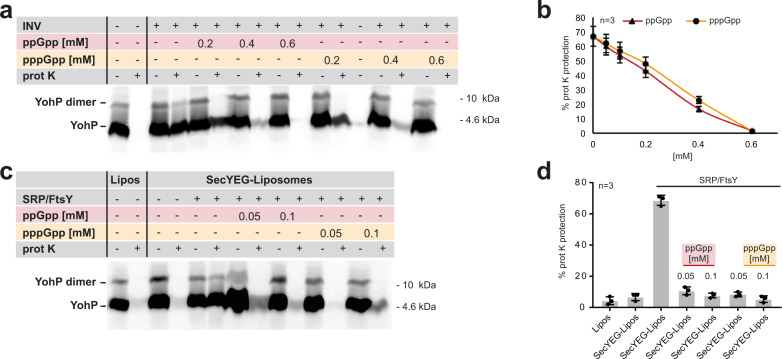
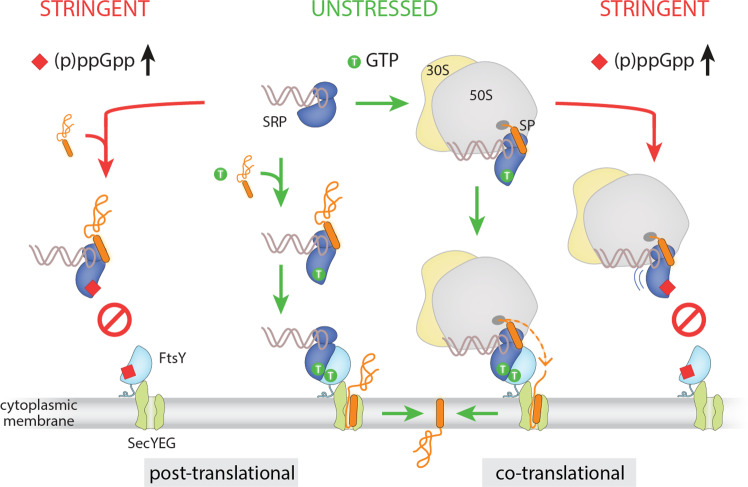
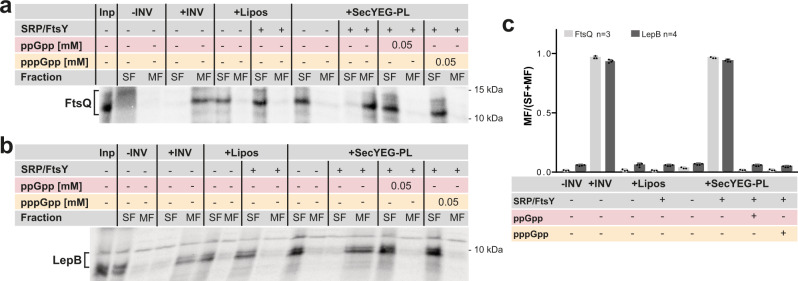
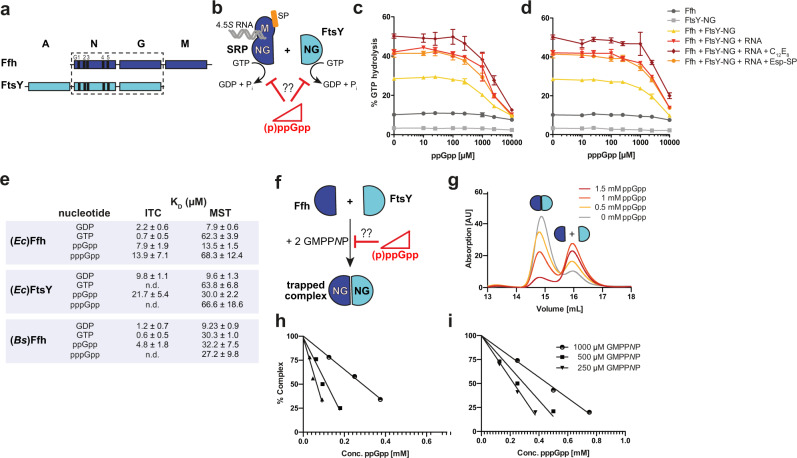
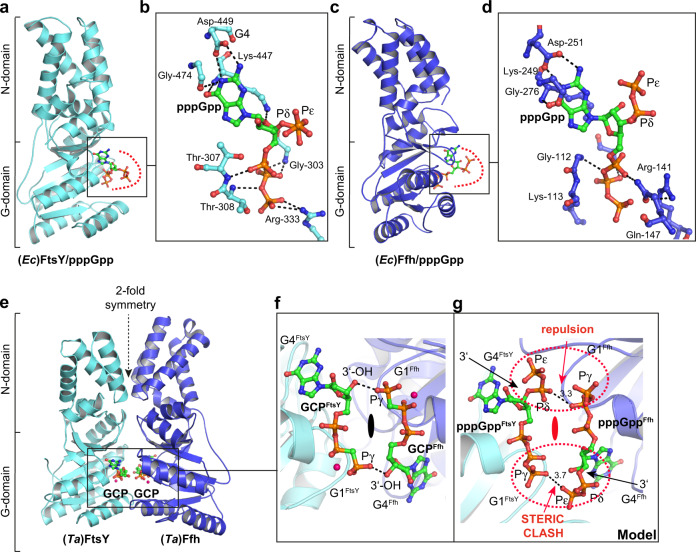
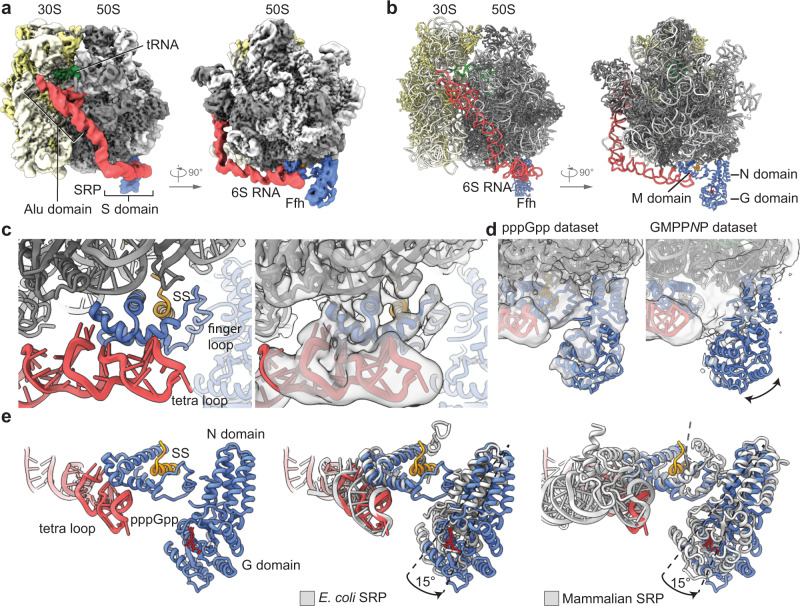
The stringent response enables bacteria to respond to nutrient limitation and other stress conditions through production of the nucleotide-based second messengers ppGpp and pppGpp, collectively known as (p)ppGpp. Here, we report that (p)ppGpp inhibits the signal recognition particle (SRP)-dependent protein targeting pathway, which is essential for membrane protein biogenesis and protein secretion. More specifically, (p)ppGpp binds to the SRP GTPases Ffh and FtsY, and inhibits the formation of the SRP receptor-targeting complex, which is central for the coordinated binding of the translating ribosome to the SecYEG translocon. Cryo-EM analysis of SRP bound to translating ribosomes suggests that (p)ppGpp may induce a distinct conformational stabilization of the NG domain of Ffh and FtsY in Bacillus subtilis but not in E. coli.
严格响应使细菌能够通过产生基于核苷酸的第二信使 ppGpp 和 pppGpp(统称为 (p)ppGpp)来应对营养限制和其他应激条件。在这里,我们报告 (p)ppGpp 抑制信号识别颗粒 (SRP) 依赖性蛋白靶向途径,该途径对于膜蛋白生物发生和蛋白分泌是必不可少的。更具体地说,(p)ppGpp 结合到 SRP GTPases Ffh 和 FtsY,并抑制 SRP 受体靶向复合物的形成,该复合物对于协调翻译核糖体与 SecYEG 易位酶的结合至关重要。结合到翻译核糖体的 SRP 的冷冻电镜分析表明,(p)ppGpp 可能诱导枯草芽孢杆菌中 Ffh 和 FtsY 的 NG 结构域发生独特的构象稳定,但在大肠杆菌中则不会。