Gong Haiguang, Rehman Fazal, Ma Yun, A Biao, Zeng Shaohua, Yang Tianshun, Huang Jianguo, Li Zhong, Wu Dongpo, Wang Ying
Key Laboratory of South China Agricultural Plant Molecular Analysis and Genetic Improvement, Provincial Key Laboratory of Digital Botanical Garden and Public Science, South China Botanical Garden, Chinese Academy of Sciences, Guangzhou, China.
School of Life Science, University of Chinese Academy of Sciences, Beijing, China.
Front Plant Sci. 2022 Feb 11;13:802936. doi: 10.3389/fpls.2022.802936. eCollection 2022.
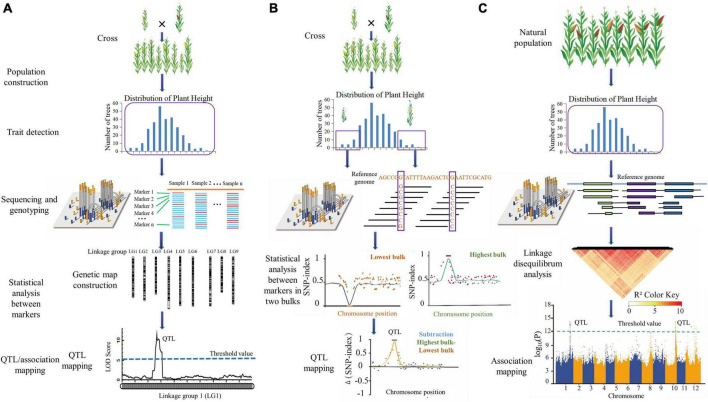
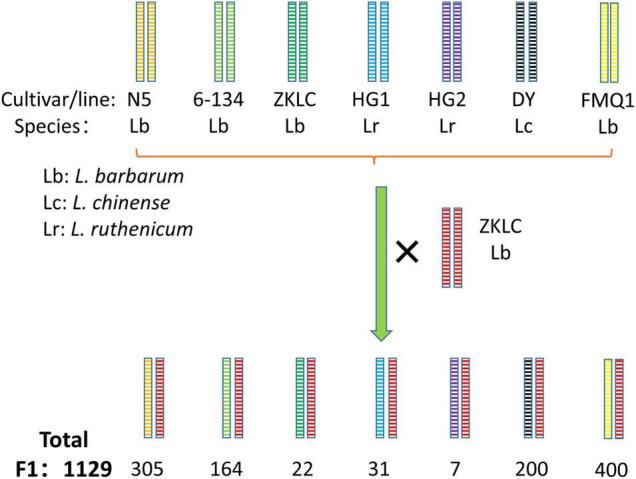
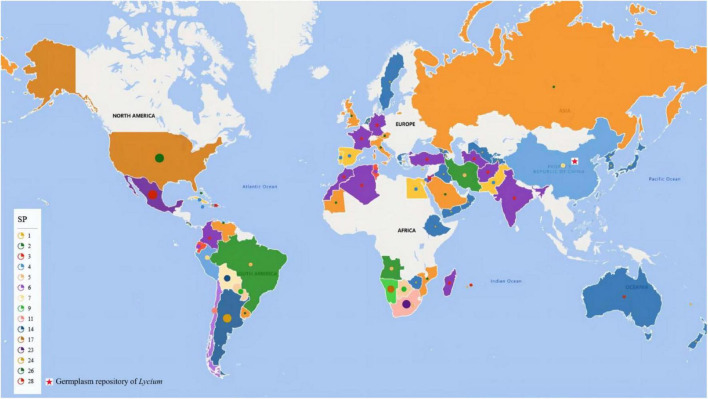
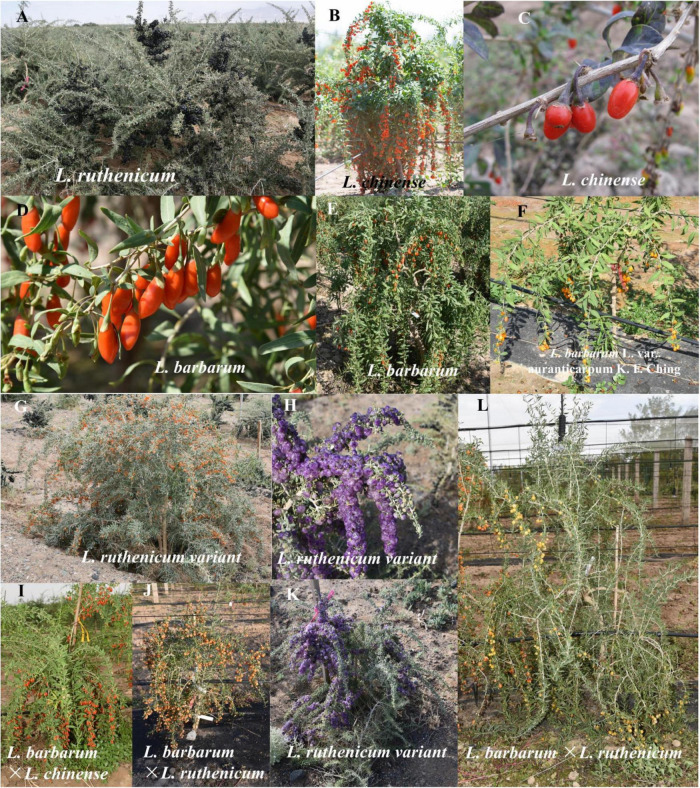
species (goji), belonging to Solanaceae, are widely spread in the arid to semiarid environments of Eurasia, Africa, North and South America, among which most species have affinal drug and diet functions, resulting in their potential to be a superior healthy food. However, compared with other crop species, scientific research on breeding species lags behind. This review systematically introduces the present germplasm resources, cytological examination and molecular-assisted breeding progress in species. Introduction of the distribution of species around the world could facilitate germplasm collection for breeding. Karyotypes of different species could provide a feasibility analysis of fertility between species. The introduction of mapping technology has discussed strategies for quantitative trait locus (QTL) mapping in species according to different kinds of traits. Moreover, to extend the number of traits and standardize the protocols of trait detection, we also provide 1,145 potential traits (275 agronomic and 870 metabolic) in different organs based on different reference studies on , tomato and other Solanaceae species. Finally, perspectives on goji breeding research are discussed and concluded. This review will provide breeders with new insights into breeding species.
枸杞属植物属于茄科,广泛分布于欧亚大陆、非洲以及南北美洲的干旱至半干旱环境中,其中大多数物种具有药用和食用功能,因而具有成为优质健康食品的潜力。然而,与其他作物物种相比,枸杞属植物的育种科学研究相对滞后。本综述系统介绍了枸杞属植物目前的种质资源、细胞学研究以及分子辅助育种进展。介绍枸杞属植物在全球的分布情况有助于为育种收集种质资源。不同物种的核型可为种间育性提供可行性分析。引入图谱技术,根据不同类型的性状,探讨了枸杞属植物数量性状位点(QTL)定位策略。此外,为了增加性状数量并规范性状检测方案,我们还基于对枸杞、番茄及其他茄科物种的不同参考研究,提供了1145个不同器官中的潜在性状(275个农艺性状和870个代谢性状)。最后,对枸杞育种研究进行了讨论并得出结论。本综述将为育种者提供有关枸杞属植物育种的新见解。