Srimaneepong Viritpon, Heboyan Artak, Zafar Muhammad Sohail, Khurshid Zohaib, Marya Anand, Fernandes Gustavo V O, Rokaya Dinesh
Department of Prosthodontics, Faculty of Dentistry, Chulalongkorn University, Bangkok 10330, Thailand.
Department of Prosthodontics, Faculty of Stomatology, Yerevan State Medical University after Mkhitar Heratsi, Str. Koryun 2, Yerevan 0025, Armenia.
J Funct Biomater. 2022 Feb 1;13(1):15. doi: 10.3390/jfb13010015.
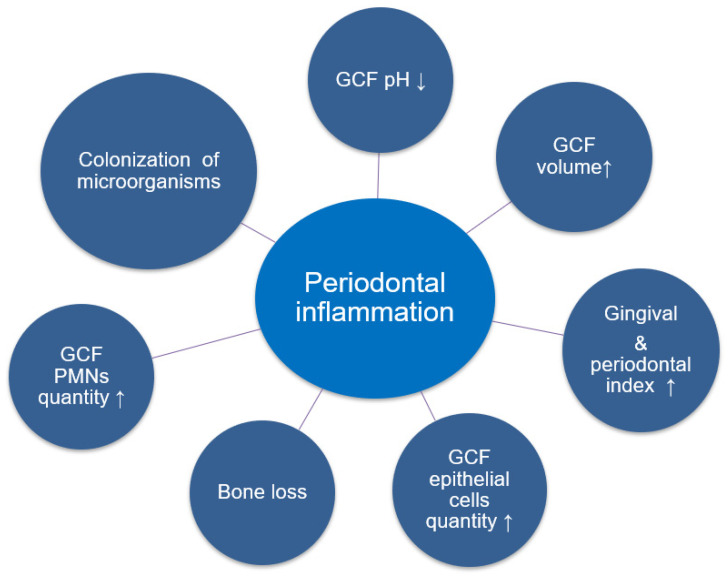
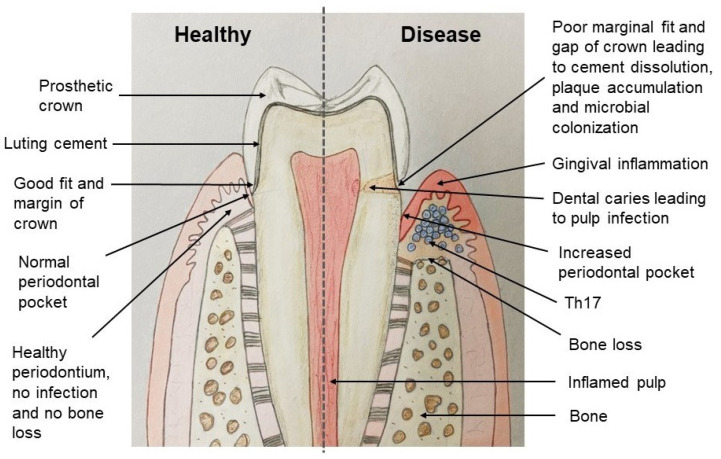
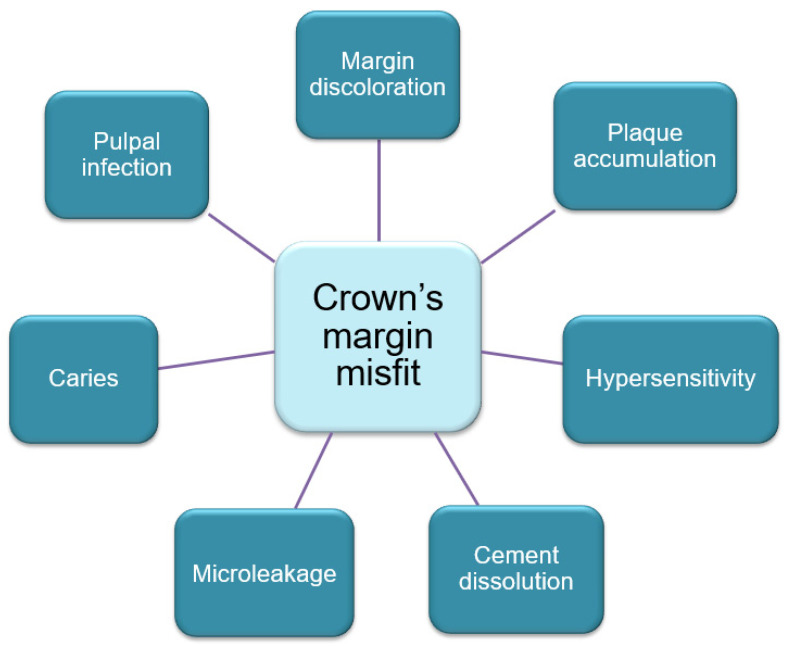
Periodontal health plays an important role in the longevity of prosthodontic restorations. The issues of comparative assessment of prosthetic constructions are complicated and not fully understood. The aim of this article is to review and present the current knowledge regarding the various technical, clinical, and molecular aspects of different prosthetic biomaterials and highlight the interactions between periodontal health and prosthetic restorations. Articles on periodontal health and fixed dental prostheses were searched using the keywords "zirconium", "CAD/CAM", "dental ceramics", "metal-ceramics", "margin fit", "crown", "fixed dental prostheses", "periodontium", and "margin gap" in PubMed/Medline, Scopus, Google Scholar, and Science Direct. Further search criteria included being published in English, and between January 1981 and September 2021. Then, relevant articles were selected, included, and critically analyzed in this review. The margin of discrepancy results in the enhanced accumulation of dental biofilm, microleakage, hypersensitivity, margin discoloration, increased gingival crevicular fluid flow (GCF), recurrent caries, pulp infection and, lastly, periodontal lesion and bone loss, which can lead to the failure of prosthetic treatment. Before starting prosthetic treatment, the condition of the periodontal tissues should be assessed for their oral hygiene status, and gingival and periodontal conditions. Zirconium-based restorations made from computer-aided design and computer-aided manufacturing (CAD/CAM) technology provide better results, in terms of marginal fit, inflammation reduction, maintenance, and the restoration of periodontal health and oral hygiene, compared to constructions made by conventional methods, and from other alloys. Compared to subgingival margins, supragingival margins offer better oral hygiene, which can be maintained and does not lead to secondary caries or periodontal disease.
牙周健康在口腔修复体的使用寿命中起着重要作用。口腔修复体的比较评估问题复杂且尚未完全明了。本文旨在回顾并介绍有关不同修复生物材料的各种技术、临床和分子方面的现有知识,并强调牙周健康与口腔修复体之间的相互作用。在PubMed/Medline、Scopus、谷歌学术和科学Direct数据库中,使用关键词“锆”“计算机辅助设计与制造(CAD/CAM)”“牙科陶瓷”“金属陶瓷”“边缘适合性”“牙冠”“固定义齿”“牙周组织”和“边缘间隙”搜索有关牙周健康和固定义齿的文章。进一步的搜索标准包括以英文发表,以及发表时间在1981年1月至2021年9月之间。然后,在本综述中选择、纳入并严格分析相关文章。边缘差异会导致牙菌斑积聚增加、微渗漏、过敏、边缘变色、龈沟液流量增加(GCF)、继发龋、牙髓感染,最后导致牙周病变和骨质流失,进而可能导致修复治疗失败。在开始修复治疗之前,应评估牙周组织的状况,包括口腔卫生状况、牙龈和牙周状况。与传统方法制作的修复体以及其他合金制成的修复体相比,采用计算机辅助设计和计算机辅助制造(CAD/CAM)技术制作的锆基修复体在边缘适合性、减少炎症、维护以及牙周健康和口腔卫生恢复方面提供了更好的效果。与龈下边缘相比,龈上边缘提供了更好的口腔卫生,易于维护且不会导致继发龋或牙周疾病。