Dou Ce, Zhen Gehua, Dan Yang, Wan Mei, Limjunyawong Nathachit, Cao Xu
Department of Orthopedic Surgery, Institute of Cell Engineering and Department of Biomedical Engineering, Johns Hopkins University School of Medicine, Baltimore, MD, USA.
The Solomon H. Snyder Department of Neuroscience, Johns Hopkins University School of Medicine, Baltimore, MD, USA.
Bone Res. 2022 Mar 2;10(1):24. doi: 10.1038/s41413-022-00186-0.
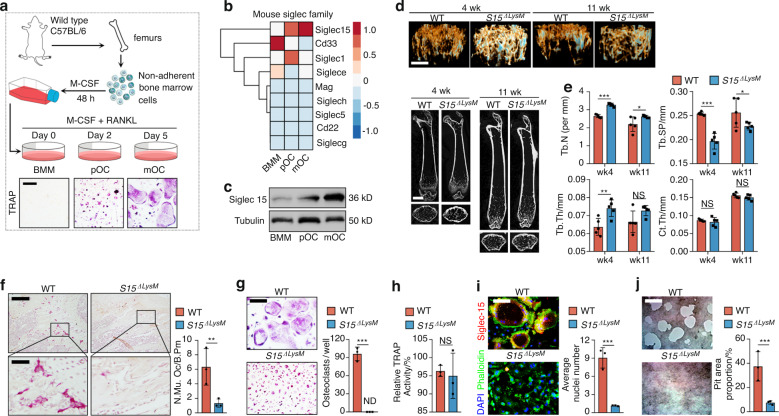
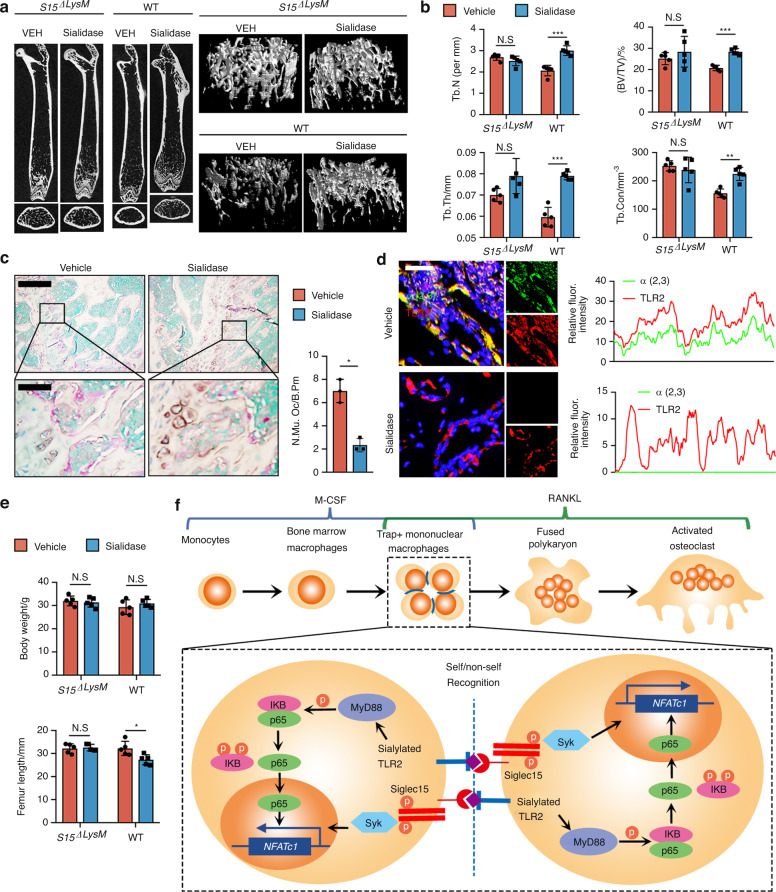
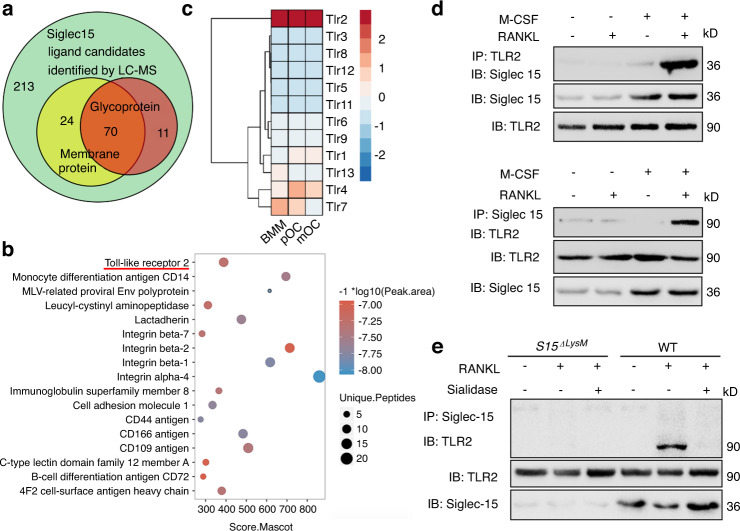
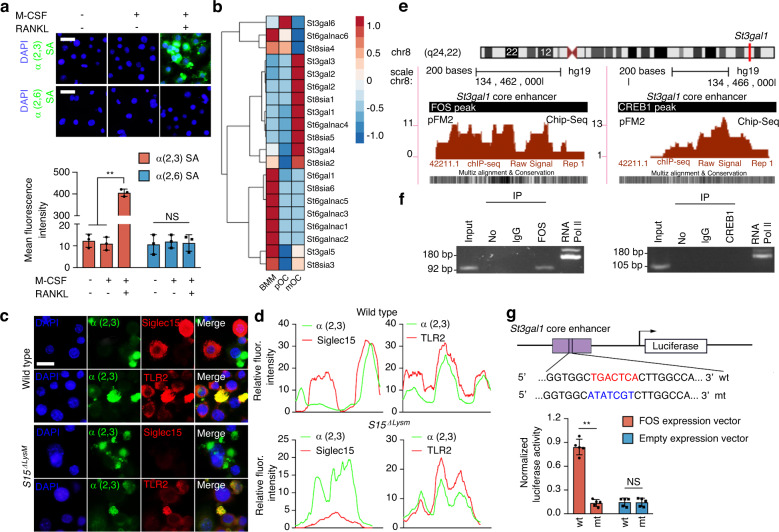
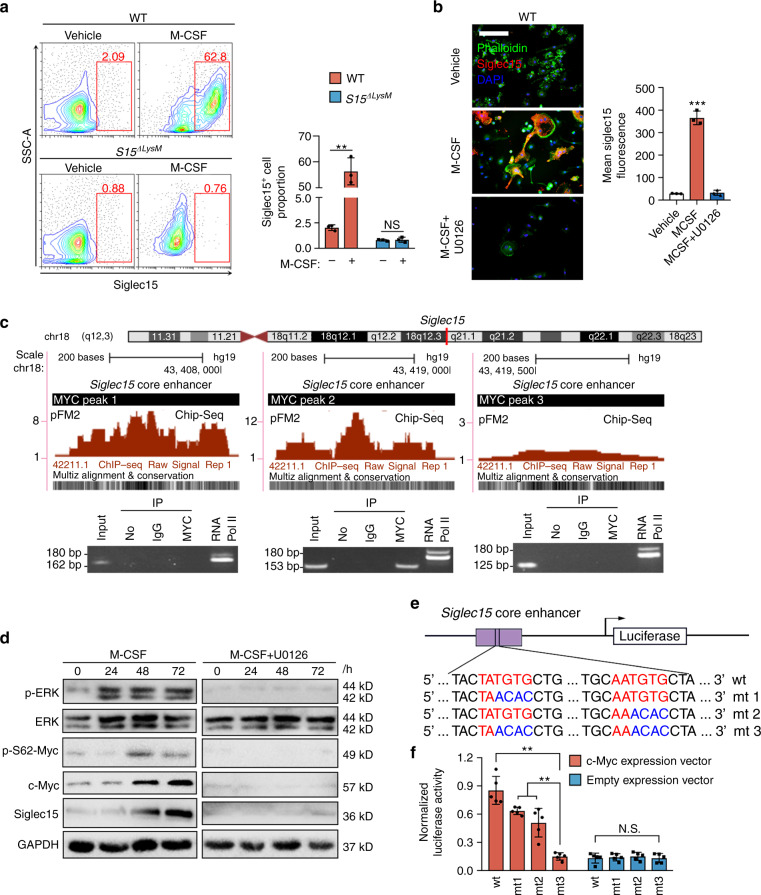
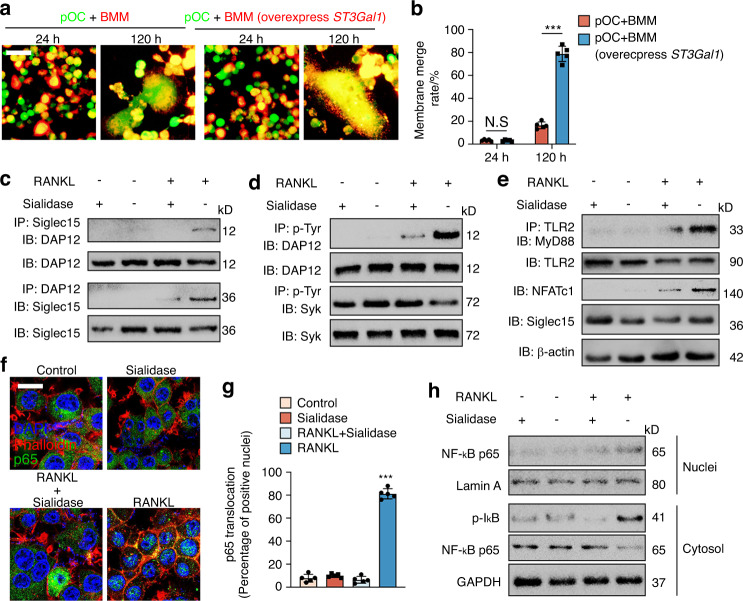
The molecular control of osteoclast formation is still not clearly elucidated. Here, we show that a process of cell recognition mediated by Siglec15-TLR2 binding is indispensable and occurs prior to cell fusion in RANKL-mediated osteoclastogenesis. Siglec15 has been shown to regulate osteoclastic bone resorption. However, the receptor for Siglec15 has not been identified, and the signaling mechanism involving Siglec15 in osteoclast function remains unclear. We found that Siglec15 bound sialylated TLR2 as its receptor and that the binding of sialylated TLR2 to Siglec15 in macrophages committed to the osteoclast-lineage initiated cell fusion for osteoclast formation, in which sialic acid was transferred by the sialyltransferase ST3Gal1. Interestingly, the expression of Siglec15 in macrophages was activated by M-CSF, whereas ST3Gal1 expression was induced by RANKL. Both Siglec15-specific deletion in macrophages and intrafemoral injection of sialidase abrogated cell recognition and reduced subsequent cell fusion for the formation of osteoclasts, resulting in increased bone formation in mice. Thus, our results reveal that cell recognition mediated by the binding of sialylated TLR2 to Siglec15 initiates cell fusion for osteoclast formation.
破骨细胞形成的分子调控机制仍未完全阐明。在此,我们表明,由Siglec15-TLR2结合介导的细胞识别过程是必不可少的,且发生在RANKL介导的破骨细胞生成过程中的细胞融合之前。已有研究表明Siglec15可调节破骨细胞的骨吸收。然而,Siglec15的受体尚未确定,且Siglec15在破骨细胞功能中的信号传导机制仍不清楚。我们发现Siglec15以唾液酸化的TLR2作为其受体,并且唾液酸化的TLR2与破骨细胞谱系巨噬细胞中的Siglec15结合启动了破骨细胞形成的细胞融合,其中唾液酸由唾液酸转移酶ST3Gal1转移。有趣的是,巨噬细胞中Siglec15的表达由M-CSF激活,而ST3Gal1的表达由RANKL诱导。巨噬细胞中Siglec15特异性缺失和股骨内注射唾液酸酶均消除了细胞识别并减少了随后破骨细胞形成的细胞融合,导致小鼠骨形成增加。因此,我们的结果表明,唾液酸化的TLR2与Siglec15结合介导的细胞识别启动了破骨细胞形成的细胞融合。