Jayathilake Abilasha Gayani, Hassanzadeganroudsari Majid, Jovanovska Valentina, Luwor Rodney Brain, Nurgali Kulmira, Su Xiao Qun
Institute for Health and Sport, Victoria University, P.O. Box 14428, Melbourne, 8001, Australia.
Department of Surgery, The Royal Melbourne Hospital, The University of Melbourne, Parkville, Australia.
Nutr Metab (Lond). 2022 Mar 2;19(1):12. doi: 10.1186/s12986-022-00646-8.
Our in vitro studies demonstrated that krill oil (KO) has anti-cancer potential. This study aimed to compare the anti-cancer effects of KO with a commonly used chemotherapeutic drug, oxaliplatin and to identify the molecular mechanisms associated with KO supplementation in a mouse model of colorectal cancer (CRC).
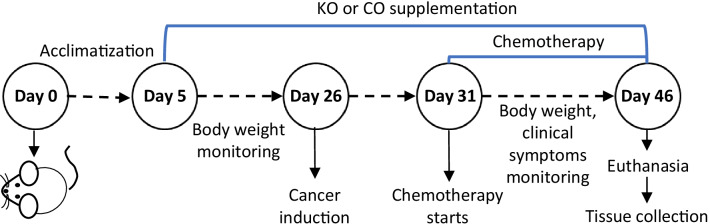
Thirty-six male Balb/c mice were randomly divided into six groups. Five groups received standard chow diet supplemented with KO (150 g/kg)), corn oil (150 g/kg), KO combined with ½ dose of oxaliplatin (1.5 mg/kg body weight/3 times per week), corn oil combined with ½ dose of oxaliplatin (1.5 mg/kg body weight/3 times per week), or a full dose of oxaliplatin (3 mg/kg body weight/3 times per week). The control (sham) group received a standard chow diet. Treatments started three weeks before and continued for three weeks after orthotopic CRC induction. The number of metastases, tumour weight and volume were quantified ex-vivo. The expression of cytochrome c, cleaved caspase-9 and -3, DNA damage, PD-L1, PD-L2 and HSP-70 were determined.
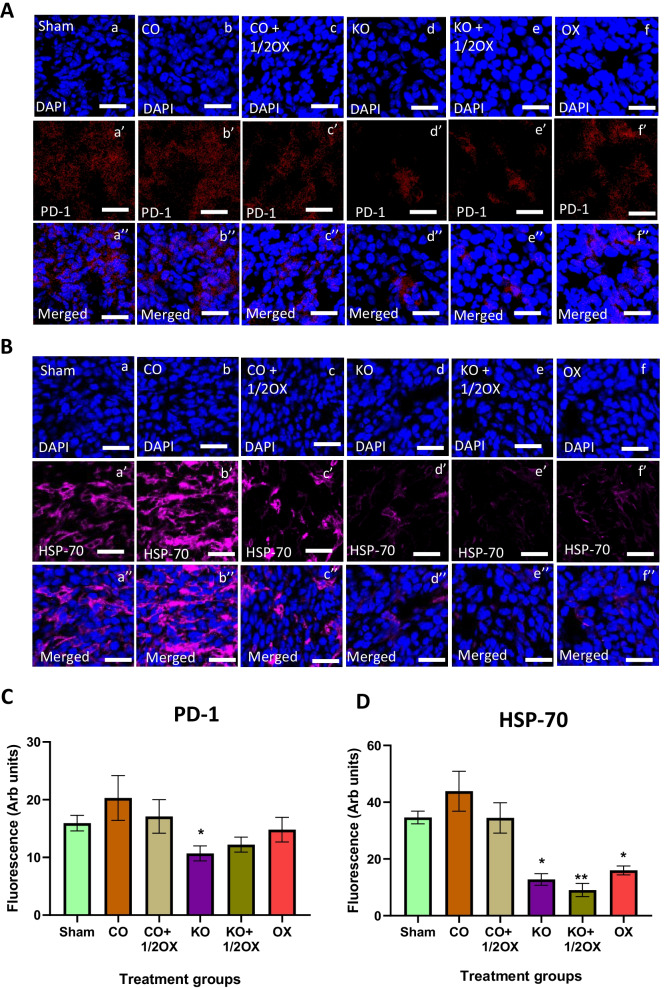
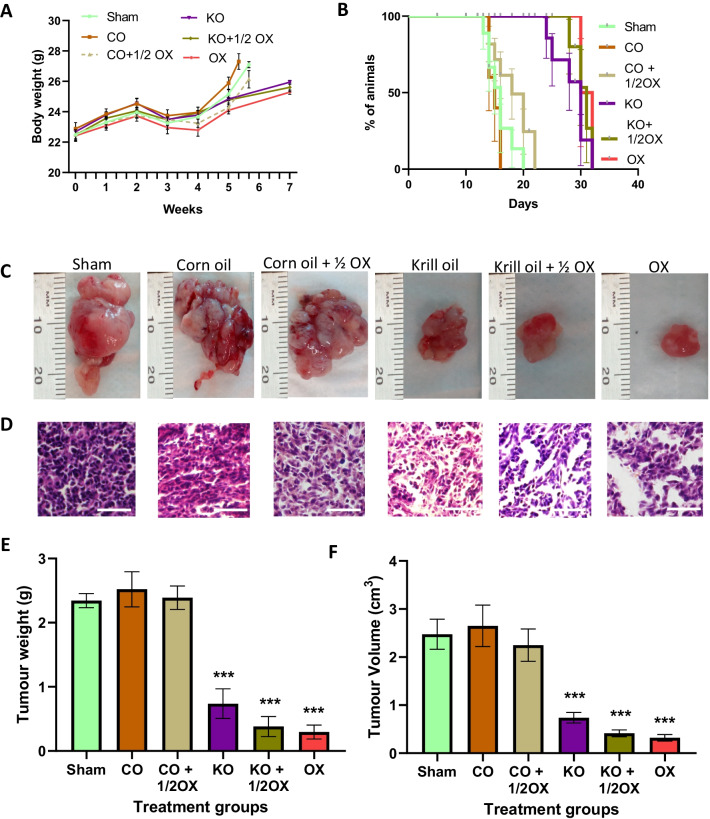
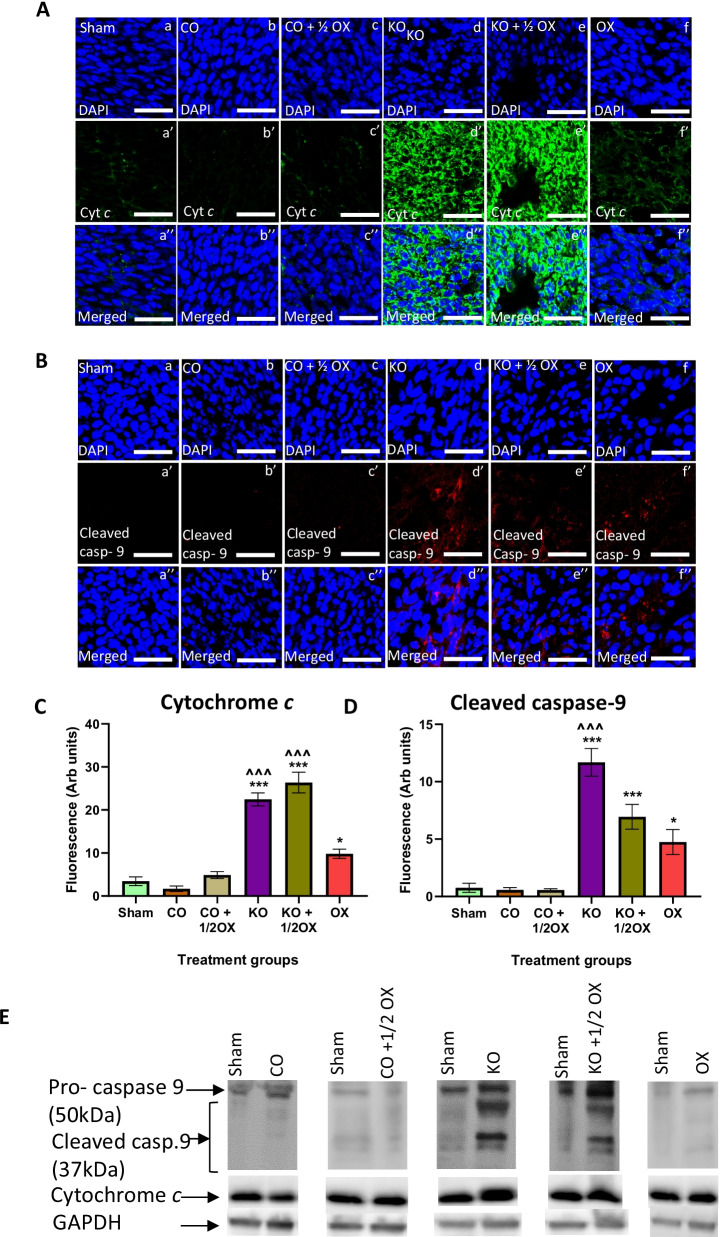
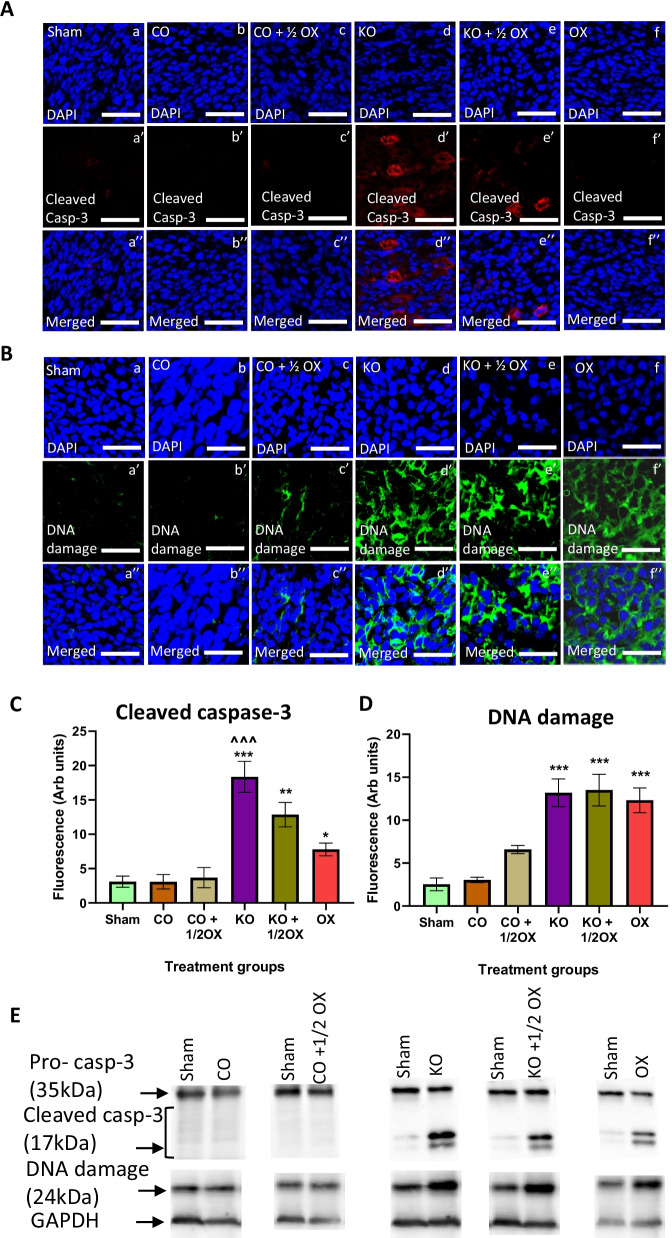
A significant reductions in the weight and volume of tumours were observed in mice treated with KO and KO plus a ½ dose of oxaliplatin compared to the sham group, similar to oxaliplatin-treated mice. KO, and KO plus ½ dose of oxaliplatin significantly increased the expression of cytochrome c, cleaved caspase-9 and -3, and DNA damage and decreased expression of PD-L1, PD-L2 and HSP-70 in tumour tissues compared to the sham group.
The in vivo anti-cancer effects of KO are comparable with oxaliplatin. Thus, dietary KO supplementation has a great potential as a therapeutic/adjunctive agent for CRC treatment.
我们的体外研究表明,磷虾油(KO)具有抗癌潜力。本研究旨在比较磷虾油与常用化疗药物奥沙利铂的抗癌效果,并确定在结直肠癌(CRC)小鼠模型中补充磷虾油相关的分子机制。
将36只雄性Balb/c小鼠随机分为六组。五组接受补充了磷虾油(150 g/kg)、玉米油(150 g/kg)、磷虾油联合半剂量奥沙利铂(1.5 mg/kg体重/每周3次)、玉米油联合半剂量奥沙利铂(1.5 mg/kg体重/每周3次)或全剂量奥沙利铂(3 mg/kg体重/每周3次)的标准饲料。对照组(假手术组)接受标准饲料。在原位CRC诱导前三周开始治疗,并在诱导后持续三周。体外定量转移灶数量、肿瘤重量和体积。测定细胞色素c、裂解的半胱天冬酶-9和-3的表达、DNA损伤、程序性死亡受体配体1(PD-L1)、程序性死亡受体配体2(PD-L2)和热休克蛋白70(HSP-70)。
与假手术组相比,接受磷虾油和磷虾油加半剂量奥沙利铂治疗的小鼠肿瘤重量和体积显著降低,与奥沙利铂治疗的小鼠相似。与假手术组相比,磷虾油以及磷虾油加半剂量奥沙利铂显著增加了肿瘤组织中细胞色素c、裂解的半胱天冬酶-9和-3的表达以及DNA损伤,并降低了PD-L1、PD-L2和HSP-70的表达。
磷虾油的体内抗癌效果与奥沙利铂相当。因此,饮食中补充磷虾油作为CRC治疗的治疗/辅助剂具有巨大潜力。