Department of Agricultural Economics and Agribusiness, University of Arkansas, Fayetteville, Arkansas, United States of America.
Morrison School of Agribusiness, Arizona State University, Mesa, Arizona, United States of America.
PLoS One. 2022 Mar 3;17(3):e0264355. doi: 10.1371/journal.pone.0264355. eCollection 2022.
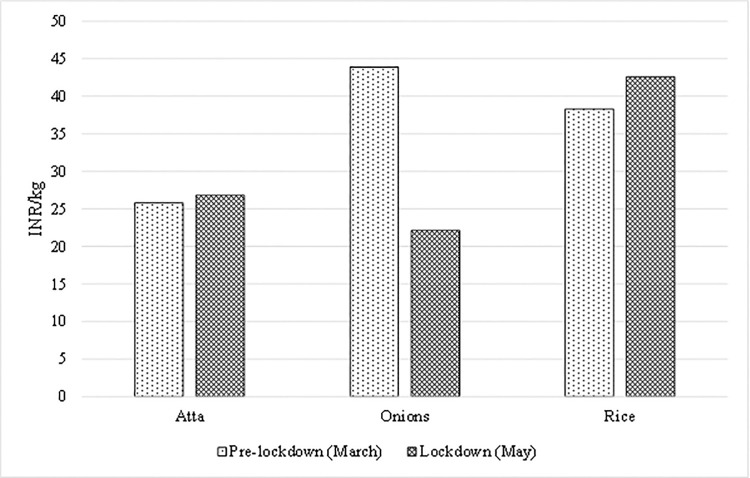
The supply chain disruptions caused by the COVID-19 outbreak have led to changes in food prices globally. The impact of COVID-19 on the price of essential and perishable food items in developing and emerging economies has been lacking. Using a recent phone survey by the World Bank, this study examines the impact of the COVID-19 pandemic on the prices of the three essential food items in India. The results indicate that price of basic food items such as atta (wheat flour) and rice increased significantly during the pandemic compared to the pre-pandemic period. In contrast, during the same period, the price of onions declined significantly. The findings may suggest panic-buying, hoarding, and storability of food items. The results further reveal that remittance income and cash transfers from the government negatively affected commodity prices. Thus, this study's findings suggest that families may have shifted the demand away from essential foods during the pandemic.
由 COVID-19 爆发引起的供应链中断导致了全球食品价格的变化。然而,COVID-19 对发展中和新兴经济体的基本和易腐食品价格的影响尚未得到充分研究。本研究利用世界银行最近的电话调查,考察了 COVID-19 大流行对印度三种基本食品价格的影响。结果表明,在大流行期间,与大流行前相比,基本食品如 atta(小麦粉)和大米的价格显著上涨。相比之下,在此期间,洋葱的价格大幅下跌。这一发现可能表明存在恐慌性购买、囤积和食品的储存性。研究结果还表明,汇款收入和政府的现金转移对商品价格产生了负面影响。因此,本研究的结果表明,家庭在大流行期间可能已经将需求从基本食品转移出去。