Ceballos Francisco, Kannan Samyuktha, Kramer Berber
International Food Policy Research Institute (IFPRI) Markets, Trade, and Institutions Division Washington District of Columbia USA.
International Food Policy Research Institute South Asia Regional Office Delhi India.
Agric Econ. 2021 May;52(3):525-542. doi: 10.1111/agec.12633. Epub 2021 May 25.
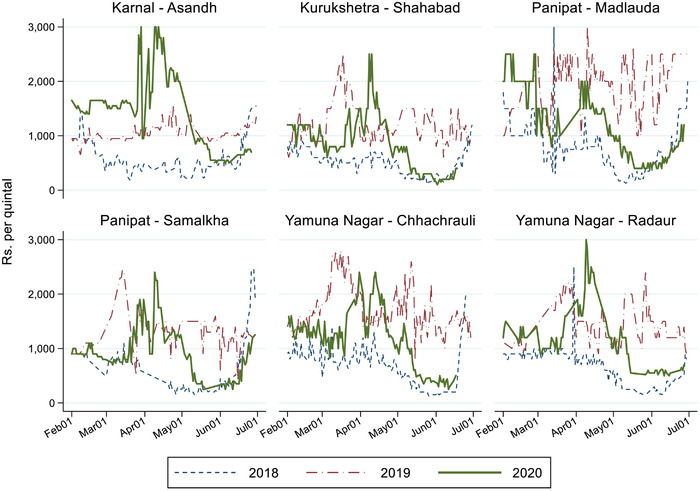
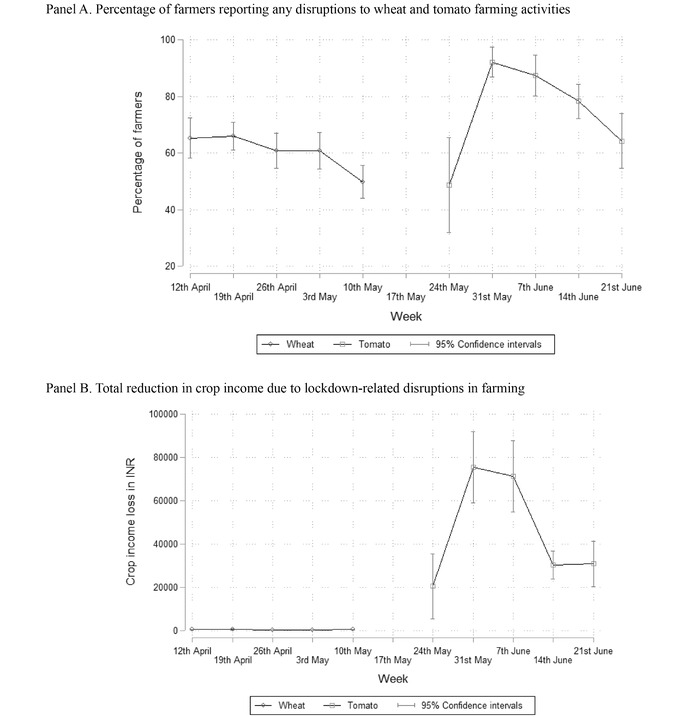
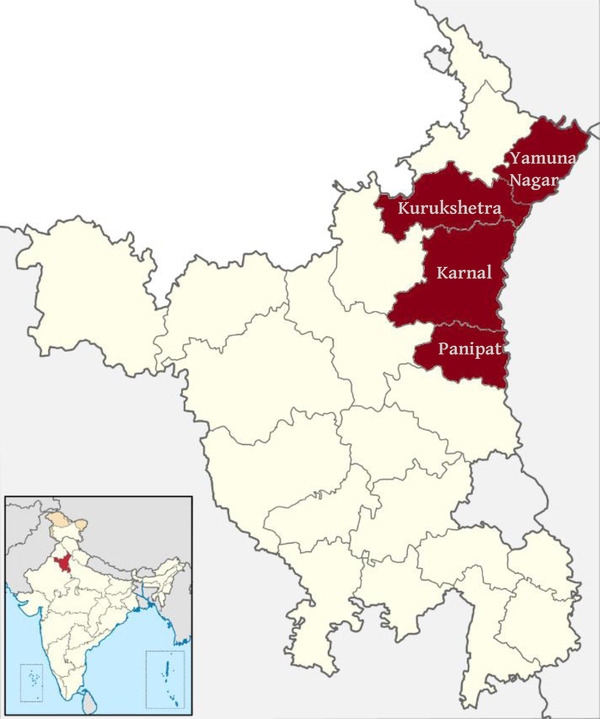
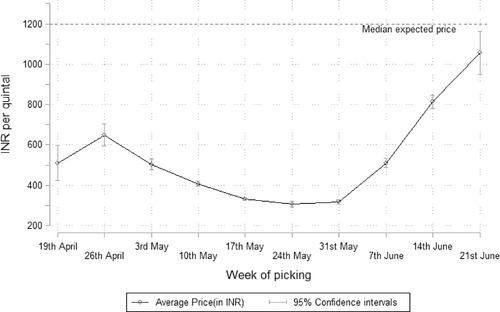
In March 2020, India declared a nationwide lockdown in response to the COVID-19 pandemic. Such restrictions on mobility interrupted the normal functioning of agricultural value chains. For a sample of 1767 tomato and wheat producers in the state of Haryana, we study to what extent the lockdown limited access to inputs, labor, machinery, and markets to produce, harvest, and sell their crops. We quantify crop income reductions during the first months of the lockdown and analyze to what extent these are associated with borrowing and food insecurity. We find that wheat producers, for whom state-led procurement guaranteed market access at fixed prices, suffered minimal declines in income. For tomato producers-an already more vulnerable population-income fell by 50% relative to their expected income in a normal year, largely due to a steep fall of tomato prices as they shifted from wholesale markets to local retail markets, resulting in a sharp increase in local supply. Relative to wheat producers affected by the lockdown, reduced income for tomato producers was associated with an increase in borrowing and reduced food security. We conclude that targeting producers of crops that face substantial price risk and introducing policies that stabilize market prices are important in efforts to aid recovery and build resilience of smallholder farmers.
2020年3月,印度宣布全国封锁,以应对新冠疫情。这种对人员流动的限制扰乱了农业价值链的正常运转。对于哈里亚纳邦1767名番茄和小麦种植户的样本,我们研究了封锁在多大程度上限制了他们获取生产、收获和销售作物所需的投入、劳动力、机械及市场。我们量化了封锁头几个月作物收入的减少情况,并分析了这些减少在多大程度上与借贷及粮食不安全相关。我们发现,对于小麦种植户而言,由于政府主导的采购以固定价格保障了市场准入,他们的收入降幅最小。对于番茄种植户(这本来就是一个更脆弱的群体),与正常年份的预期收入相比,其收入下降了50%,主要原因是番茄从批发市场转向当地零售市场后价格大幅下跌,导致当地供应急剧增加。与受封锁影响的小麦种植户相比,番茄种植户收入减少与借贷增加及粮食安全降低有关。我们得出结论,针对面临重大价格风险的作物种植户并出台稳定市场价格的政策,对于帮助小农户恢复生产及增强恢复力至关重要。