National Center for Cancer Immune Therapy, CCIT-DK, Department of Oncology, Copenhagen University Hospital Herlev and Gentofte, Herlev, Denmark.
Department of Oncology, Copenhagen University Hospital Herlev and Gentofte, Herlev, Denmark.
BMC Cancer. 2022 Mar 5;22(1):246. doi: 10.1186/s12885-022-09349-y.
The increasing role of exercise training in cancer care is built on evidence that exercise can reduce side effects of treatment, improve physical functioning and quality of life. We and others have shown in mouse tumor models, that exercise leads to an adrenalin-mediated increased influx of T and NK cells into the tumor, altering the tumor microenvironment (TME) and leading to reduced tumor growth. These data suggest that exercise could improve immune responses against cancer cells by increase immune cell infiltration to the tumor and potentially having an impact on disease progression. Additionally, there are data to suggest that infiltration of T and NK cells into the TME is correlates with response to immune checkpoint inhibitors in patients. We have therefore initiated the clinical trial HI AIM, to investigate if high intensity exercise can mobilize and increase infiltration of immune cells in the TME in patients with lung cancer.
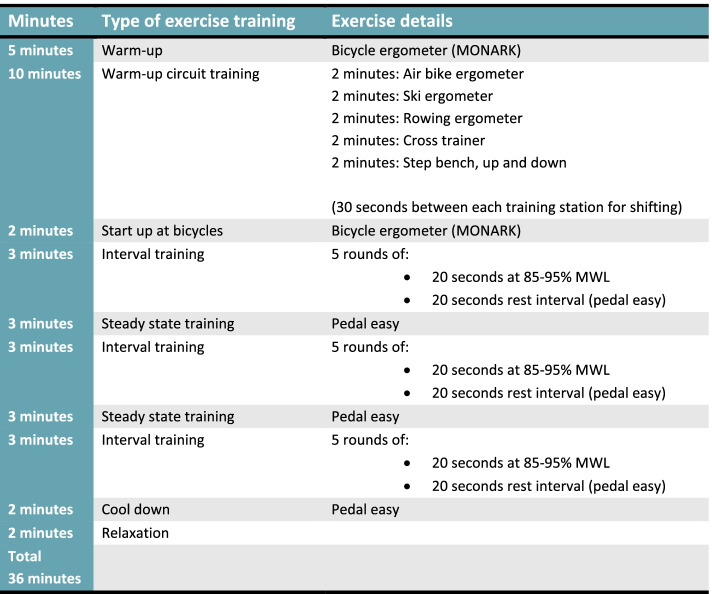
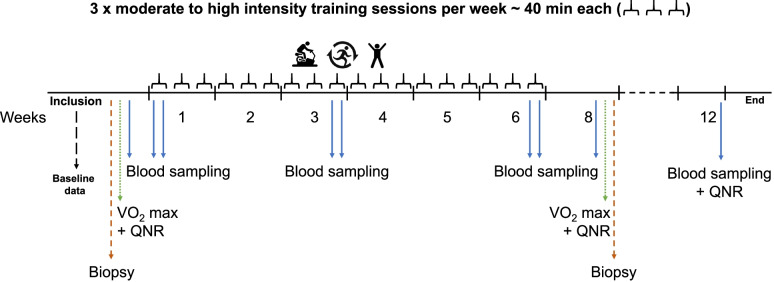
HI AIM (NCT04263467) is a randomized controlled trial (70 patients, 1:1) for patients with non-small cell lung cancer. Patients in the treatment arm, receive an exercise-intervention consisting of supervised and group-based exercise training, comprising primarily intermediate to high intensity interval training three times per week over 6 weeks. All patients will also receive standard oncological treatments; checkpoint inhibitors, checkpoint inhibitors combined with chemotherapy or oncological surveillance. Blood samples and biopsies (ultrasound guided), harvested before, during and after the 6-week training program, will form basis for immunological measurements of an array of immune cells and markers. Primary outcome is circulating NK cells. Secondary outcome is other circulating immune cells, infiltration of immune cells in tumor, inflammatory markers, aerobic capacity measured by VO max test, physical activity levels and quality of life measured by questionnaires, and clinical outcomes.
To our knowledge, HI AIM is the first project to combine supervised and monitored exercise in patients with lung cancer, with rigorous analyses of immune and cancer cell markers over the course of the trial. Data from the trial can potentially support exercise as a tool to mobilize cells of the immune system, which in turn could potentiate the effect of immunotherapy.
The study was prospectively registered at ClinicalTrials.gov on February 10 2020, ID: NCT04263467. https://clinicaltrials.gov/ct2/show/NCT04263467.
运动训练在癌症治疗中的作用不断增加,这是基于运动可以减少治疗副作用、改善身体机能和生活质量的证据。我们和其他人在小鼠肿瘤模型中已经表明,运动导致肾上腺素介导的 T 细胞和 NK 细胞涌入肿瘤,改变肿瘤微环境(TME),导致肿瘤生长减少。这些数据表明,运动可以通过增加免疫细胞浸润肿瘤来增强对癌细胞的免疫反应,并可能对疾病进展产生影响。此外,有数据表明,T 细胞和 NK 细胞浸润 TME 与患者对免疫检查点抑制剂的反应相关。因此,我们启动了 HI AIM 临床试验,以研究高强度运动是否可以动员和增加肺癌患者 TME 中的免疫细胞浸润。
HI AIM(NCT04263467)是一项针对非小细胞肺癌患者的随机对照试验(70 例患者,1:1)。治疗组患者接受包括监督和小组为基础的运动训练的运动干预,主要包括每周三次、中高强度间歇训练,共 6 周。所有患者还将接受标准肿瘤治疗;检查点抑制剂、检查点抑制剂联合化疗或肿瘤监测。在 6 周训练计划之前、期间和之后采集的血液样本和活检(超声引导)将作为一系列免疫细胞和标志物免疫测定的基础。主要结局是循环 NK 细胞。次要结局是其他循环免疫细胞、肿瘤浸润免疫细胞、炎症标志物、通过 VO max 测试测量的有氧能力、通过问卷测量的身体活动水平和生活质量以及临床结局。
据我们所知,HI AIM 是第一个将监督和监测的运动与肺癌患者结合起来的项目,对试验过程中的免疫和癌细胞标志物进行了严格的分析。该试验的数据可能支持运动作为动员免疫系统细胞的工具,这反过来又可能增强免疫疗法的效果。
该研究于 2020 年 2 月 10 日前瞻性地在 ClinicalTrials.gov 注册,编号为 NCT04263467。https://clinicaltrials.gov/ct2/show/NCT04263467。