Sorbonne Université, Paris, France.
Institut du Cerveau - Paris Brain Institute - ICM, Paris, France.
Alzheimers Res Ther. 2022 Mar 8;14(1):40. doi: 10.1186/s13195-022-00981-1.
Temporary disruption of the blood-brain barrier (BBB) using pulsed ultrasound leads to the clearance of both amyloid and tau from the brain, increased neurogenesis, and mitigation of cognitive decline in pre-clinical models of Alzheimer's disease (AD) while also increasing BBB penetration of therapeutic antibodies. The goal of this pilot clinical trial was to investigate the safety and efficacy of this approach in patients with mild AD using an implantable ultrasound device.
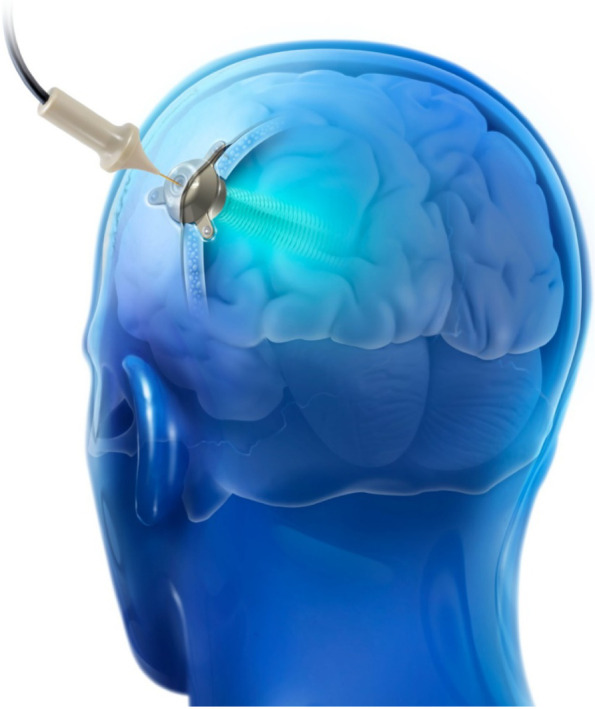
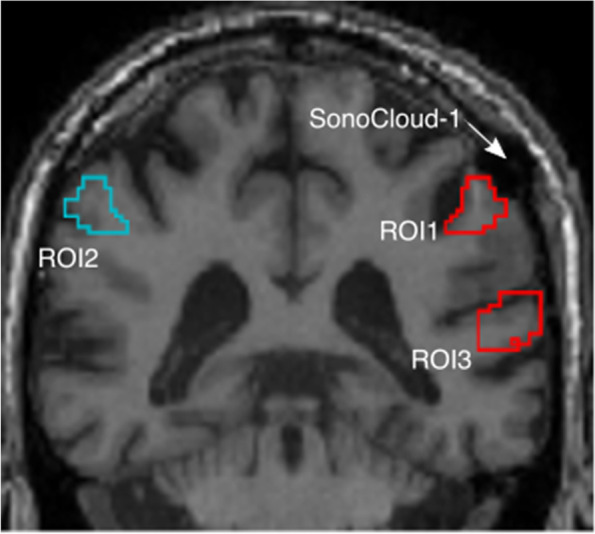
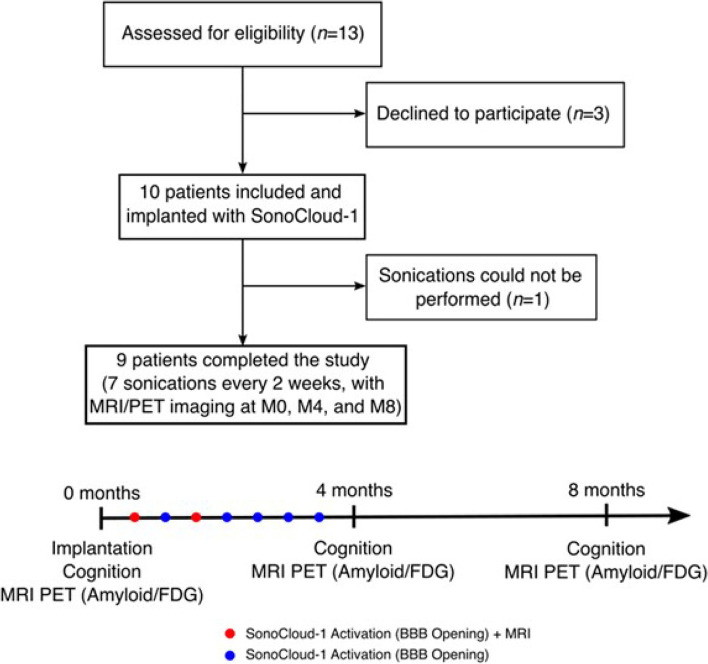
An implantable, 1-MHz ultrasound device (SonoCloud-1) was implanted under local anesthesia in the skull (extradural) of 10 mild AD patients to target the left supra-marginal gyrus. Over 3.5 months, seven ultrasound sessions in combination with intravenous infusion of microbubbles were performed twice per month to temporarily disrupt the BBB. F-florbetapir and F-fluorodeoxyglucose positron emission tomography (PET) imaging were performed on a combined PET/MRI scanner at inclusion and at 4 and 8 months after the initiation of sonications to monitor the brain metabolism and amyloid levels along with cognitive evaluations. The evolution of cognitive and neuroimaging features was compared to that of a matched sample of control participants taken from the Alzheimer's Disease Neuroimaging Initiative (ADNI).
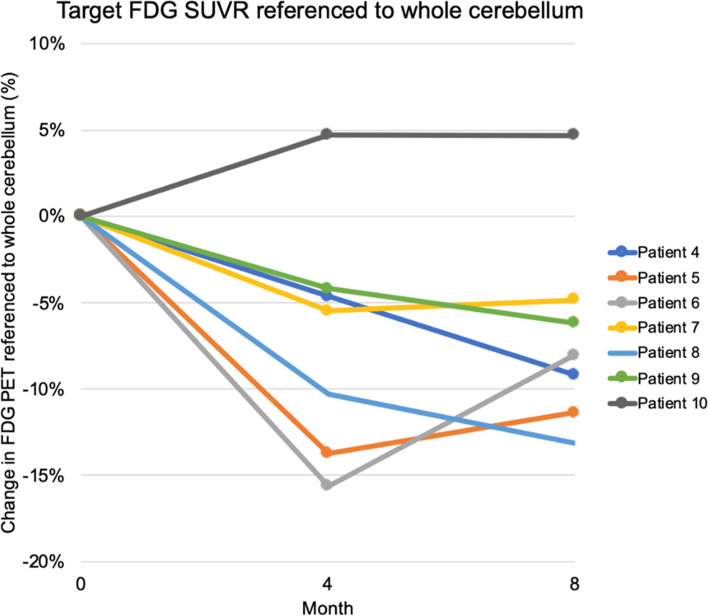
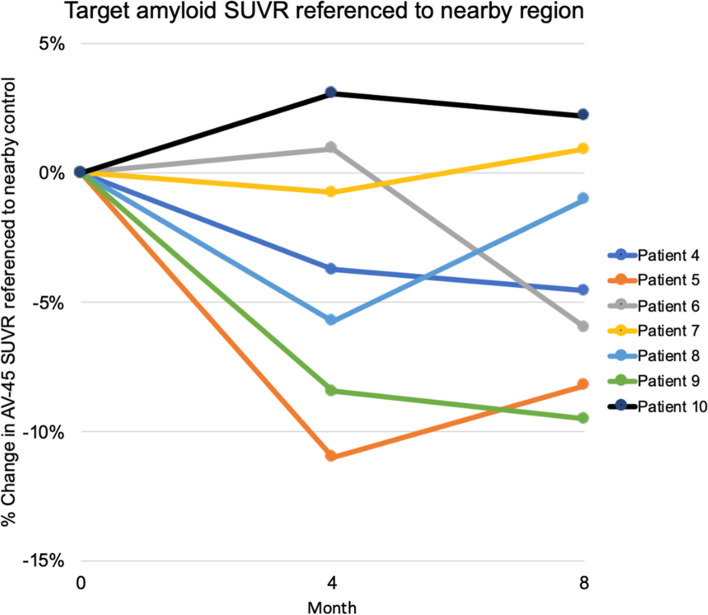
A total of 63 BBB opening procedures were performed in nine subjects. The procedure was well-tolerated. A non-significant decrease in amyloid accumulation at 4 months of - 6.6% (SD = 7.2%) on F-florbetapir PET imaging in the sonicated gray matter targeted by the ultrasound transducer was observed compared to baseline in six subjects that completed treatments and who had evaluable imaging scans. No differences in the longitudinal change in the glucose metabolism were observed compared to the neighboring or contralateral regions or to the change observed in the same region in ADNI participants. No significant effect on cognition evolution was observed in comparison with the ADNI participants as expected due to the small sample size and duration of the trial.
These results demonstrate the safety of ultrasound-based BBB disruption and the potential of this technology to be used as a therapy for AD patients. Research of this technique in a larger clinical trial with a device designed to sonicate larger volumes of tissue and in combination with disease-modifying drugs may further enhance the effects observed.
ClinicalTrials.gov, NCT03119961.
使用脉冲超声暂时破坏血脑屏障(BBB)可导致脑内淀粉样蛋白和 tau 的清除、神经发生增加以及在阿尔茨海默病(AD)的临床前模型中认知能力下降得到缓解,同时也增加了治疗性抗体对 BBB 的穿透性。这项初步临床试验的目的是使用可植入超声设备在轻度 AD 患者中研究这种方法的安全性和有效性。
在 10 名轻度 AD 患者的颅骨(硬膜外)下植入可植入的 1MHz 超声设备(SonoCloud-1),以靶向左侧额上回。在 3.5 个月内,每月进行两次共 7 次超声治疗联合静脉输注微泡,以暂时破坏 BBB。在开始超声治疗前和 4 个月及 8 个月时,在 PET/MRI 扫描仪上进行 F-氟比他哌和 F-氟脱氧葡萄糖正电子发射断层扫描(PET)成像,以监测大脑代谢和淀粉样蛋白水平以及认知评估。将认知和神经影像学特征的演变与来自阿尔茨海默病神经影像学倡议(ADNI)的匹配对照组进行比较。
在 9 名受试者中总共进行了 63 次 BBB 开放手术。该过程耐受性良好。与基线相比,在完成治疗且可评估影像学扫描的 6 名受试者中,在超声换能器靶向的靶向灰质中的 F-氟比他哌 PET 成像上观察到淀粉样蛋白积累减少了 6.6%(标准差=7.2%)。与相邻或对侧区域或与 ADNI 参与者在同一区域观察到的变化相比,葡萄糖代谢的纵向变化无差异。与 ADNI 参与者相比,由于样本量小和试验持续时间短,未观察到认知演变的显著影响。
这些结果证明了基于超声的 BBB 破坏的安全性,以及该技术作为 AD 患者治疗方法的潜力。在更大的临床试验中,使用旨在对更大体积的组织进行超声治疗的设备,并结合疾病修饰药物进行该技术的研究,可能会进一步增强观察到的效果。
ClinicalTrials.gov,NCT03119961。