MacKellar Duncan, Hlophe Thabo, Ujamaa Dawud, Pals Sherri, Dlamini Makhosazana, Dube Lenhle, Suraratdecha Chutima, Williams Daniel, Byrd Johnita, Tobias James, Mndzebele Phumzile, Behel Stephanie, Pathmanathan Ishani, Mazibuko Sikhathele, Tilahun Endale, Ryan Caroline
Division of Global HIV and TB, Center for Global Health, U.S. Centers for Disease Control and Prevention, Atlanta, GA, USA.
Eswatini Ministry of Health, Mbabane, Eswatini.
Arch Public Health. 2022 Mar 9;80(1):74. doi: 10.1186/s13690-022-00810-9.
Persons living with HIV infection (PLHIV) who are diagnosed in community settings in sub-Saharan Africa are particularly vulnerable to barriers to care that prevent or delay many from obtaining antiretroviral therapy (ART).
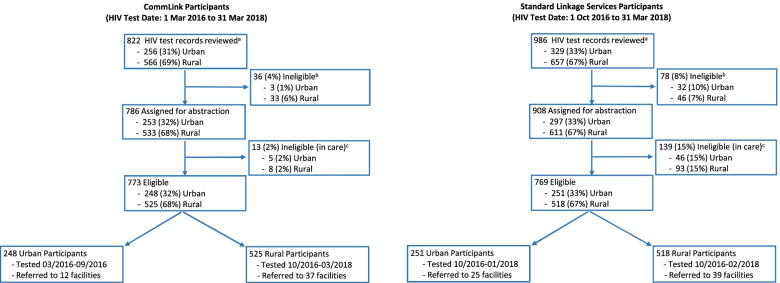
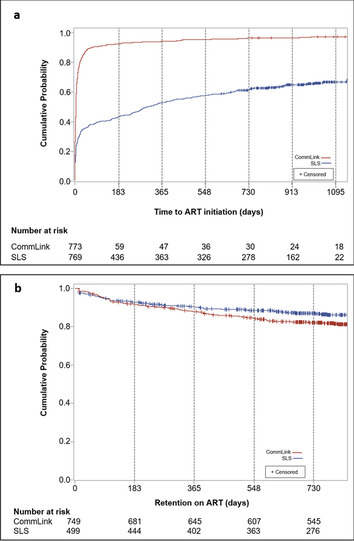
We conducted a retrospective cohort study to assess if a package of peer-delivered linkage case management and treatment navigation services (CommLink) was more effective than peer-delivered counseling, referral, and telephone follow-up (standard linkage services, SLS) in initiating and retaining PLHIV on ART after diagnosis in community settings in Eswatini. HIV-test records of 773 CommLink and 769 SLS clients aged ≥ 15 years diagnosed between March 2016 and March 2018, matched by urban and rural settings of diagnosis, were selected for the study. CommLink counselors recorded resolved and unresolved barriers to care (e.g., perceived wellbeing, fear of partner response, stigmatization) during a median of 52 days (interquartile range: 35-69) of case management.
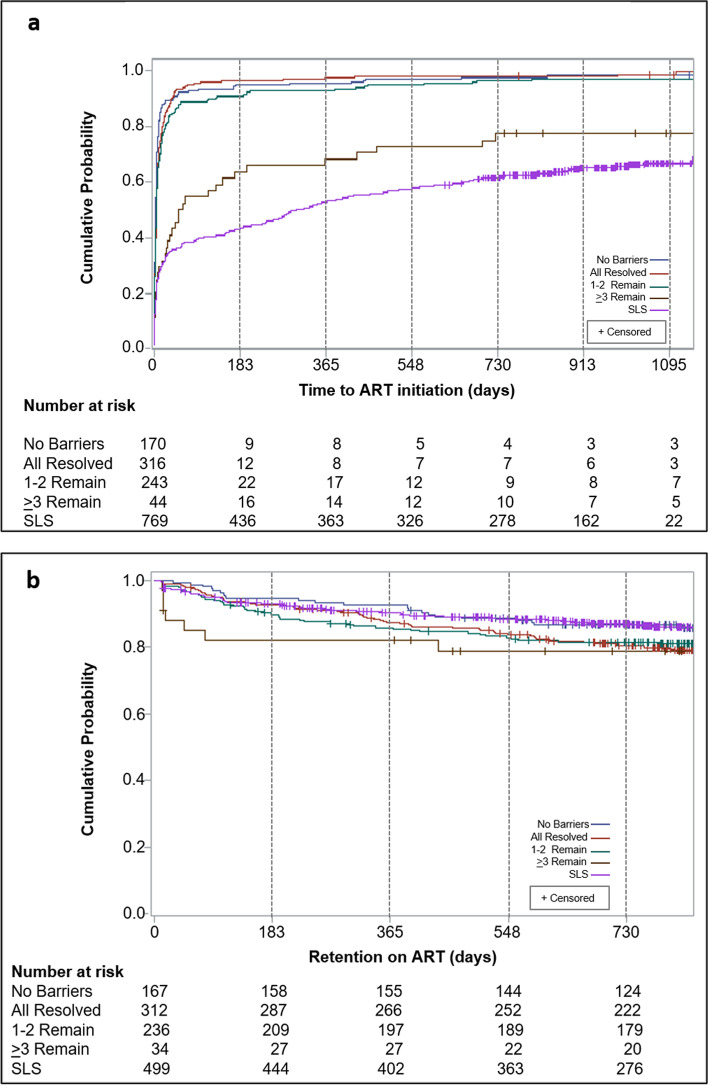
Twice as many CommLink than SLS clients initiated ART by 90 days of diagnosis overall (88.4% vs. 37.9%, adjusted relative risk (aRR): 2.33, 95% confidence interval (CI): 1.97, 2.77) and during test and treat when all PLHIV were eligible for ART (96.2% vs. 37.1%, aRR: 2.59, 95% CI: 2.20, 3.04). By 18 months of diagnosis, 54% more CommLink than SLS clients were initiated and retained on ART (76.3% vs. 49.5%, aRR: 1.54, 95% CI: 1.33, 1.79). Peer counselors helped resolve 896 (65%) of 1372 identified barriers of CommLink clients. Compared with clients with ≥ 3 unresolved barriers to care, 42% (aRR: 1.42, 95% CI: 1.19, 1.68) more clients with 1-2 unresolved barriers, 44% (aRR: 1.44, 95% CI: 1.25, 1.66) more clients with all barriers resolved, and 54% (aRR: 1.54, 95% CI: 1.30, 1.81) more clients who had no identified barriers were initiated and retained on ART by 18 months of diagnosis.
To improve early ART initiation and retention among PLHIV diagnosed in community settings, HIV prevention programs should consider providing a package of peer-delivered linkage case management and treatment navigation services. Clients with multiple unresolved barriers to care measured as part of that package should be triaged for differentiated linkage and retention services.
在撒哈拉以南非洲社区环境中被诊断出感染艾滋病毒的人(PLHIV),特别容易受到阻碍治疗的因素影响,这些因素致使许多人无法获得抗逆转录病毒疗法(ART)或延迟治疗。
我们开展了一项回顾性队列研究,以评估一套由同伴提供的联系病例管理和治疗指导服务(CommLink),在斯威士兰社区环境中诊断出的PLHIV开始接受ART并坚持治疗方面,是否比同伴提供的咨询、转诊和电话随访(标准联系服务,SLS)更有效。选取了2016年3月至2018年3月期间诊断出的773名CommLink客户和769名年龄≥15岁的SLS客户的艾滋病毒检测记录,这些记录按城乡诊断环境进行匹配,用于该研究。CommLink顾问在为期52天(四分位间距:35 - 69天)的病例管理期间,记录了已解决和未解决的治疗阻碍因素(如感知到的健康状况、对伴侣反应的恐惧、污名化)。
总体而言,在诊断后90天内开始接受ART的CommLink客户数量是SLS客户的两倍(88.4%对37.9%,调整后相对风险(aRR):2.33,95%置信区间(CI):1.97,2.77);在所有PLHIV都有资格接受ART的检测即治疗期间,这一比例为96.2%对37.1%,aRR:2.59,95% CI:2.20,3.04。到诊断后18个月时,开始并坚持接受ART的CommLink客户比SLS客户多54%(76.3%对49.5%,aRR:1.54,95% CI:1.33,1.79)。同伴顾问帮助CommLink客户解决了1372个已识别阻碍因素中的896个(65%)。与存在≥3个未解决治疗阻碍因素的客户相比,存在1 - 2个未解决阻碍因素的客户开始并坚持接受ART的比例高出42%(aRR:1.42,95% CI:1.19,1.68),所有阻碍因素均已解决的客户高出44%(aRR:1.44,95% CI:1.25,1.66),没有已识别阻碍因素的客户高出54%(aRR:1.54,95% CI:1.30,1.81),均在诊断后18个月时。
为改善在社区环境中诊断出的PLHIV的早期ART启动和坚持治疗情况,艾滋病毒预防项目应考虑提供一套由同伴提供的联系病例管理和治疗指导服务。作为该服务一部分所衡量的存在多个未解决治疗阻碍因素的客户,应进行分类以便提供差异化的联系和坚持治疗服务。