School of Life Sciences, IDG/McGovern Institute for Brain Research, Tsinghua University, Beijing 100084, China.
Tsinghua-Peking Center for Life Sciences, Beijing 100084, China.
Sci Adv. 2022 Mar 11;8(10):eabl6121. doi: 10.1126/sciadv.abl6121. Epub 2022 Mar 9.
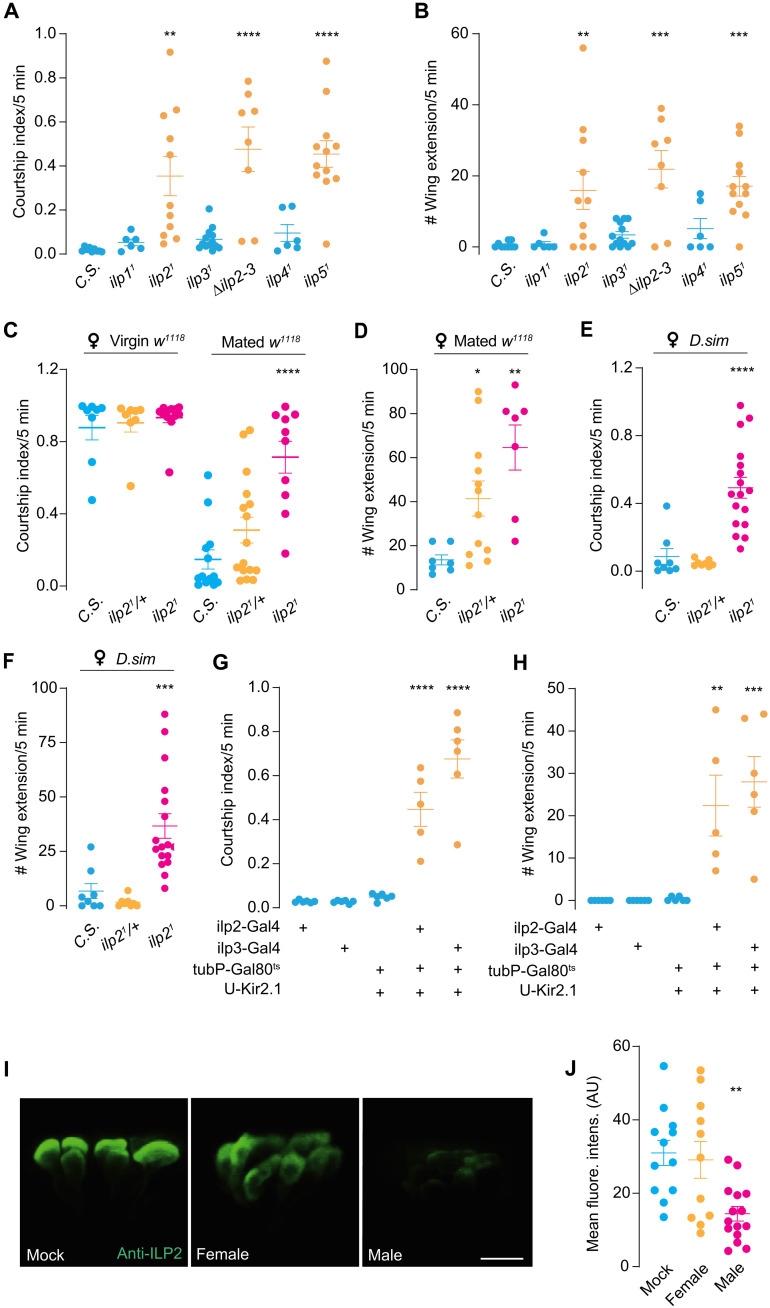
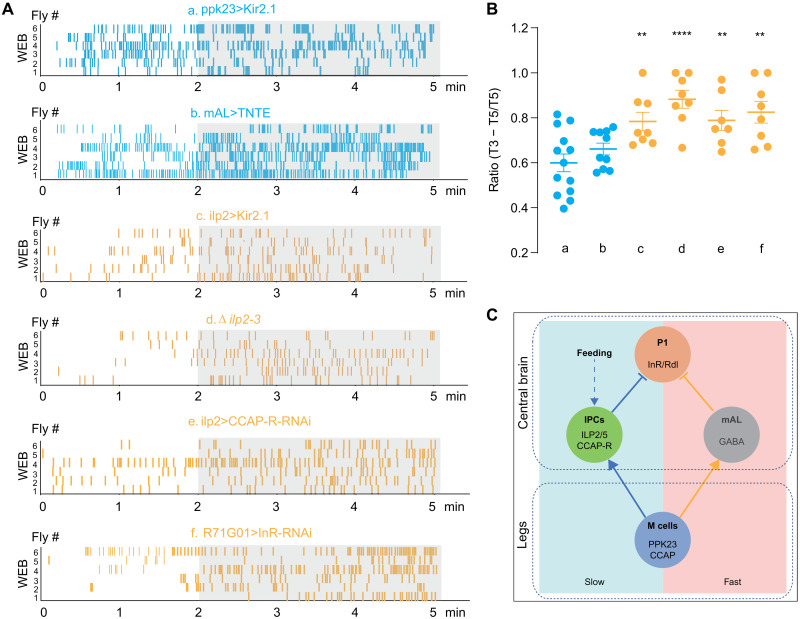
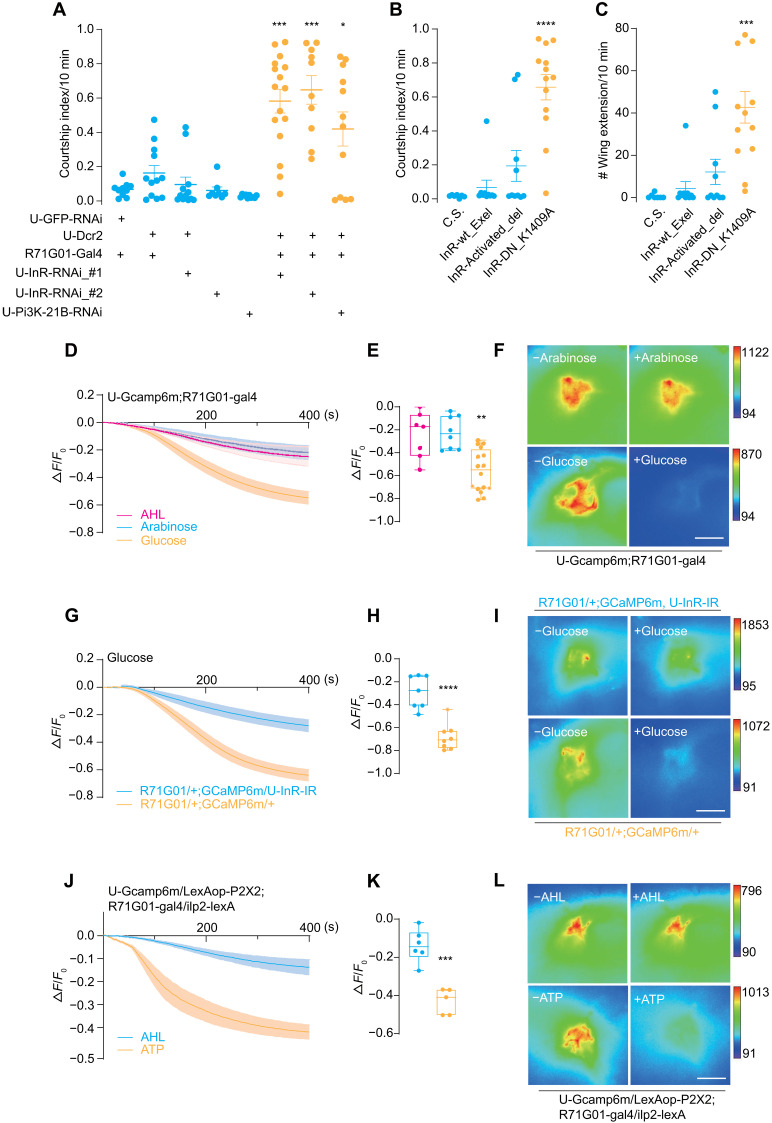
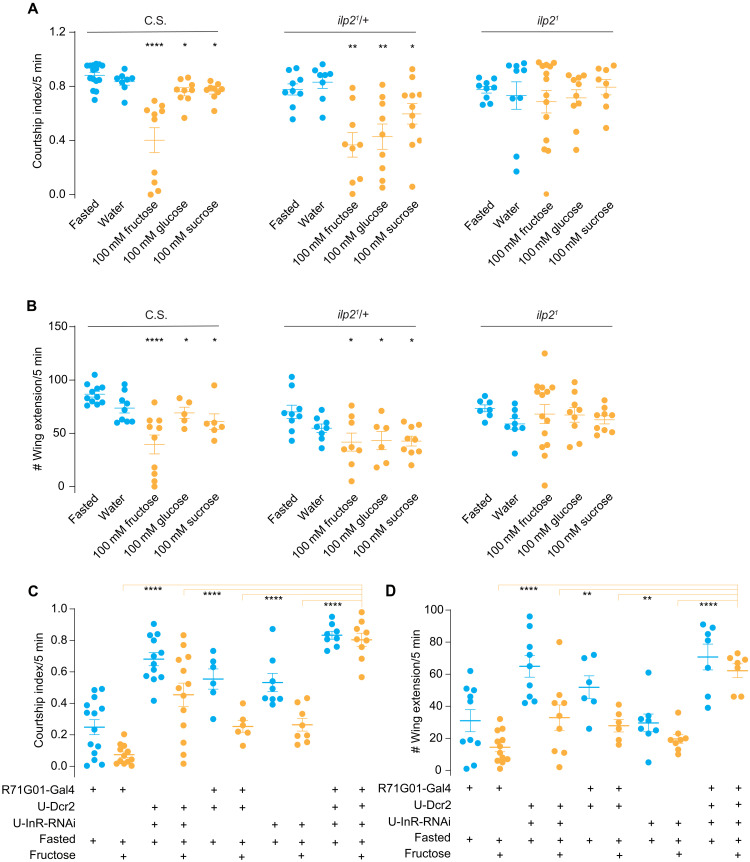
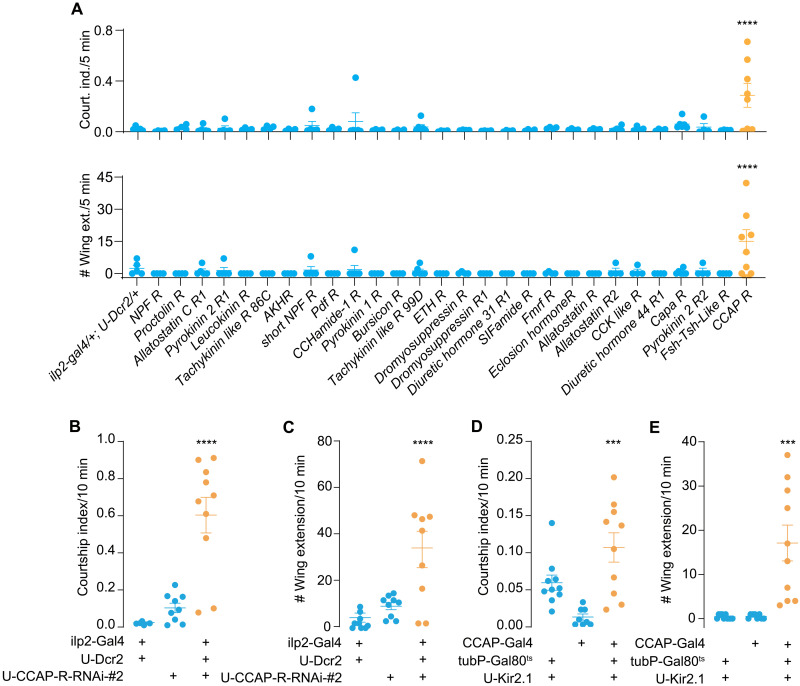
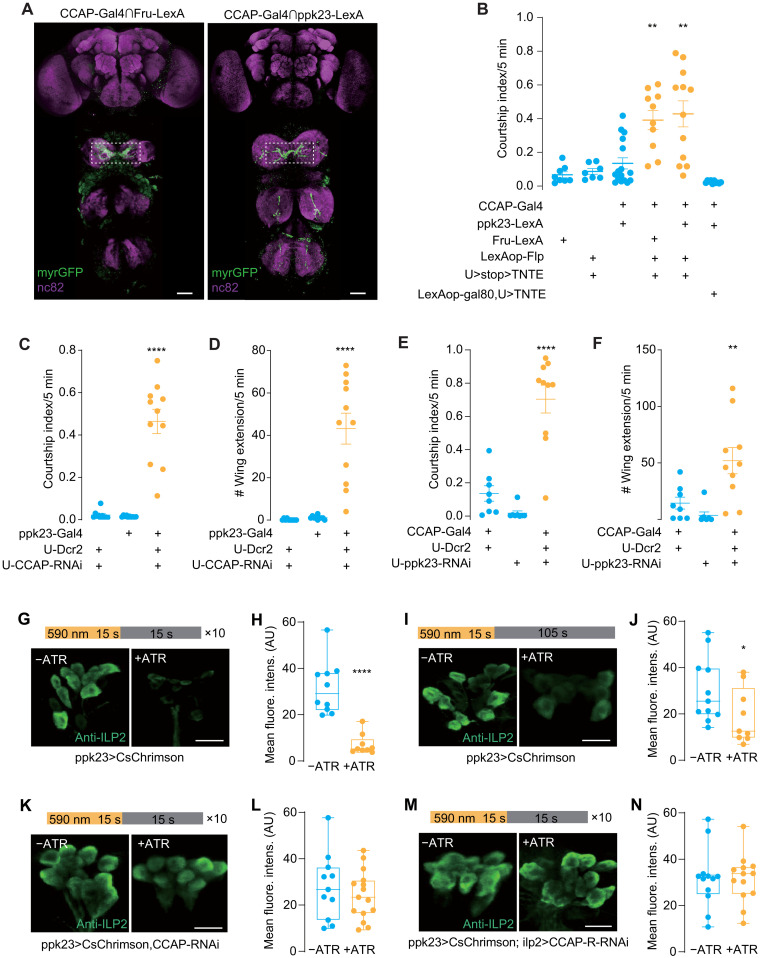
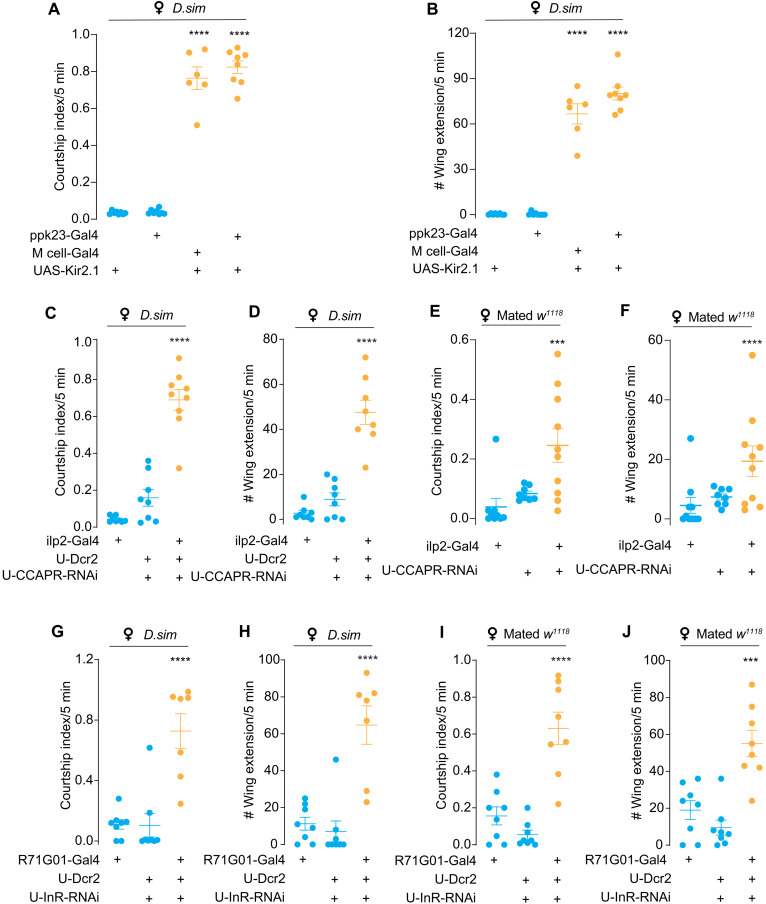
Food and reproduction are the fundamental needs for all animals. However, the neural mechanisms that orchestrate nutrient intake and sexual behaviors are not well understood. Here, we find that sugar feeding immediately suppresses sexual drive of male , a regulation mediated by insulin that acts on insulin receptors on the courtship-promoting P1 neurons. The same pathway was co-opted by anaphrodisiac pheromones to suppress sexual hyperactivity to suboptimal mates. Activated by repulsive pheromones, male-specific PPK23 neurons on the leg tarsus release crustacean cardioactive peptide (CCAP) that acts on CCAP receptor on the insulin-producing cells in the brain to trigger insulin release, which then inhibits P1 neurons. Our results reveal how male flies avoid promiscuity by balancing the weight between aphrodisiac and anaphrodisiac inputs from multiple peripheral sensory pathways and nutritional states. Such a regulation enables male animals to make an appropriate mating decision under fluctuating feeding conditions.
食物和繁殖是所有动物的基本需求。然而,协调营养摄入和性行为的神经机制尚不清楚。在这里,我们发现糖的摄入立即抑制了雄性的求爱欲望,这种调节是由胰岛素介导的,作用于求爱促进的 P1 神经元上的胰岛素受体。同样的途径被性抑制信息素用来抑制对次优配偶的过度性行为。由排斥性信息素激活的跗节上的雄性特异性 PPK23 神经元释放甲壳动物心脏活性肽 (CCAP),作用于脑内产生胰岛素的细胞上的 CCAP 受体,触发胰岛素释放,从而抑制 P1 神经元。我们的结果揭示了雄性苍蝇如何通过平衡来自多个外围感觉途径和营养状态的性刺激和性抑制输入之间的权重来避免滥交。这种调节使雄性动物能够在不断变化的进食条件下做出适当的交配决定。