Department of Biological Sciences, Florida Atlantic University, Jupiter, Florida, United States of America.
Wilkes Honors College, Florida Atlantic University, Jupiter, Florida, United States of America.
PLoS Genet. 2020 Mar 11;16(3):e1008270. doi: 10.1371/journal.pgen.1008270. eCollection 2020 Mar.
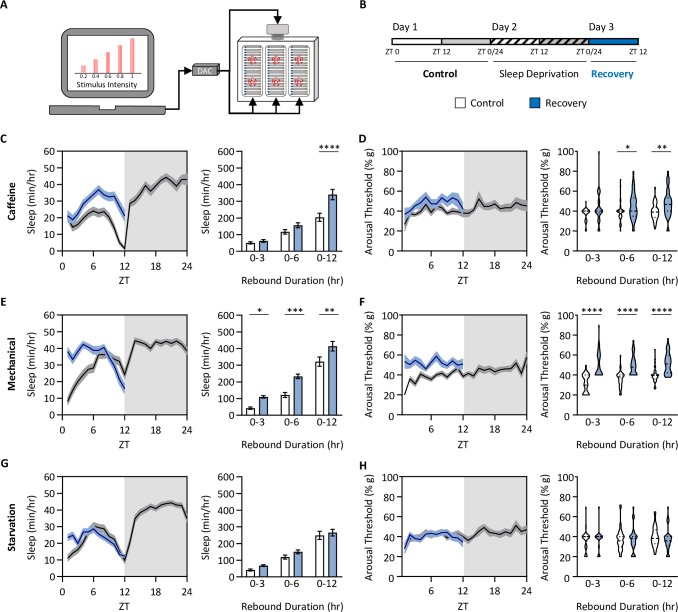
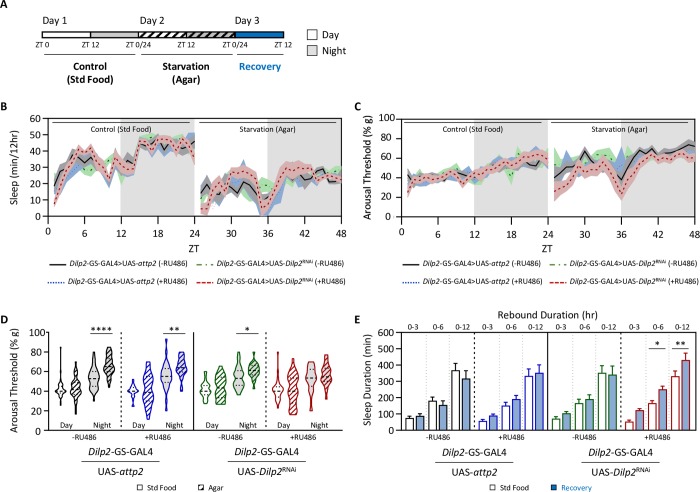
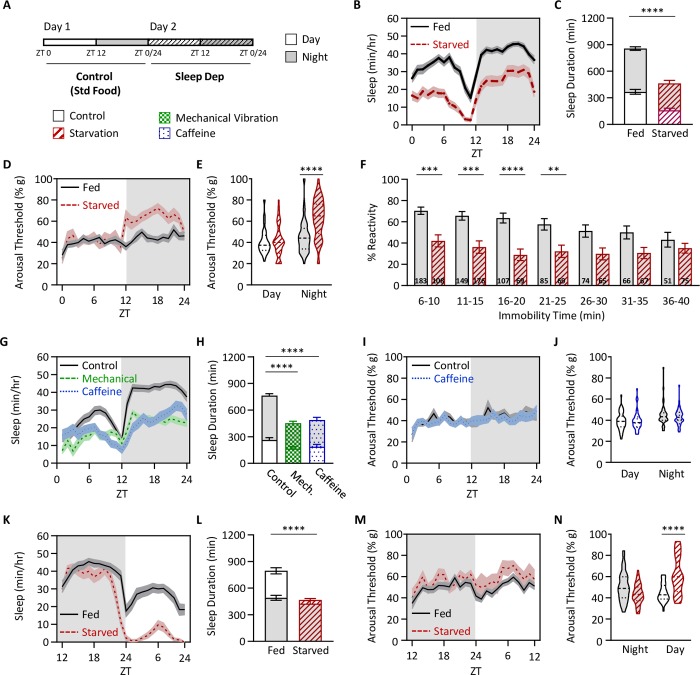
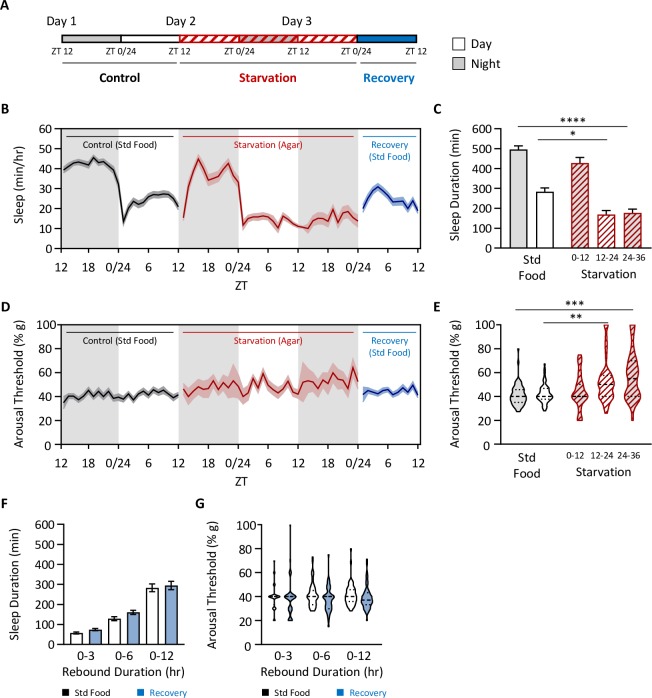
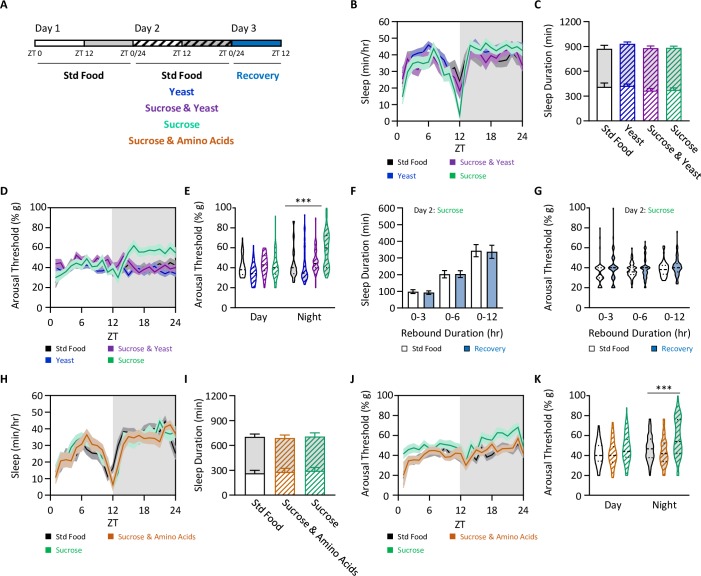
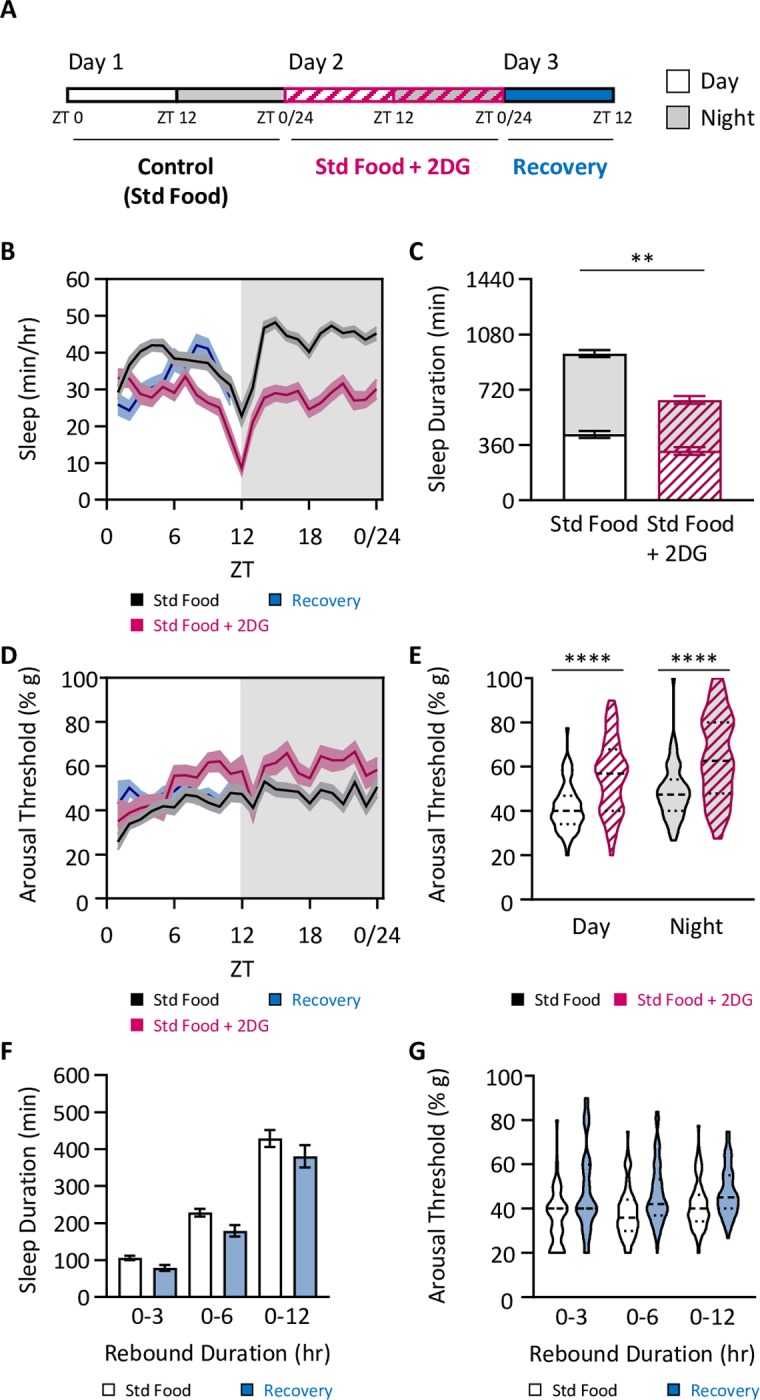
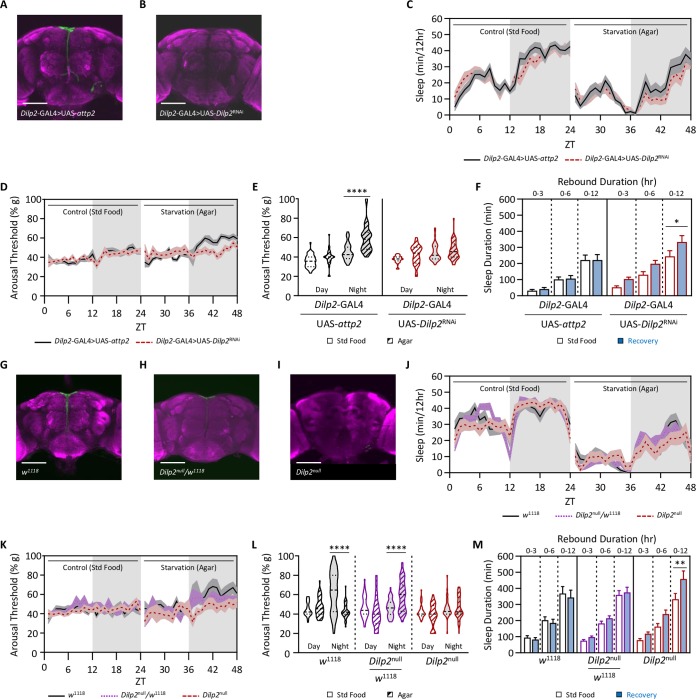
Sleep is a nearly universal behavior that is regulated by diverse environmental stimuli and physiological states. A defining feature of sleep is a homeostatic rebound following deprivation, where animals compensate for lost sleep by increasing sleep duration and/or sleep depth. The fruit fly, Drosophila melanogaster, exhibits robust recovery sleep following deprivation and represents a powerful model to study neural circuits regulating sleep homeostasis. Numerous neuronal populations have been identified in modulating sleep homeostasis as well as depth, raising the possibility that the duration and quality of recovery sleep is dependent on the environmental or physiological processes that induce sleep deprivation. Here, we find that unlike most pharmacological and environmental manipulations commonly used to restrict sleep, starvation potently induces sleep loss without a subsequent rebound in sleep duration or depth. Both starvation and a sucrose-only diet result in increased sleep depth, suggesting that dietary protein is essential for normal sleep depth and homeostasis. Finally, we find that Drosophila insulin like peptide 2 (Dilp2) is acutely required for starvation-induced changes in sleep depth without regulating the duration of sleep. Flies lacking Dilp2 exhibit a compensatory sleep rebound following starvation-induced sleep deprivation, suggesting Dilp2 promotes resiliency to sleep loss. Together, these findings reveal innate resilience to starvation-induced sleep loss and identify distinct mechanisms that underlie starvation-induced changes in sleep duration and depth.
睡眠是一种几乎普遍存在的行为,受多种环境刺激和生理状态调节。睡眠的一个定义特征是剥夺后的同型反弹,动物通过增加睡眠时间和/或睡眠深度来补偿失去的睡眠。黑腹果蝇(Drosophila melanogaster)在剥夺后表现出强大的恢复性睡眠,是研究调节睡眠同型性的神经回路的有力模型。大量神经元群体已被确定在调节睡眠同型性以及深度方面发挥作用,这增加了恢复性睡眠的持续时间和质量可能取决于诱导睡眠剥夺的环境或生理过程。在这里,我们发现与大多数常用的限制睡眠的药理学和环境操作不同,饥饿强烈地诱导睡眠缺失,而不会随后导致睡眠时间或深度的反弹。饥饿和仅蔗糖饮食都会导致睡眠深度增加,这表明饮食蛋白对于正常的睡眠深度和同型性是必需的。最后,我们发现果蝇胰岛素样肽 2(Dilp2)在饥饿诱导的睡眠深度变化中急性需要,而不调节睡眠时间。缺乏 Dilp2 的果蝇在饥饿诱导的睡眠剥夺后表现出补偿性的睡眠反弹,表明 Dilp2 促进了对睡眠缺失的弹性。总之,这些发现揭示了对饥饿诱导的睡眠缺失的内在弹性,并确定了饥饿诱导的睡眠时间和深度变化的不同机制。