Leibniz Institute for Experimental Virology (HPI), 20251 Hamburg, Germany; Centre for Structural Systems Biology, 22607 Hamburg, Germany; Institute of Virology, Hannover Medical School, 30625 Hannover, Germany.
Leibniz Institute for Experimental Virology (HPI), 20251 Hamburg, Germany.
Cell Rep. 2022 Mar 8;38(10):110469. doi: 10.1016/j.celrep.2022.110469.
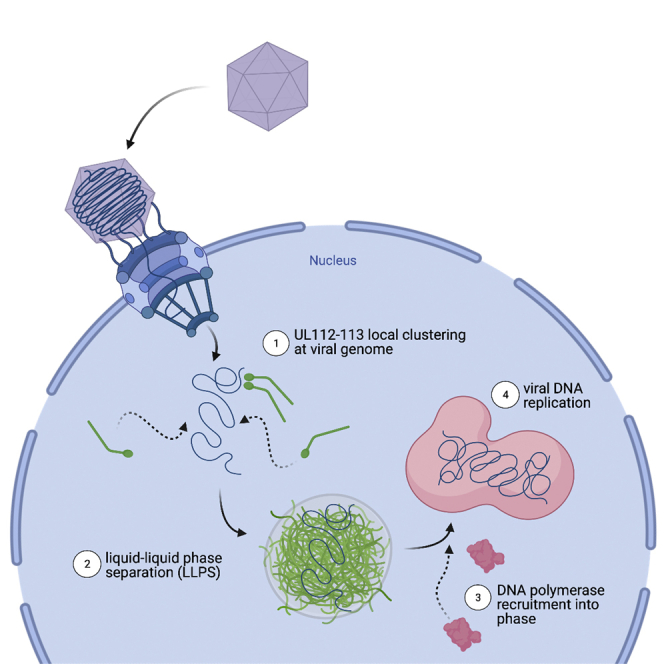
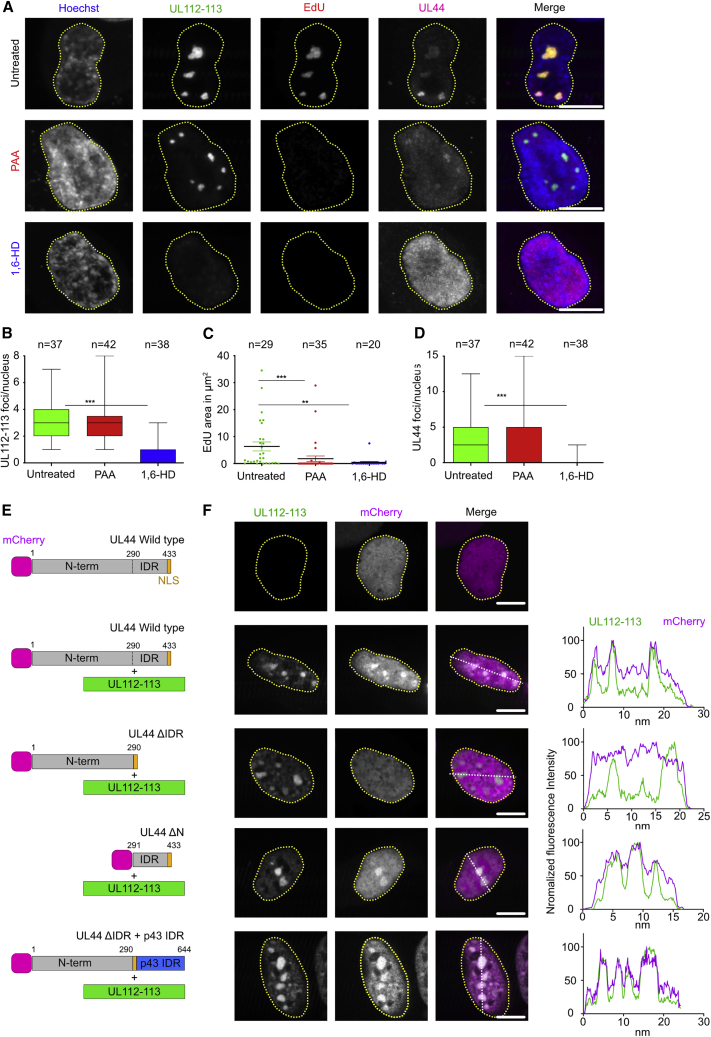
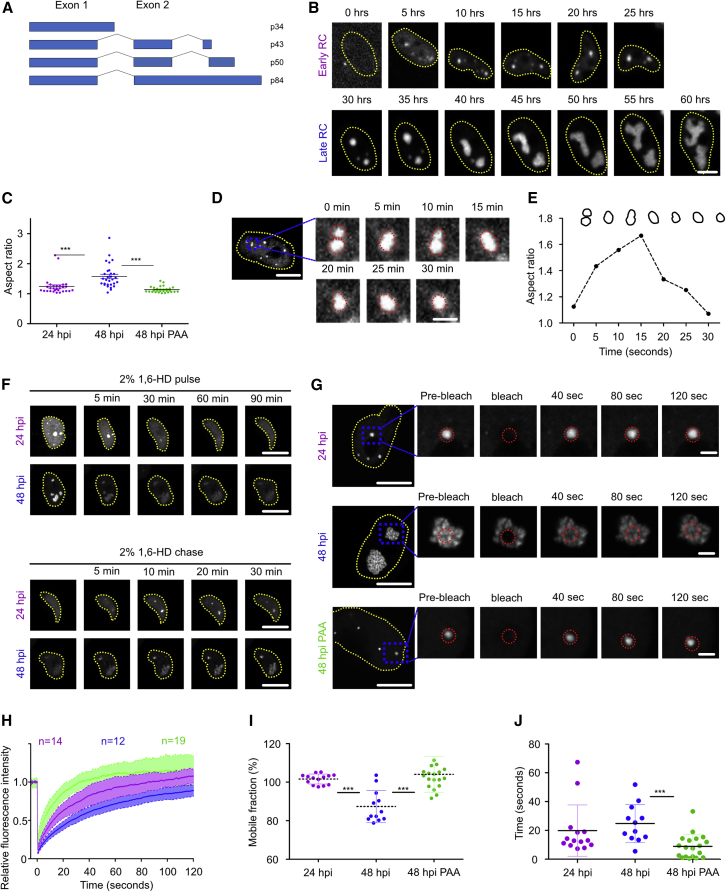
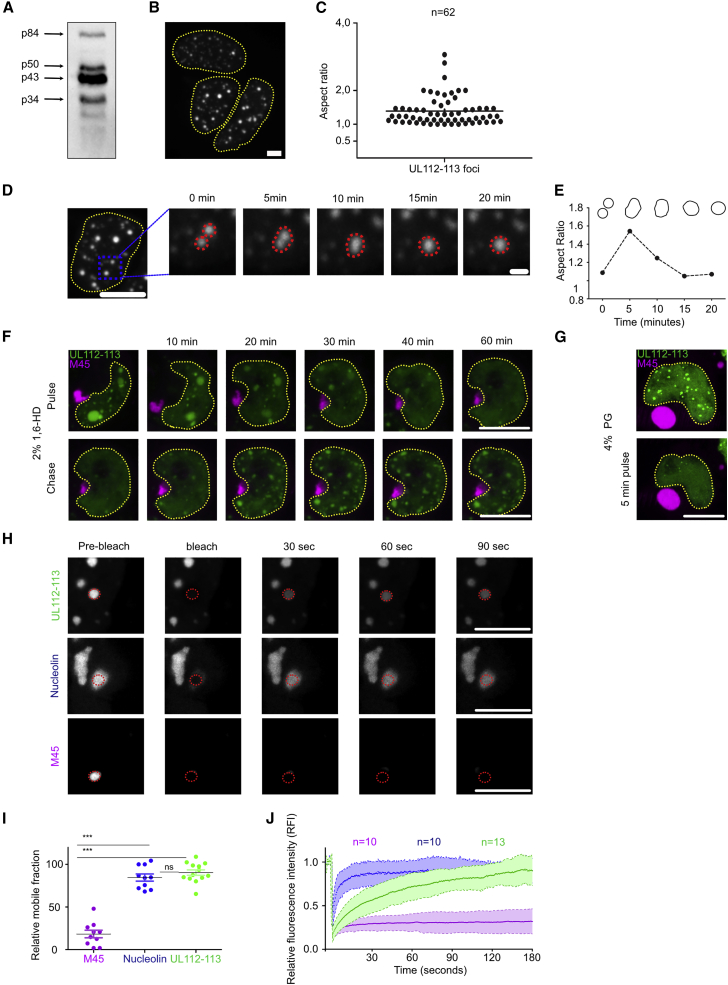
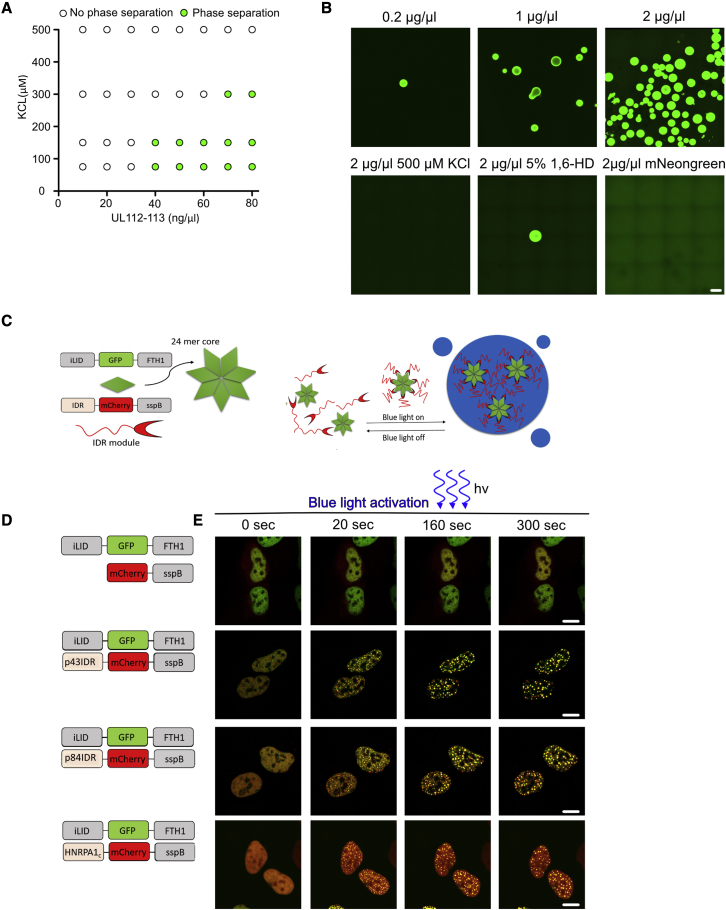
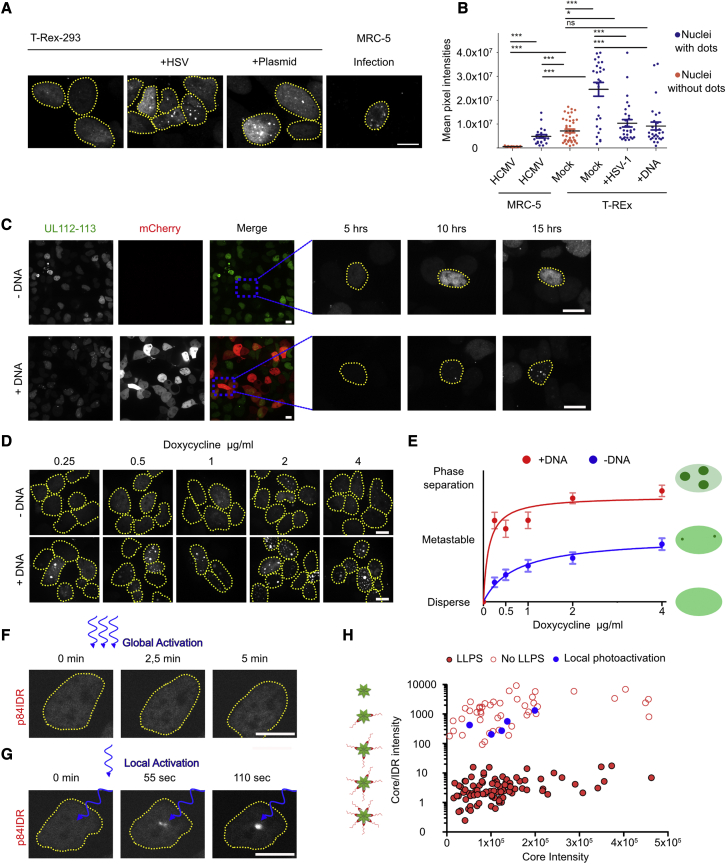
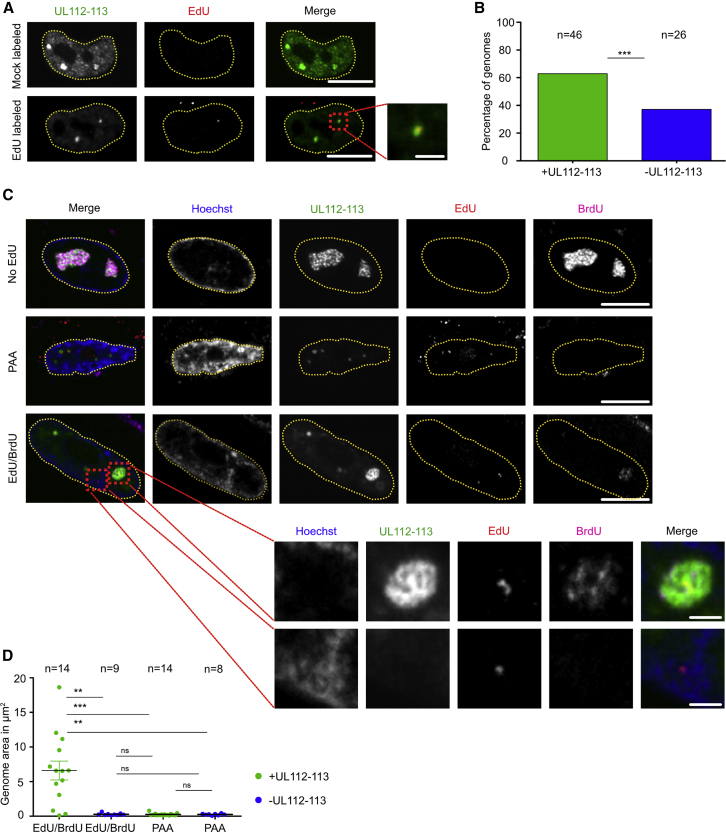
Human cytomegalovirus (HCMV) replicates its DNA genome in specialized replication compartments (RCs) in the host cell nucleus. These membrane-less organelles originate as spherical structures and grow in size over time. However, the mechanism of RC biogenesis has remained understudied. Using live-cell imaging and photo-oligomerization, we show that a central component of RCs, the UL112-113 proteins, undergo liquid-liquid phase separation (LLPS) to form RCs in the nucleus. We show that the self-interacting domain and large intrinsically disordered regions of UL112-113 are required for LLPS. Importantly, viral DNA induces local clustering of these proteins and lowers the threshold for phase separation. The formation of phase-separated compartments around viral genomes is necessary to recruit the viral DNA polymerase for viral genome replication. Thus, HCMV uses its UL112-113 proteins to generate RCs around viral genomes by LLPS to ensure the formation of a pro-replicative environment.
人类巨细胞病毒 (HCMV) 在宿主细胞核内的专门复制隔间 (RC) 中复制其 DNA 基因组。这些无膜细胞器最初是作为球形结构产生的,并随着时间的推移而增大。然而,RC 生物发生的机制仍未得到充分研究。使用活细胞成像和光寡聚化,我们表明 RC 的一个核心成分,UL112-113 蛋白,通过液-液相分离 (LLPS) 在核内形成 RC。我们表明 UL112-113 的自我相互作用结构域和大的无序结构域对于 LLPS 是必需的。重要的是,病毒 DNA 诱导这些蛋白质的局部聚集并降低相分离的阈值。在病毒基因组周围形成相分离的隔室对于招募病毒 DNA 聚合酶进行病毒基因组复制是必要的。因此,HCMV 通过 LLPS 在病毒基因组周围生成 RC,利用其 UL112-113 蛋白来确保形成有利于复制的环境。