D'Onofrio Valentino, Heylen Dries, Pusparum Murih, Grondman Inge, Vanwalleghem Johan, Meersman Agnes, Cartuyvels Reinoud, Messiaen Peter, Joosten Leo A B, Netea Mihai G, Valkenborg Dirk, Ertaylan Gökhan, Gyssens Inge C
Faculty of Medicine and Life Sciences, Hasselt University, Martelarenlaan 42, 3500, Hasselt, Belgium.
Department of Infectious Diseases and Immunity, Jessa Hospital, Hasselt, Belgium.
J Intensive Care. 2022 Mar 9;10(1):13. doi: 10.1186/s40560-022-00602-x.
Sepsis is a life-threatening organ dysfunction. A fast diagnosis is crucial for patient management. Proteins that are synthesized during the inflammatory response can be used as biomarkers, helping in a rapid clinical assessment or an early diagnosis of infection. The aim of this study was to identify biomarkers of inflammation for the diagnosis and prognosis of infection in patients with suspected sepsis.
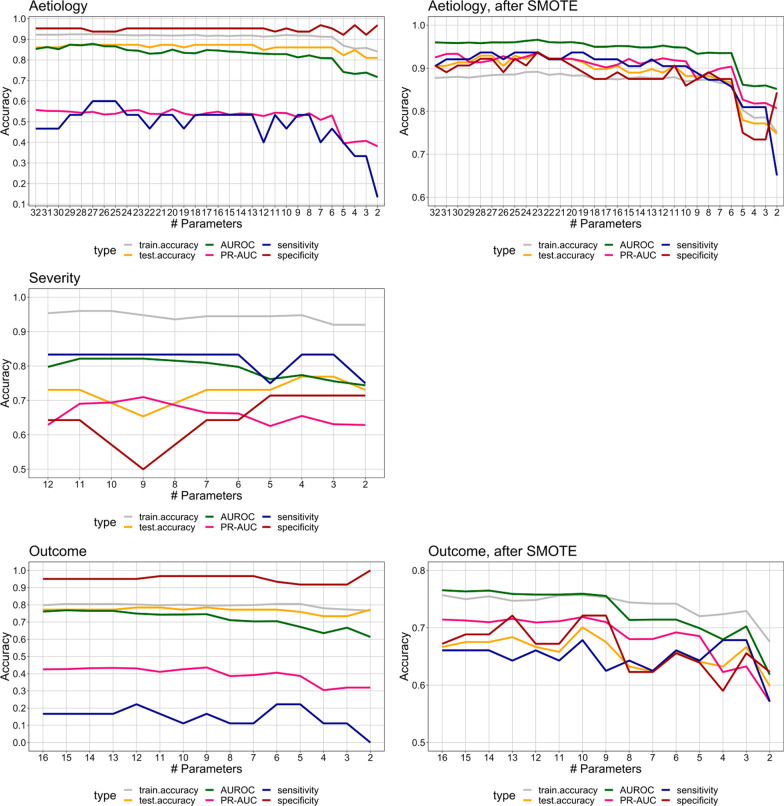
In total 406 episodes were included in a prospective cohort study. Plasma was collected from all patients with suspected sepsis, for whom blood cultures were drawn, in the emergency department (ED), the department of infectious diseases, or the haemodialysis unit on the first day of a new episode. Samples were analysed using a 92-plex proteomic panel based on a proximity extension assay with oligonucleotide-labelled antibody probe pairs (OLink, Uppsala, Sweden). Supervised and unsupervised differential expression analyses and pathway enrichment analyses were performed to search for inflammatory proteins that were different between patients with viral or bacterial sepsis and between patients with worse or less severe outcome.
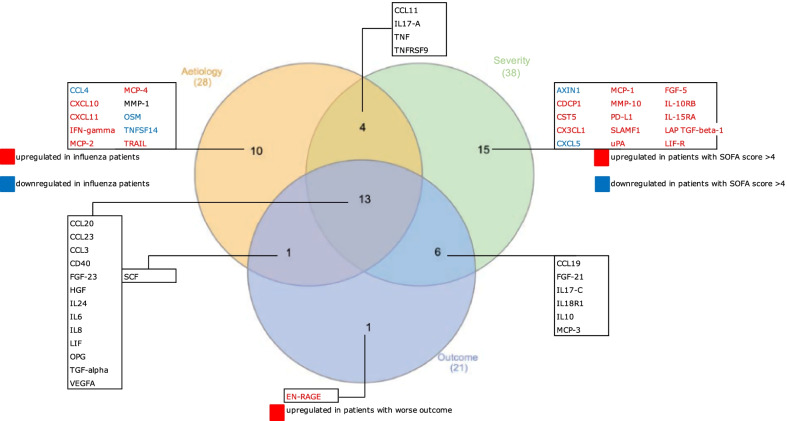
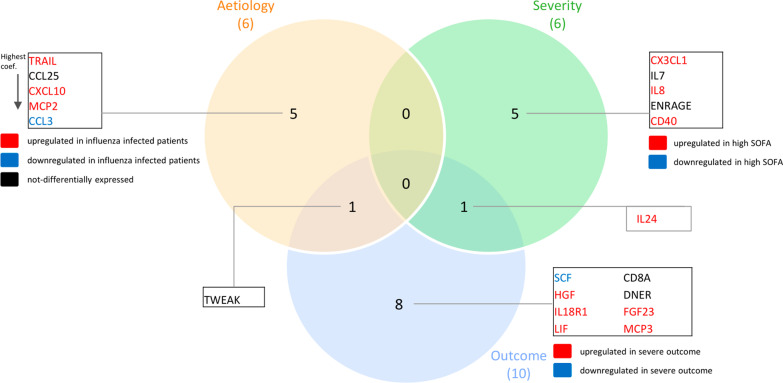
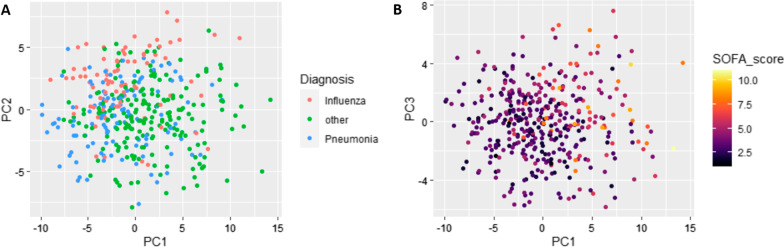
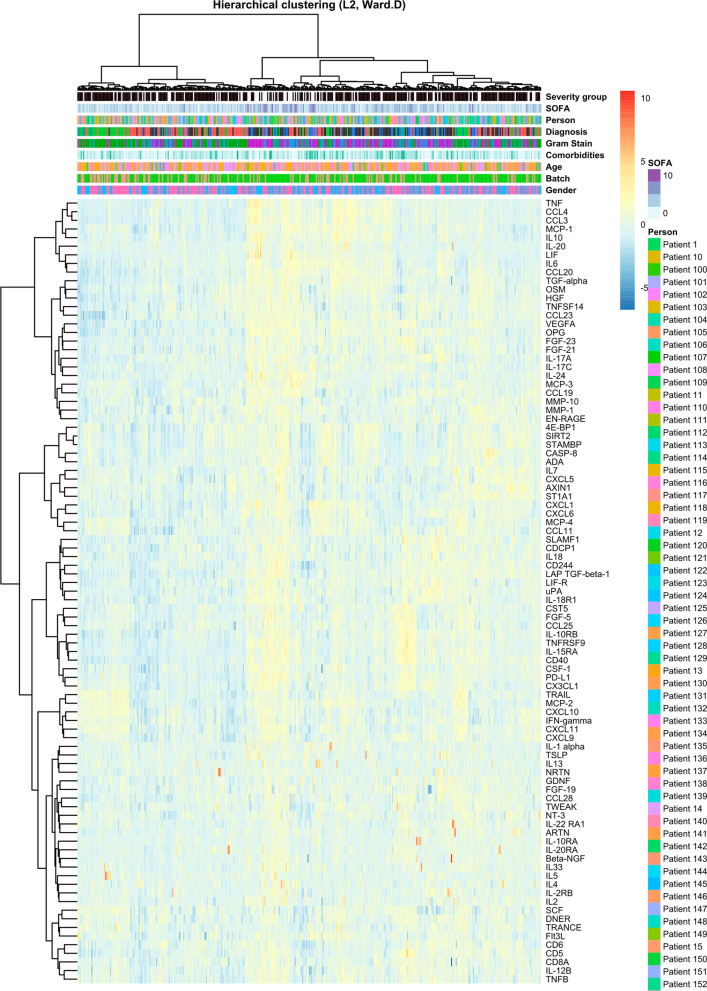
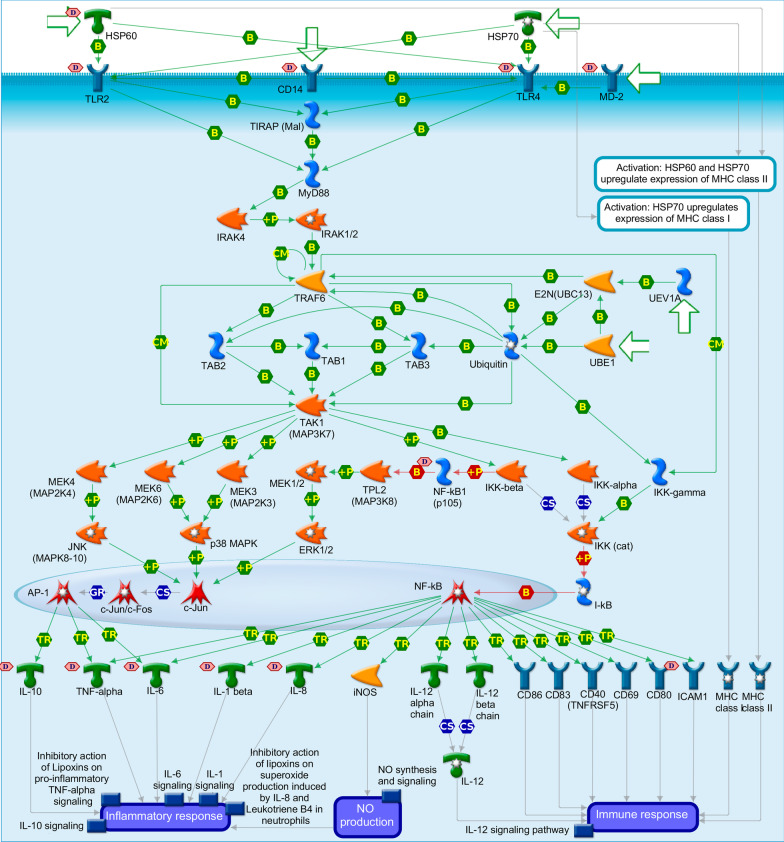
Supervised differential expression analysis revealed 21 proteins that were significantly lower in circulation of patients with viral infections compared to patients with bacterial infections. More strongly, higher expression levels were observed for 38 proteins in patients with high SOFA scores (> 4), and for 21 proteins in patients with worse outcome. These proteins are mostly involved in pathways known to be activated early in the inflammatory response. Unsupervised, hierarchical clustering confirmed that inflammatory response was more strongly related to disease severity than to aetiology.
Several differentially expressed inflammatory proteins were identified that could be used as biomarkers for sepsis. These proteins are mostly related to disease severity. Within the setting of an emergency department, they could be used for outcome prediction, patient monitoring, and directing diagnostics.
clinicaltrial.gov identifier NCT03841162.
脓毒症是一种危及生命的器官功能障碍。快速诊断对于患者管理至关重要。炎症反应期间合成的蛋白质可作为生物标志物,有助于快速临床评估或早期感染诊断。本研究的目的是确定疑似脓毒症患者感染诊断和预后的炎症生物标志物。
一项前瞻性队列研究共纳入406例病例。在新发病例的第一天,从急诊科、传染病科或血液透析科所有疑似脓毒症且进行了血培养的患者中采集血浆。使用基于寡核苷酸标记抗体探针组的邻位延伸分析的92重蛋白质组学检测板(瑞典乌普萨拉的Olink公司)对样本进行分析。进行了监督和非监督差异表达分析以及通路富集分析,以寻找病毒或细菌性脓毒症患者之间以及预后较差或较轻患者之间不同的炎症蛋白。
监督差异表达分析显示,与细菌感染患者相比,病毒感染患者循环中21种蛋白质显著降低。更明显的是,序贯器官衰竭评估(SOFA)评分高(>4)的患者中有38种蛋白质表达水平较高,预后较差的患者中有21种蛋白质表达水平较高。这些蛋白质大多参与已知在炎症反应早期被激活的通路。非监督层次聚类证实,炎症反应与疾病严重程度的相关性比与病因的相关性更强。
确定了几种差异表达的炎症蛋白,可作为脓毒症的生物标志物。这些蛋白质大多与疾病严重程度相关。在急诊科环境中,它们可用于预后预测、患者监测和指导诊断。
clinicaltrial.gov标识符NCT03841162。