Department of Gastroenterology and Hepatology, Leiden University Medical Center, Leiden, The Netherlands.
Department of Medical Oncology, Oncode Institute, Leiden University Medical Center, Leiden, The Netherlands.
J Immunother Cancer. 2022 Mar;10(3). doi: 10.1136/jitc-2021-003591.
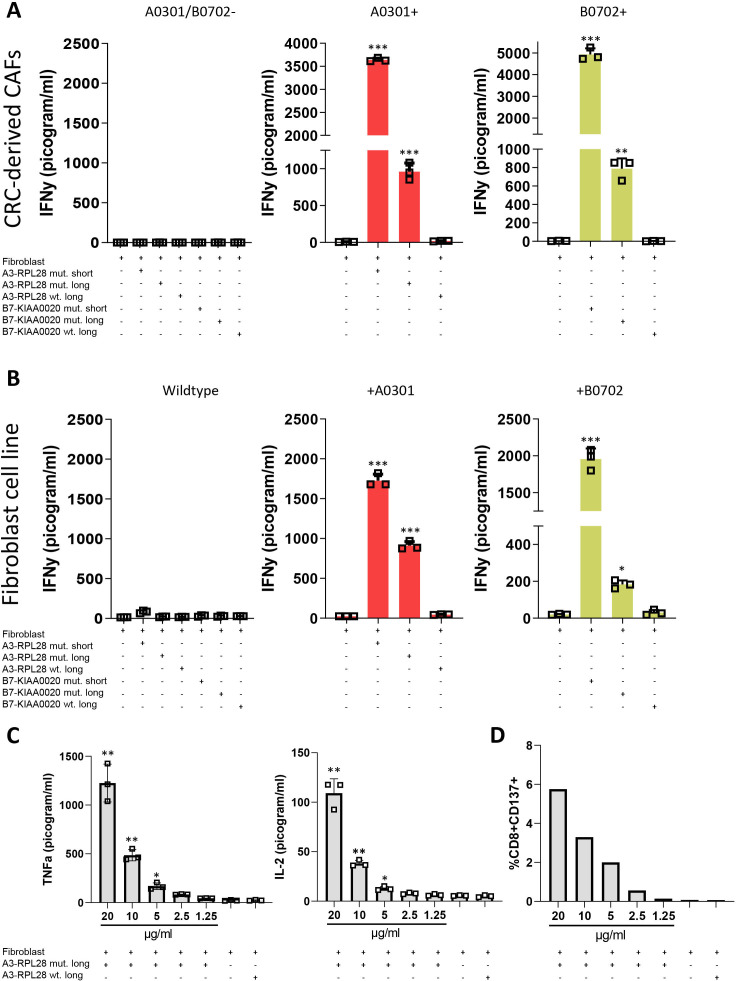
Cross-presentation of exogenous antigens in HLA-class I molecules by professional antigen presenting cells (APCs) is crucial for CD8+ T cell function. Recent murine studies show that several non-professional APCs, including cancer-associated fibroblasts (CAFs) also possess this capacity. Whether human CAFs are able to cross-present exogenous antigen, which molecular pathways are involved in this process and how this ultimately affects tumor-specific CD8+ T cell function is unknown.
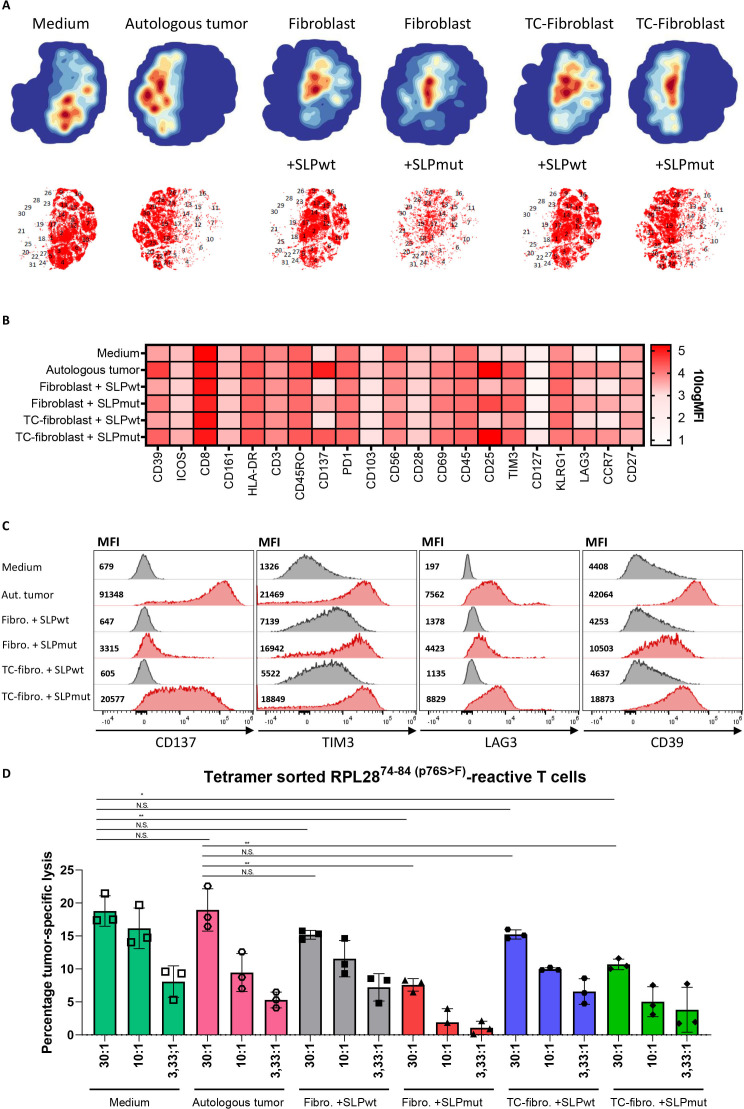
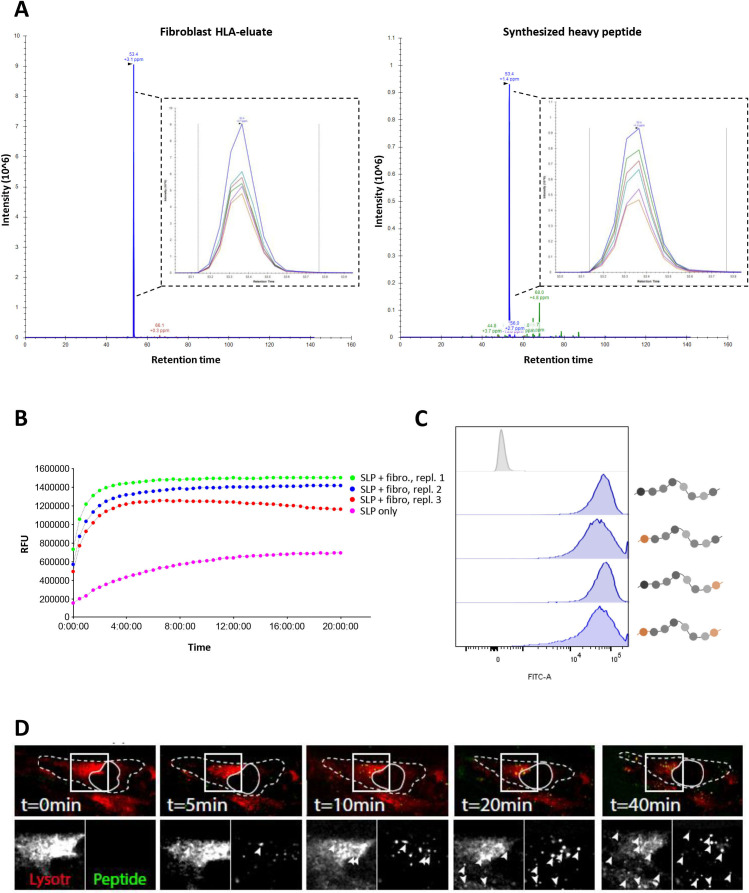
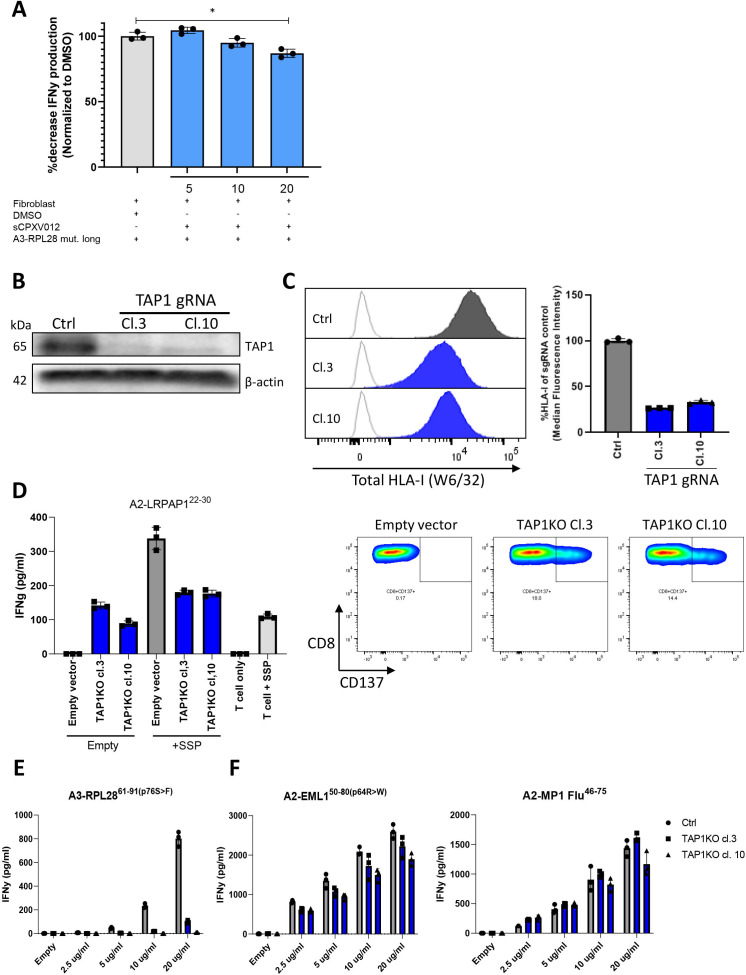
In this study, we investigated the ability of human colorectal cancer (CRC)-derived CAFs to cross-present neoantigen-derived synthetic long peptides (SLPs), corresponding to tumor-derived mutant peptides, and how this affects tumor-specific T-cell function. Processing of the SLP was studied by targeting components of the cross-presentation machinery through CRISPR/Cas9 and siRNA-mediated genetic ablation to identify the key molecules involved in fibroblast-mediated cross-presentation. Multispectral flow cytometry and killing assays were performed to study the effect of fibroblast cross-presentation on T cell function.
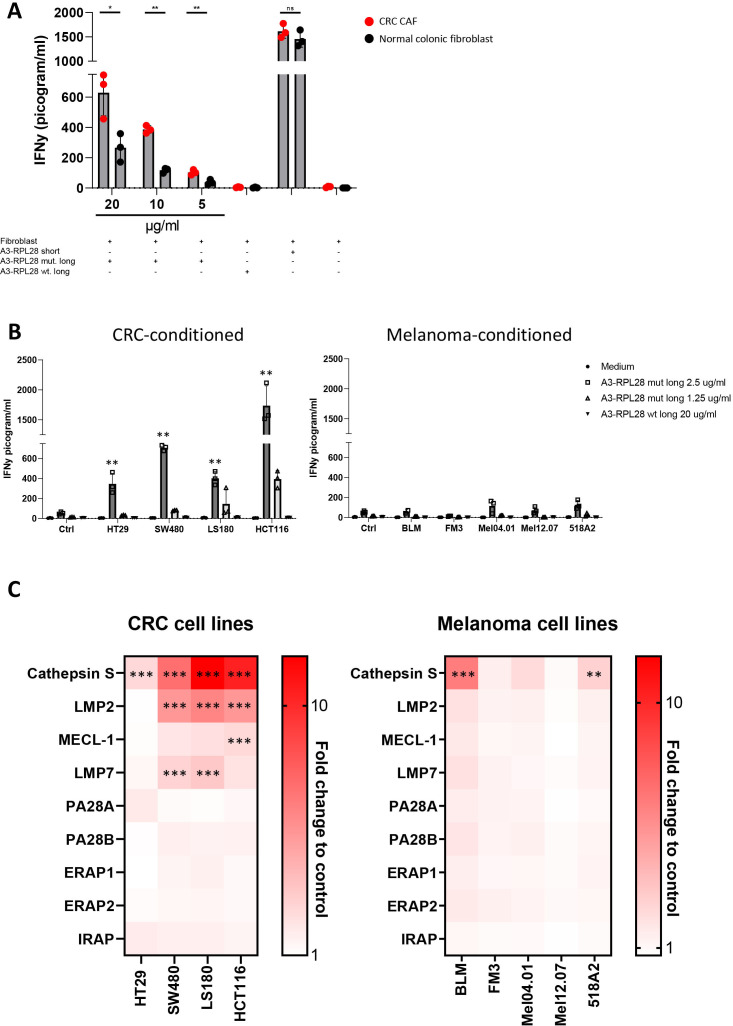
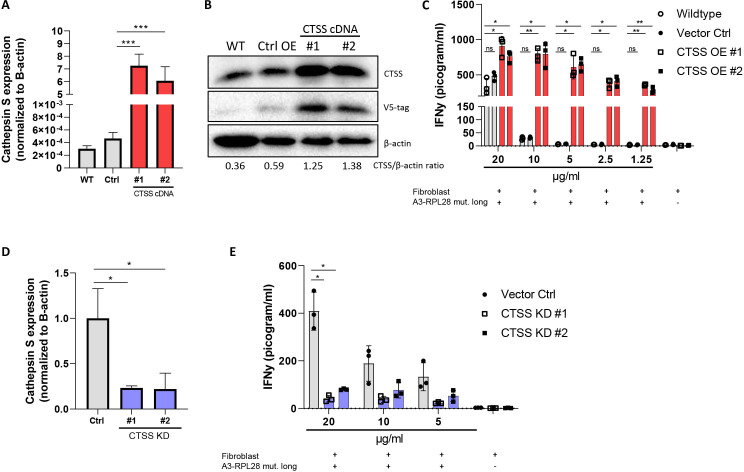
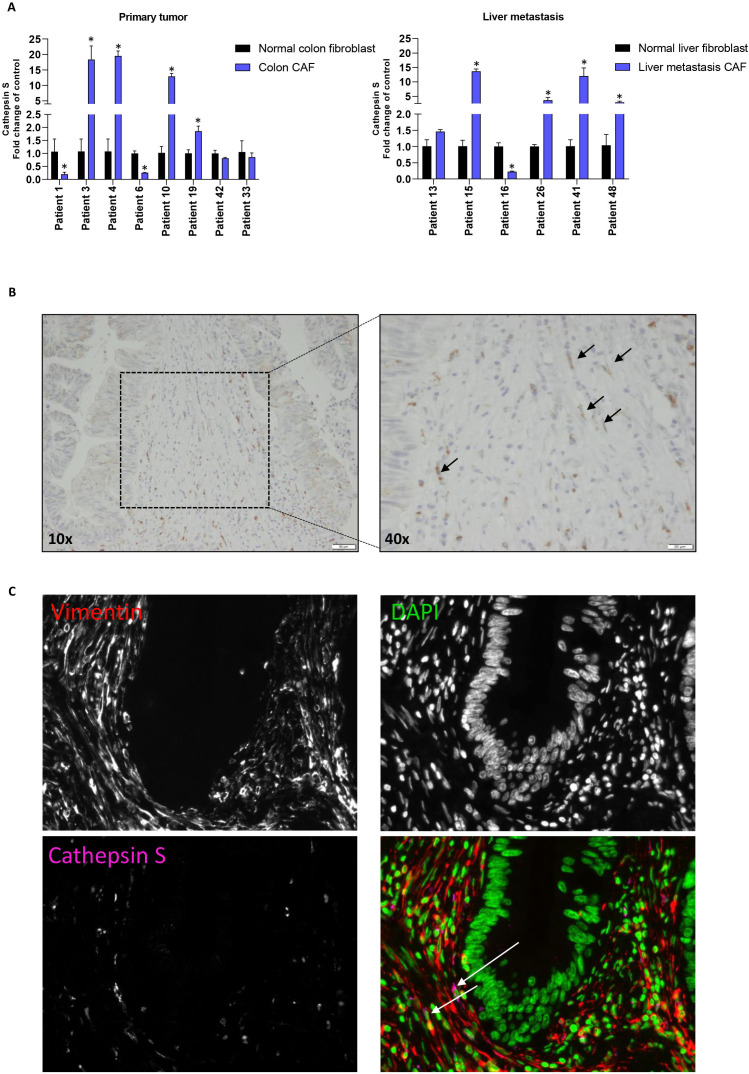
Here, we show that human CRC-derived CAFs display an enhanced capacity to cross-present neoantigen-derived SLPs when compared with normal colonic fibroblasts. Cross-presentation of antigens by fibroblasts involved the lysosomal protease cathepsin S. Cathepsin S expression by CAFs was detected in situ in human CRC tissue, was upregulated in ex vivo cultured CRC-derived CAFs and showed increased expression in normal fibroblasts after exposure to CRC-conditioned medium. Cognate interaction between CD8+ T cells and cross-presenting CAFs suppressed T cell function, reflected by decreased cytotoxicity, reduced activation (CD137) and increased exhaustion (TIM3, LAG3 and CD39) marker expression.
These data indicate that CAFs may directly suppress tumor-specific T cell function in an antigen-dependent fashion in human CRC.
专业抗原呈递细胞 (APC) 中外源抗原在 HLA 类 I 分子中的交叉呈递对于 CD8+T 细胞功能至关重要。最近的鼠类研究表明,几种非专业 APC,包括癌相关成纤维细胞 (CAFs),也具有这种能力。人类 CAFs 是否能够交叉呈递外源性抗原,该过程涉及哪些分子途径,以及这最终如何影响肿瘤特异性 CD8+T 细胞功能尚不清楚。
在这项研究中,我们研究了人类结直肠癌 (CRC) 衍生的 CAFs 交叉呈递新抗原衍生的合成长肽 (SLP) 的能力,这些 SLP 对应于肿瘤衍生的突变肽,以及这如何影响肿瘤特异性 T 细胞功能。通过靶向交叉呈递机制的成分进行 CRISPR/Cas9 和 siRNA 介导的遗传消融来研究 SLP 的加工,以鉴定参与成纤维细胞介导的交叉呈递的关键分子。通过多光谱流式细胞术和杀伤测定来研究成纤维细胞交叉呈递对 T 细胞功能的影响。
在这里,我们表明与正常结肠成纤维细胞相比,人类 CRC 衍生的 CAFs 显示出增强的交叉呈递新抗原衍生 SLP 的能力。成纤维细胞的抗原交叉呈递涉及溶酶体蛋白酶组织蛋白酶 S。在人类 CRC 组织中检测到原位 CAFs 中的组织蛋白酶 S 表达,在体外培养的 CRC 衍生 CAFs 中上调,并在暴露于 CRC 条件培养基后在正常成纤维细胞中表达增加。CD8+T 细胞与交叉呈递 CAFs 的同源相互作用抑制了 T 细胞功能,表现为细胞毒性降低、激活(CD137)减少和耗竭标志物(TIM3、LAG3 和 CD39)表达增加。
这些数据表明,CAFs 可能以抗原依赖的方式直接抑制人类 CRC 中的肿瘤特异性 T 细胞功能。