Department of Anesthesiology, Shanghai Pulmonary Hospital, Tongji University School of Medicine, Shanghai, China.
Wannan Medical College Graduate School, Wuhu, China.
Oxid Med Cell Longev. 2022 Feb 27;2022:7837837. doi: 10.1155/2022/7837837. eCollection 2022.
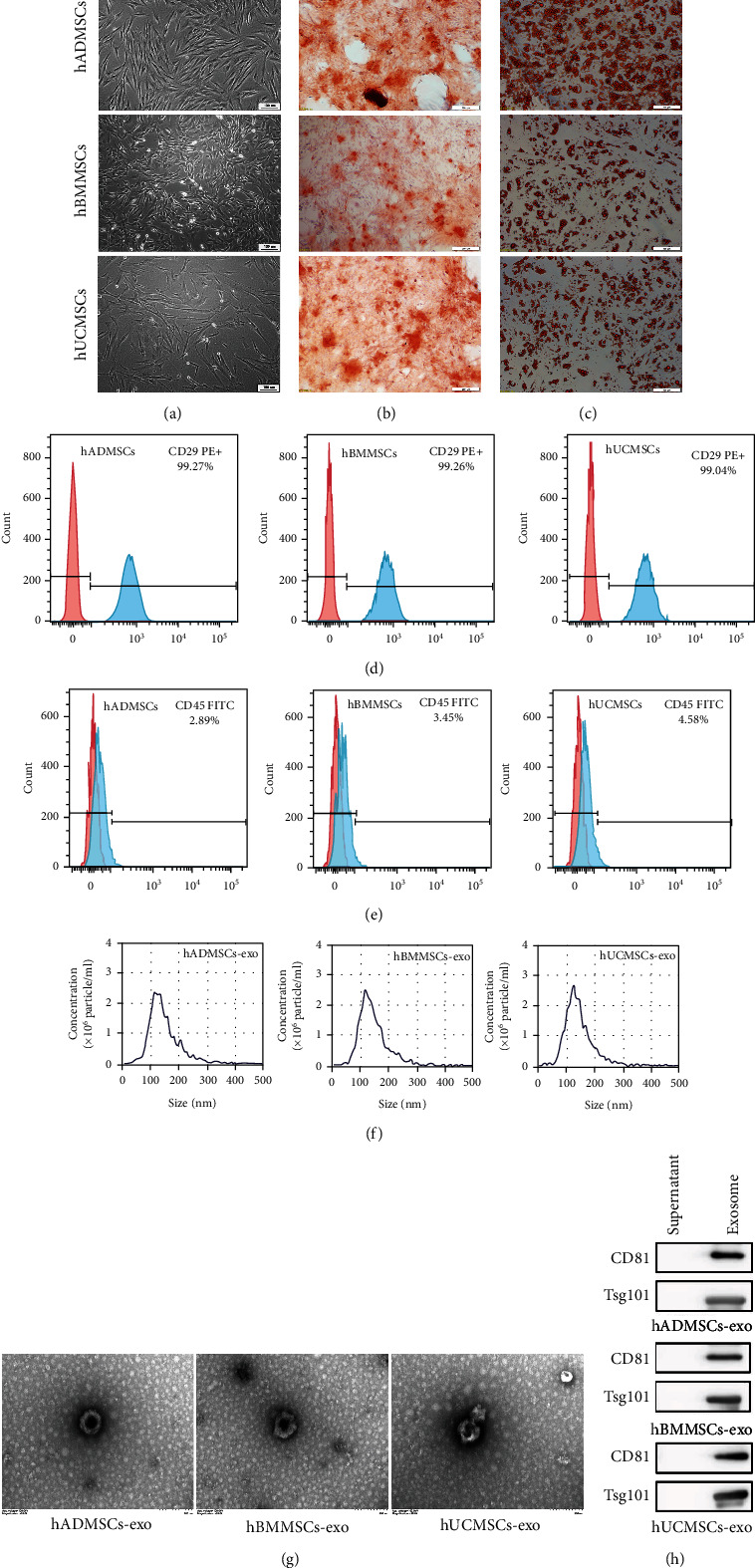
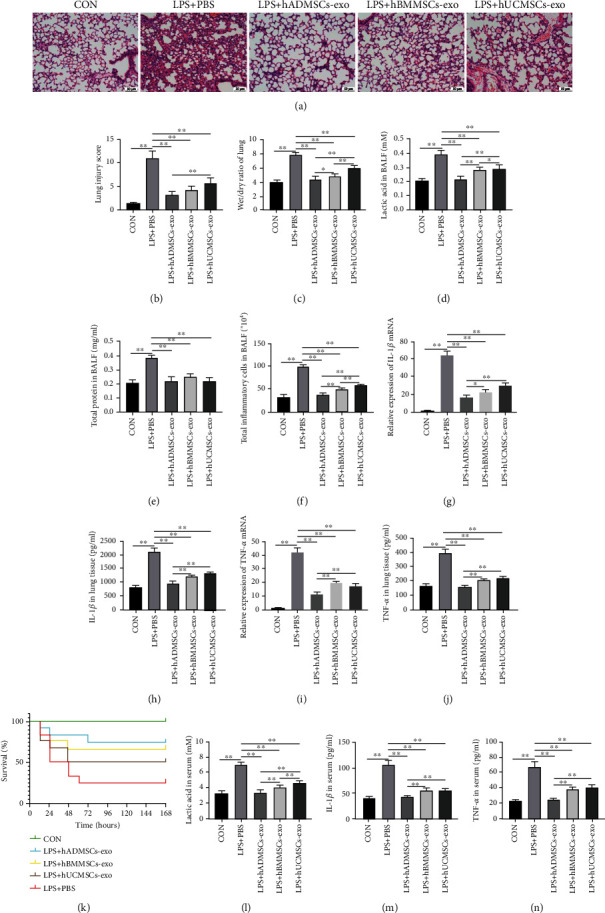
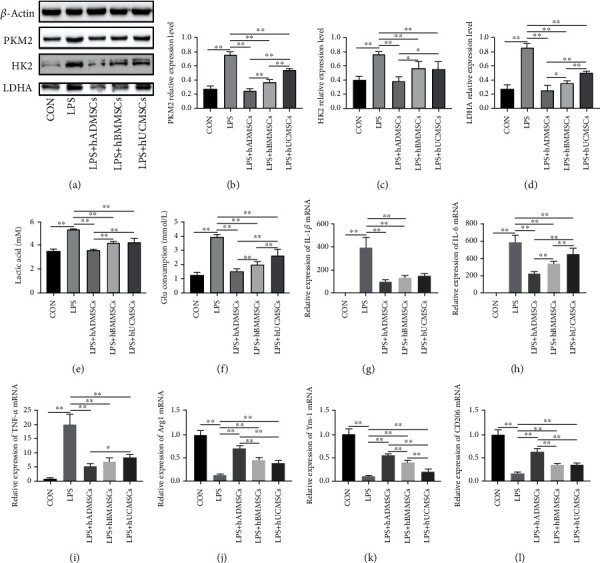
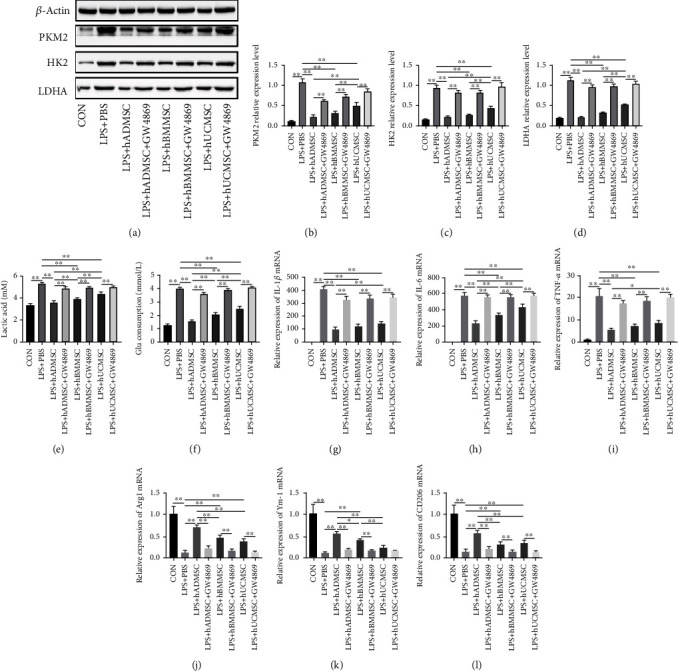
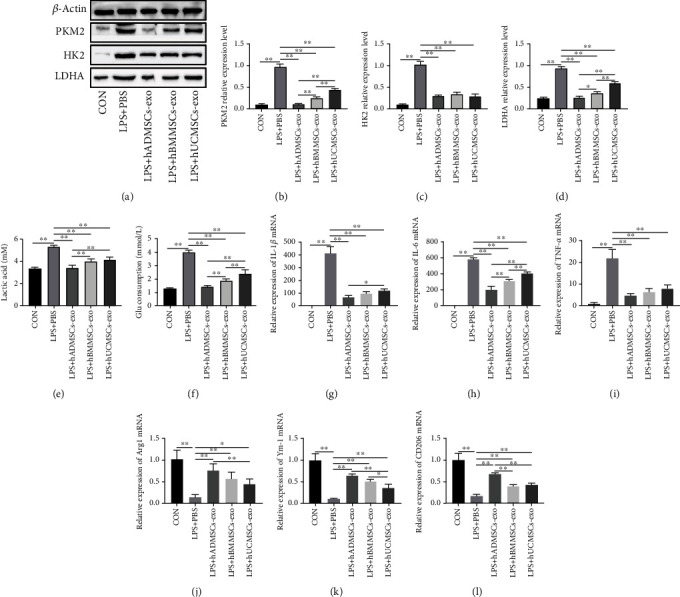
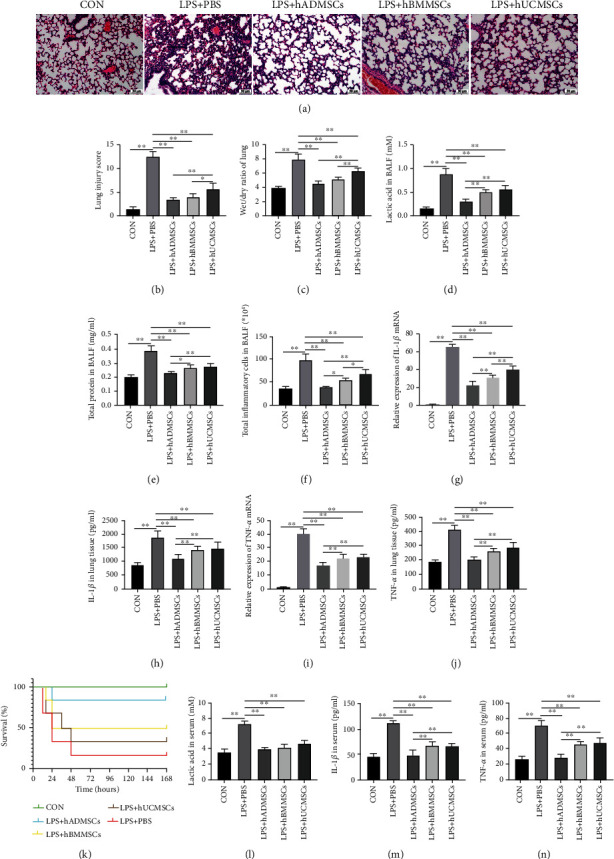
Exosomes derived from human mesenchymal stem cells (hMSCs) have the capacity to regulate various biological events associated with sepsis-induced acute respiratory distress syndrome (ARDS), including cellular immunometabolism, the production of proinflammatory cytokines, allowing them to exert therapeutic effects. However, little is known about which type of hMSC-derived exosomes (hMSC-exo) is more effective and suitable for the treatment of sepsis-induced ARDS. The purpose of this study is to compare the efficacy of hMSC-derived exosomes from human adipose tissue (hADMSC-exo), human bone marrow (hBMMSC-exo), and human umbilical cord (hUCMSC-exo) in the treatment of sepsis-induced ARDS. We cocultured lipopolysaccharide- (LPS-) stimulated RAW264.7 macrophage cells with the three kinds of hMSCs and found that all hMSCs reduced the glycolysis level and the content of lactic acid in macrophages. Accordingly, the expression of proinflammatory cytokines also decreased. Notably, the protective effects of hMSCs from adipose tissue were more obvious than those of bone marrow and umbilical cord hMSCs. However, this protective effect was eliminated when an exosome inhibitor, GW4869, was added. Subsequently, we extracted and cocultured hMSC-derived exosomes with LPS-stimulated RAW264.7 cells and found that all three kinds of exosomes exerted a similar protective effect as their parental cells, with exosomes from adipose hMSCs showing the strongest protective effect. Finally, an experimental sepsis model in mice was established, and we found that all three types of hMSCs have obvious lung-protective effects, in reducing lung injury scores, lactic acid, and proinflammatory cytokine levels in the lung tissues and decreasing the total protein content and inflammatory cell count in the bronchoalveolar lavage fluid (BALF), and also can attenuate the systemic inflammatory response and improve the survival rate of mice. Intravenous injection of three types of hMSC-exo, in particular those derived from adipose hADMSCs, also showed lung-protective effects in mice. These findings revealed that exosomes derived from different sources of hMSCs can effectively downregulate sepsis-induced glycolysis and inflammation in macrophages, ameliorate the lung pathological damage, and improve the survival rate of mice with sepsis. It is worth noting that the protective effect of hADMSC-exo is better than that of hBMMSC-exo and hUCMSC-exo.
人骨髓间充质干细胞(hMSCs)来源的外泌体具有调节与脓毒症诱导的急性呼吸窘迫综合征(ARDS)相关的各种生物学事件的能力,包括细胞免疫代谢、促炎细胞因子的产生,从而发挥治疗作用。然而,对于哪种类型的 hMSC 来源的外泌体(hMSC-exo)更有效且适合治疗脓毒症诱导的 ARDS,目前知之甚少。本研究旨在比较人脂肪组织(hADMSC-exo)、人骨髓(hBMMSC-exo)和人脐带(hUCMSC-exo)来源的 hMSC 衍生外泌体在治疗脓毒症诱导的 ARDS 中的疗效。我们将脂多糖(LPS)刺激的 RAW264.7 巨噬细胞与三种 hMSC 共培养,发现所有 hMSC 均降低了巨噬细胞的糖酵解水平和乳酸含量。相应地,促炎细胞因子的表达也减少了。值得注意的是,脂肪来源的 hMSC 的保护作用比骨髓和脐带来源的 hMSC 更明显。然而,当添加外泌体抑制剂 GW4869 时,这种保护作用就被消除了。随后,我们提取并与 LPS 刺激的 RAW264.7 细胞共培养 hMSC 衍生的外泌体,发现三种外泌体都发挥了与其亲本细胞相似的保护作用,脂肪来源的 hMSC 衍生的外泌体的保护作用最强。最后,我们建立了实验性脓毒症小鼠模型,发现三种类型的 hMSC 均具有明显的肺保护作用,可降低肺损伤评分、肺组织中乳酸和促炎细胞因子水平,并降低支气管肺泡灌洗液(BALF)中的总蛋白含量和炎症细胞计数,还能减轻全身炎症反应,提高小鼠的存活率。静脉注射三种类型的 hMSC-exo,特别是脂肪来源的 hADMSC-exo,也在小鼠中表现出肺保护作用。这些发现表明,不同来源的 hMSC 衍生的外泌体可有效下调脓毒症诱导的巨噬细胞糖酵解和炎症反应,改善脓毒症小鼠的肺病理损伤,并提高其存活率。值得注意的是,hADMSC-exo 的保护作用优于 hBMMSC-exo 和 hUCMSC-exo。