College of Horticulture and Plant Protection, Yangzhou University, Yangzhou 225009, China.
Guangling College of Yangzhou University, Yangzhou University, Yangzhou 225009, China.
Int J Mol Sci. 2020 Dec 24;22(1):117. doi: 10.3390/ijms22010117.
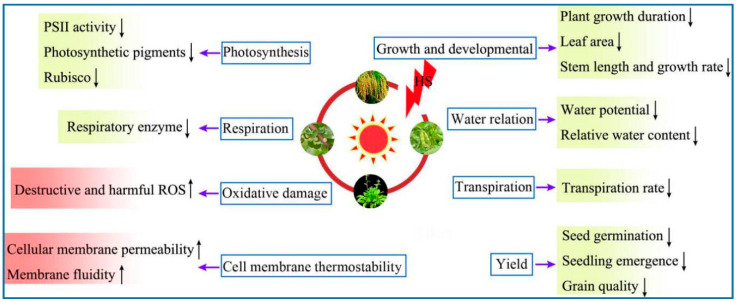
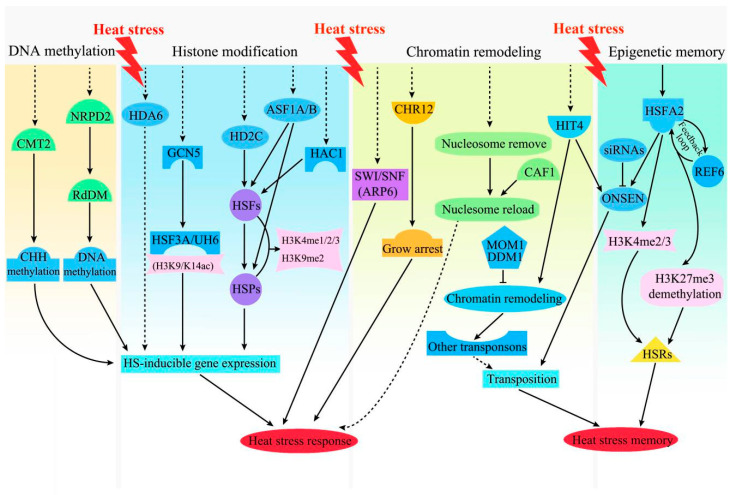
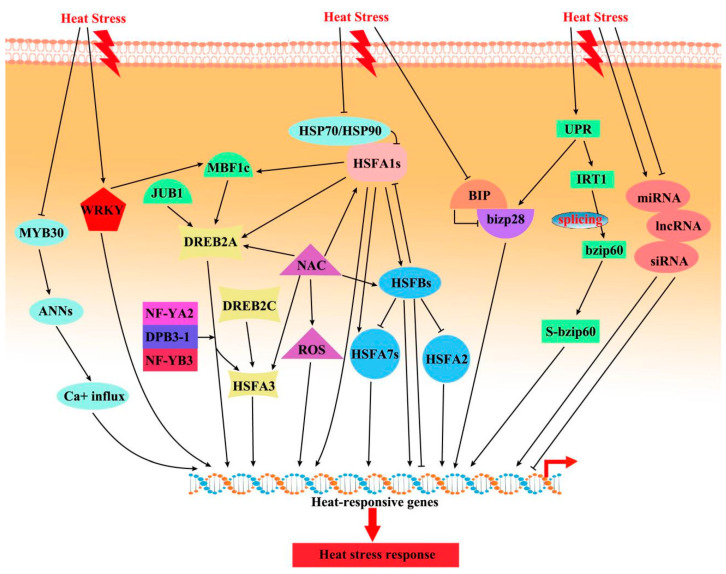
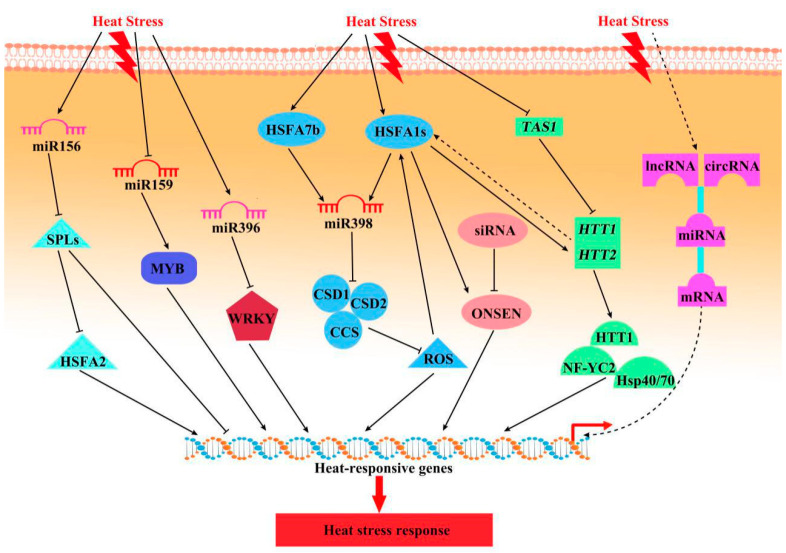
Global warming has increased the frequency of extreme high temperature events. High temperature is a major abiotic stress that limits the growth and production of plants. Therefore, the plant response to heat stress (HS) has been a focus of research. However, the plant response to HS involves complex physiological traits and molecular or gene networks that are not fully understood. Here, we review recent progress in the physiological (photosynthesis, cell membrane thermostability, oxidative damage, and others), transcriptional, and post-transcriptional (noncoding RNAs) regulation of the plant response to HS. We also summarize advances in understanding of the epigenetic regulation (DNA methylation, histone modification, and chromatin remodeling) and epigenetic memory underlying plant-heat interactions. Finally, we discuss the challenges and opportunities of future research in the plant response to HS.
全球变暖增加了极端高温事件的发生频率。高温是限制植物生长和生产的主要非生物胁迫因素。因此,植物对热胁迫(HS)的响应一直是研究的重点。然而,植物对 HS 的响应涉及复杂的生理特征和分子或基因网络,这些尚未完全了解。在这里,我们综述了植物对 HS 响应的生理(光合作用、细胞膜热稳定性、氧化损伤等)、转录和转录后(非编码 RNA)调控的最新进展。我们还总结了对植物与热相互作用的表观遗传调控(DNA 甲基化、组蛋白修饰和染色质重塑)和表观遗传记忆的理解的进展。最后,我们讨论了未来植物对 HS 响应研究的挑战和机遇。