Meteorological Research, Finnish Meteorological Institute, 00560 Helsinki, Finland.
Int J Environ Res Public Health. 2022 Mar 4;19(5):3007. doi: 10.3390/ijerph19053007.
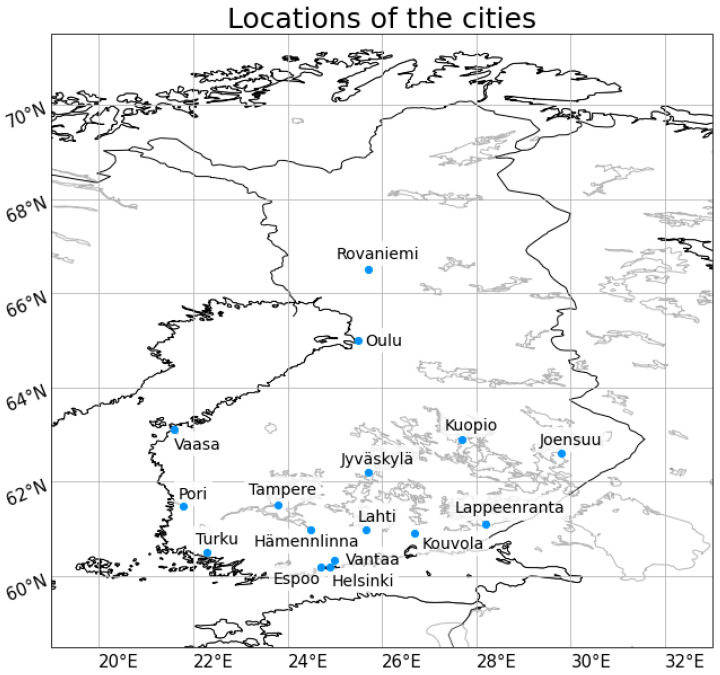
Pedestrians' slipping injuries are a very typical problem in the Nordic countries, causing varying degrees of injuries and in the worst case, long sick leaves. There is a clear seasonal variation in the number of slips. Sidewalk slipperiness and the risk of slips is a complex combination of weather, winter maintenance activities, number of walkers, and the grip between shoes and surface, as well as human behavioral and physical factors. In this study, the effect of weather on pedestrians' slipping injuries is studied. Daily weather observations are compared to the slip statistics that have been collected from commuting accident statistics in cases where the way of commuting has been walking. A total of 16 cities from Finland for 14 winters are included in this study. The results reveal that snow on the ground increases the slip risk more than three times compared to no-snow situations. Near zero temperatures and precipitation are very typical on days when slip injuries occur more than usual. However, there are also days when high amounts of slips cannot be explained with the weather. The study also shows that there are significant differences as to the number and timing of slips between different parts of the country.
行人滑倒受伤在北欧国家是一个非常典型的问题,导致不同程度的伤害,在最坏的情况下,还会长期请病假。滑倒的数量有明显的季节性变化。人行道湿滑和滑倒的风险是天气、冬季维护活动、行人数量以及鞋子与地面之间的抓地力以及人类行为和身体因素的复杂组合。本研究旨在研究天气对行人滑倒受伤的影响。将日常天气观测与从通勤事故统计中收集到的滑倒统计数据进行比较,这些数据是在步行通勤的情况下收集的。这项研究共包括芬兰的 16 个城市,历时 14 个冬季。结果表明,与无雪情况相比,地面上的积雪使滑倒风险增加了三倍以上。在滑倒受伤比平时多的日子里,接近零的温度和降水非常典型。然而,也有一些日子,即使有大量的降雪,也无法用天气来解释。该研究还表明,不同地区的滑倒次数和时间存在显著差异。