Department of Media and Social Sciences, University of Stavanger, P.O. Box 8600, 4036 Stavanger, Norway.
Int J Environ Res Public Health. 2022 Mar 4;19(5):3036. doi: 10.3390/ijerph19053036.
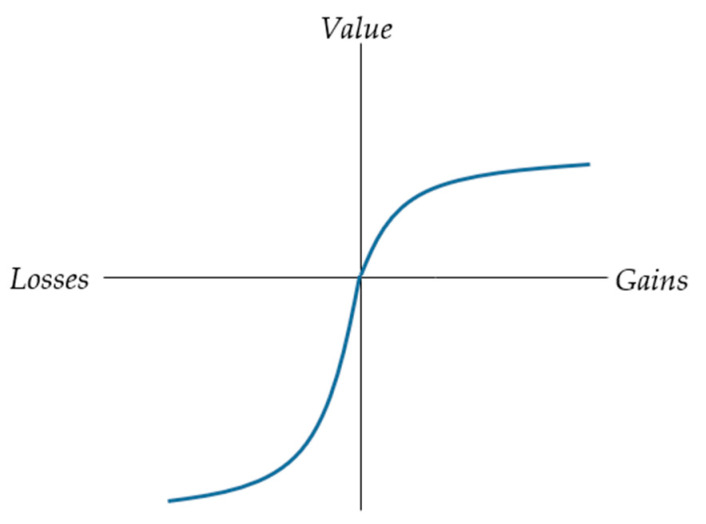
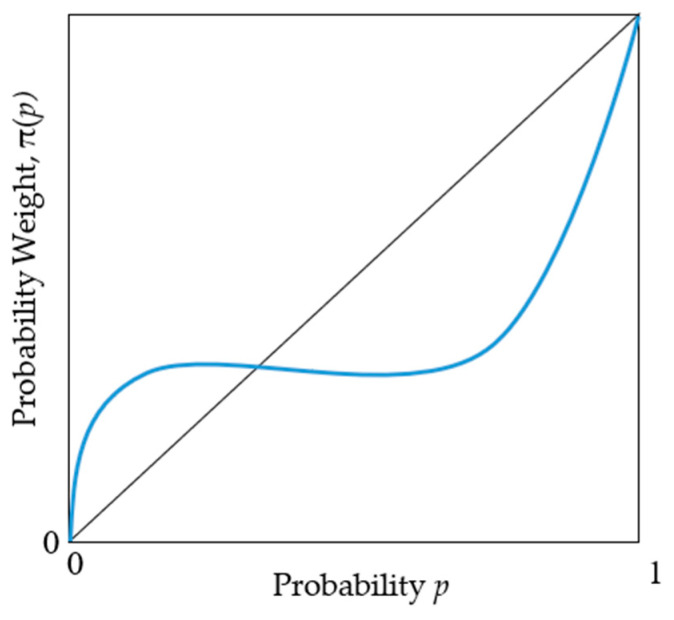
Public officials are constantly facing decisions under risk, particularly in digitalization policies, the consequences of which are hard to predict given their multiple dimensional nature. Since scholarly research has not yet addressed this phenomenon, we do not know what influences the risk preferences of politicians in digitalization policies. Prospect theory-widely used to explain political decisions-can help us describe politicians' potential risk references and the conditions affecting their decisions. Accordingly, this paper aims to answer the following question: what are the conditions affecting the risk preferences of politicians in digitalization policies? I address this question by employing two important assumptions of prospect theory: the value function and the probability weighting function. Particularly, I discuss the effects of loss/gain frames and probability weighting on the risk preferences of politicians in digitalization with outcomes in multiple dimensions (e.g., data privacy and economy). I argue that whether an outcome is perceived as a gain or as a loss depends on how the situation is framed and how the probabilities are weighted. I conclude with a brief discussion of how prospect theory can leverage our understanding of political decisions in highly complex policy environments.
公职人员在决策时经常面临风险,尤其是在数字化政策方面,由于其具有多维性质,其后果难以预测。鉴于学术研究尚未涉及这一现象,我们不知道是什么影响了政治家在数字化政策中的风险偏好。广泛用于解释政治决策的前景理论可以帮助我们描述政治家的潜在风险参考以及影响其决策的条件。因此,本文旨在回答以下问题:影响政治家在数字化政策中风险偏好的条件是什么?我通过运用前景理论的两个重要假设:价值函数和概率加权函数来回答这个问题。特别是,我讨论了在数字化中具有多维结果(例如数据隐私和经济)的情况下,损失/收益框架和概率加权对政治家风险偏好的影响。我认为,一个结果是被视为收益还是损失取决于情况的框架和概率的加权方式。最后,我简要讨论了前景理论如何利用我们对高度复杂政策环境中的政治决策的理解。