MRC Clinical Trials Unit at UCL, London, UK
MRC Clinical Trials Unit at UCL, London, UK.
BMJ Open. 2022 Mar 10;12(3):e055615. doi: 10.1136/bmjopen-2021-055615.
For medical conditions with numerous interventions worthy of investigation, there are many advantages of a multi-arm multi-stage (MAMS) platform trial approach. However, there is currently limited knowledge on uptake of the MAMS design, especially in the late-phase setting. We sought to examine uptake and characteristics of late-phase MAMS platform trials, to enable better planning for teams considering future use of this approach.
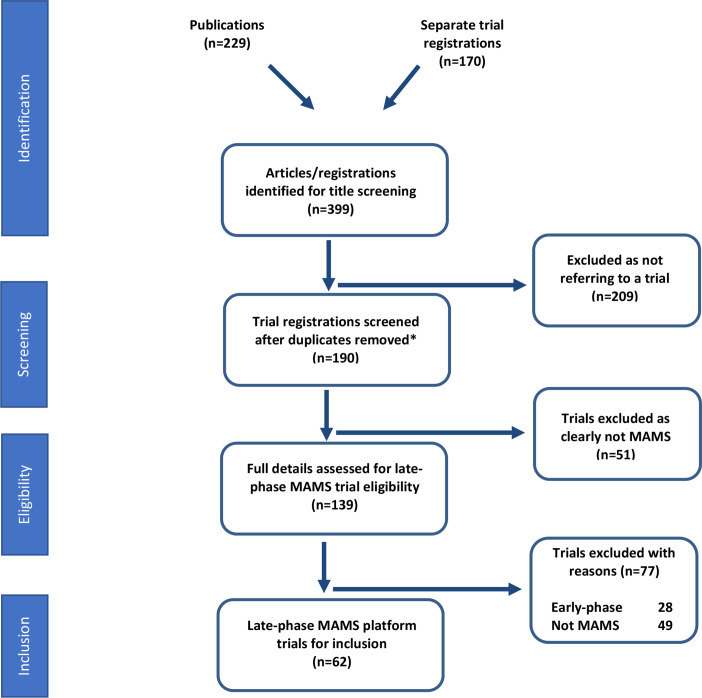
We examined uptake of registered, late-phase MAMS platforms in the EU clinical trials register, Australian New Zealand Clinical Trials Registry, International Standard Randomised Controlled Trial Number registry, Pan African Clinical Trials Registry, WHO International Clinical Trial Registry Platform and databases: PubMed, Medline, Cochrane Library, Global Health Library and EMBASE. Searching was performed and review data frozen on 1 April 2021. MAMS platforms were defined as requiring two or more comparison arms, with two or more trial stages, with an interim analysis allowing for stopping of recruitment to arms and typically the ability to add new intervention arms.
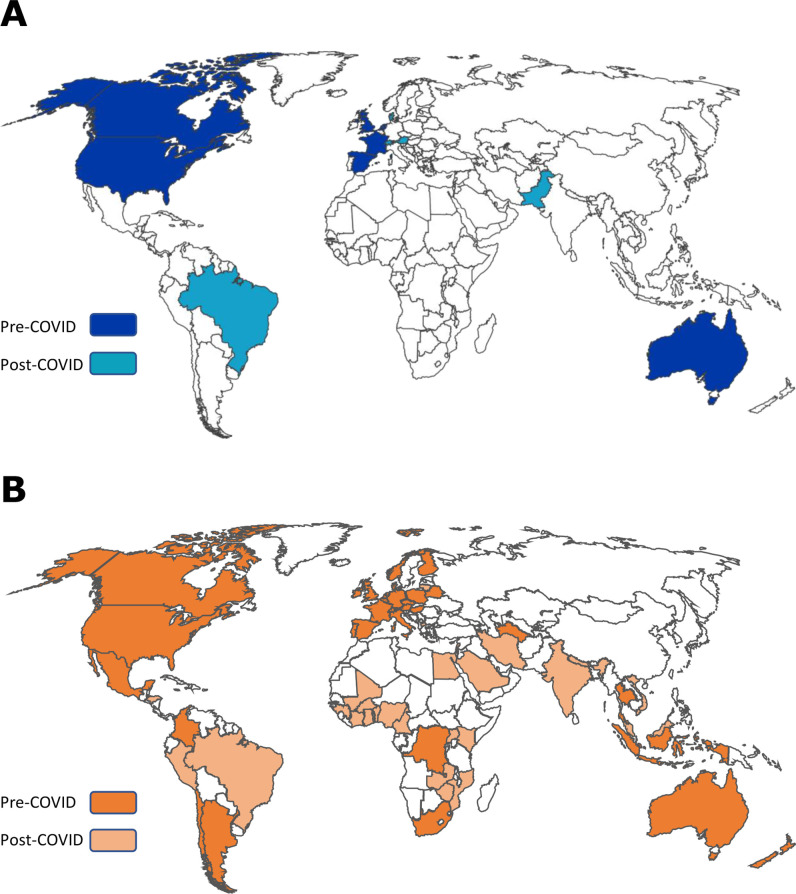
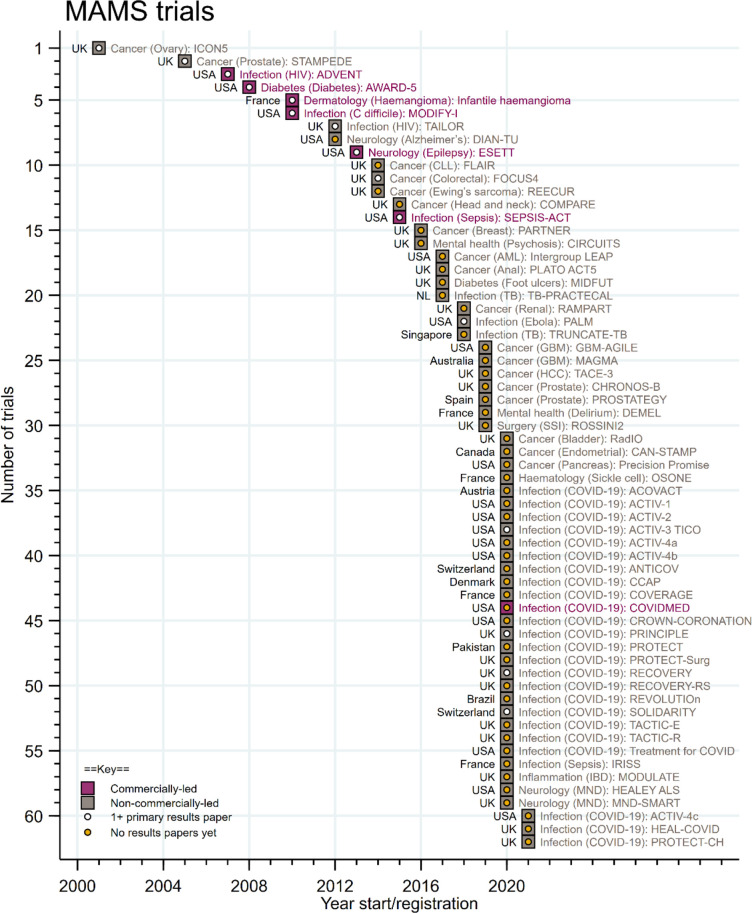
62 late-phase clinical trials using an MAMS approach were included. Overall, the number of late-phase trials using the MAMS design has been increasing since 2001 and been accelerated by COVID-19. The majority of current MAMS platforms were either targeting infectious diseases (52%) or cancers (29%) and all identified trials were for treatment interventions. 89% (55/62) of MAMS platforms were evaluating medications, with 45% (28/62) of the MAMS platforms having at least one or more repurposed medication as a comparison arm.
Historically, late-phase trials have adhered to long-established standard (two-arm) designs. However, the number of late-phase MAMS platform trials is increasing, across a range of different disease areas. This study highlights the potential scope of MAMS platform trials and may assist research teams considering use of this approach in the late-phase randomised clinical trial setting.
CRD42019153910.
对于有许多值得研究的干预措施的医学病症,多臂多阶段(MAMS)平台试验方法有很多优势。然而,目前对于这种设计的采用情况了解有限,尤其是在后期阶段。我们旨在研究后期阶段 MAMS 平台试验的采用情况和特点,以便为考虑将来采用这种方法的团队提供更好的规划。
我们在欧盟临床试验注册处、澳大利亚和新西兰临床试验注册处、国际标准随机对照试验编号注册处、泛非临床试验注册处、世界卫生组织国际临床试验注册平台以及数据库:PubMed、Medline、Cochrane 图书馆、全球卫生图书馆和 EMBASE 中检查了已注册的后期阶段 MAMS 平台的采用情况。搜索工作于 2021 年 4 月 1 日完成,数据冻结。MAMS 平台被定义为需要两个或更多比较臂,两个或更多试验阶段,具有中期分析,可以停止招募到各个臂,并且通常有能力添加新的干预臂。
共纳入 62 项采用 MAMS 方法的后期阶段临床试验。总体而言,自 2001 年以来,采用 MAMS 设计的后期阶段试验数量一直在增加,并且受到 COVID-19 的推动而加速。目前大多数 MAMS 平台都针对传染病(52%)或癌症(29%),所有确定的试验都是针对治疗干预措施。89%(55/62)的 MAMS 平台正在评估药物,其中 45%(28/62)的 MAMS 平台有一个或多个重新定位的药物作为比较臂。
历史上,后期阶段试验一直坚持长期存在的标准(两臂)设计。然而,采用后期阶段 MAMS 平台试验的数量正在增加,涉及一系列不同的疾病领域。本研究强调了 MAMS 平台试验的潜在范围,并可能有助于考虑在后期阶段随机临床试验中采用这种方法的研究团队。
CRD42019153910。