Collaborative Innovation Center for Cancer Medicine, State Key Laboratory of Oncology in South China, Sun Yat-sen University Cancer Center, Guangzhou, China.
Department of Gynecology, Guangdong Provincial People's Hospital, Guangdong Academy of Medical Sciences, Guangzhou, Guangdong, China.
J Immunother Cancer. 2022 Mar;10(3). doi: 10.1136/jitc-2021-004029.
Platinum resistance is a major challenge in the clinical treatment of advanced ovarian cancer (OC). Accumulating evidence shows that the tumor-promotive M2 macrophage is linked to the limiting chemotherapy efficacy of multiple malignancies including OC. Circular RNAs (circRNAs) are a novel class of non-coding RNAs which function as the critical regulator in biological process of cancer. However, their impact on macrophage polarization and chemoresistance of OC remain unclear.
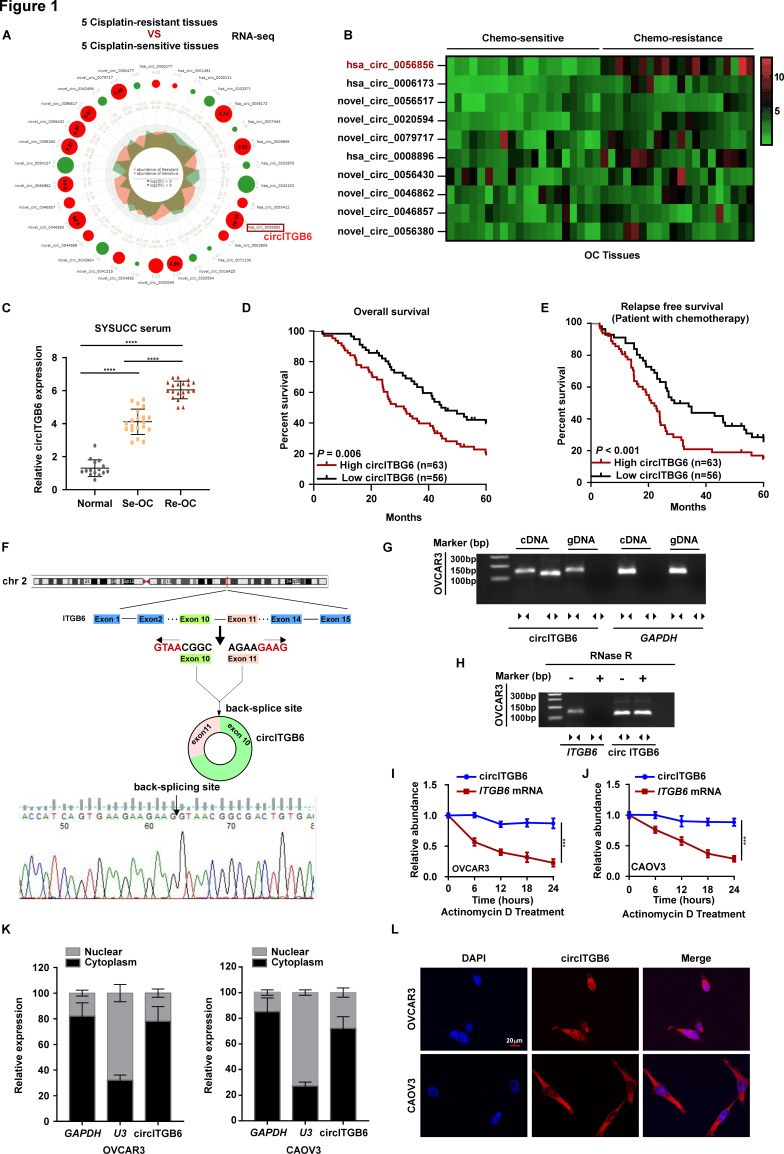
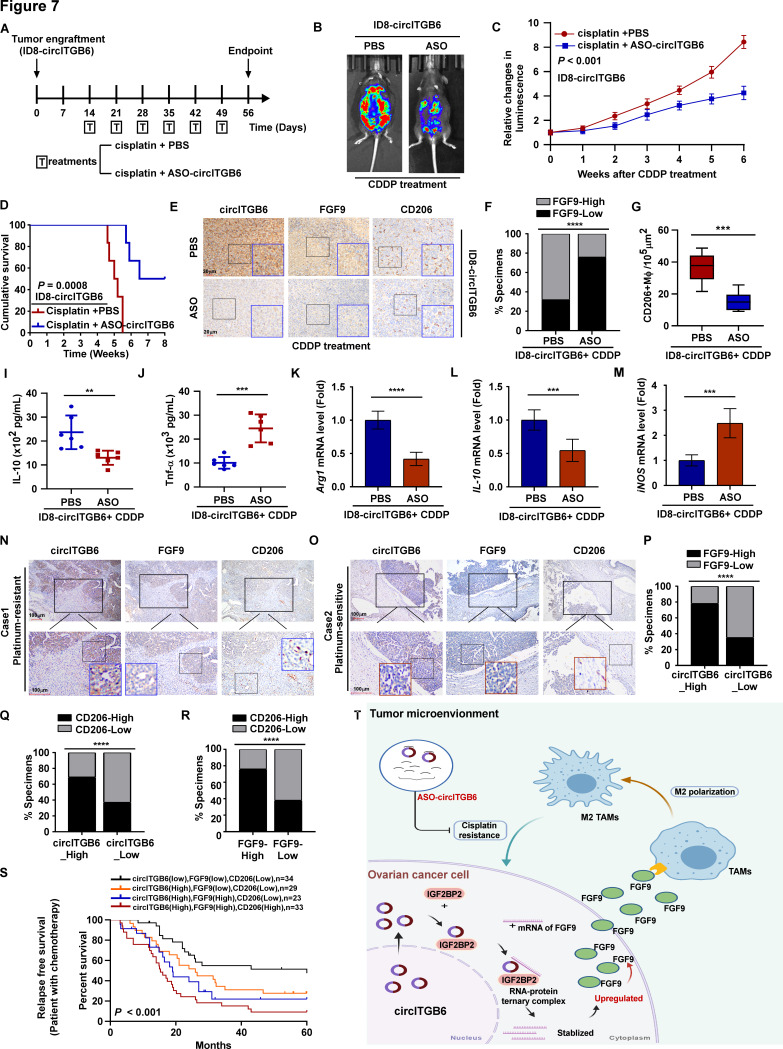
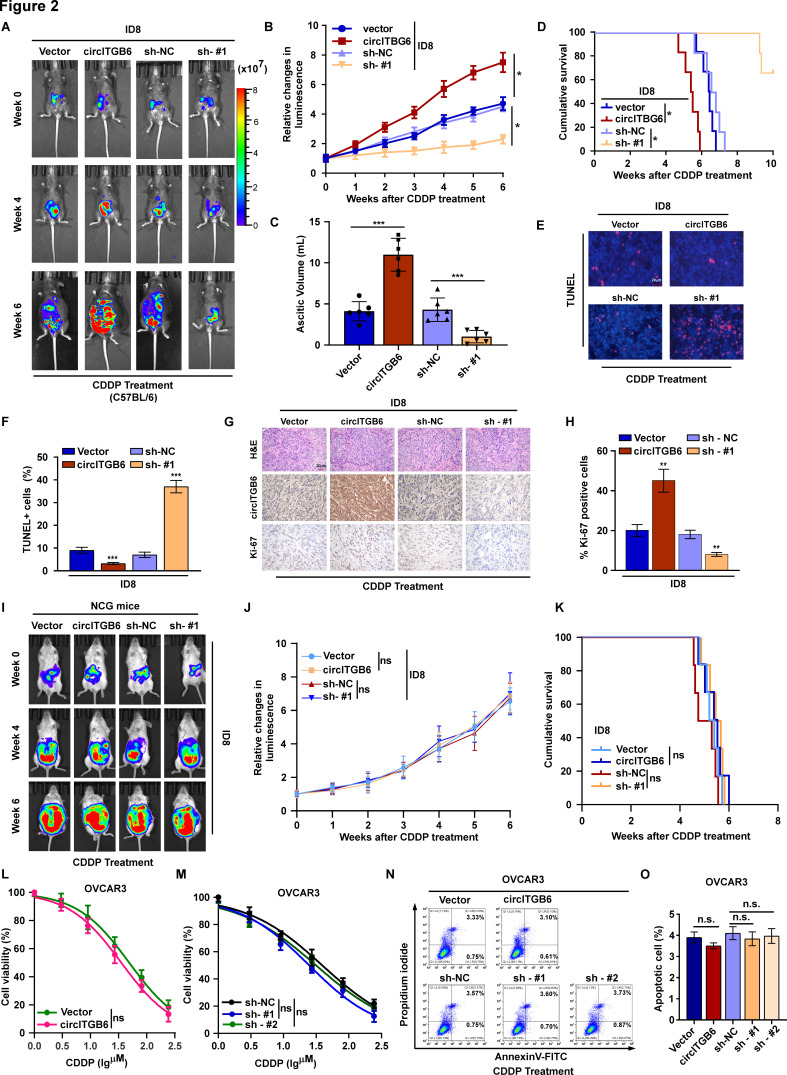
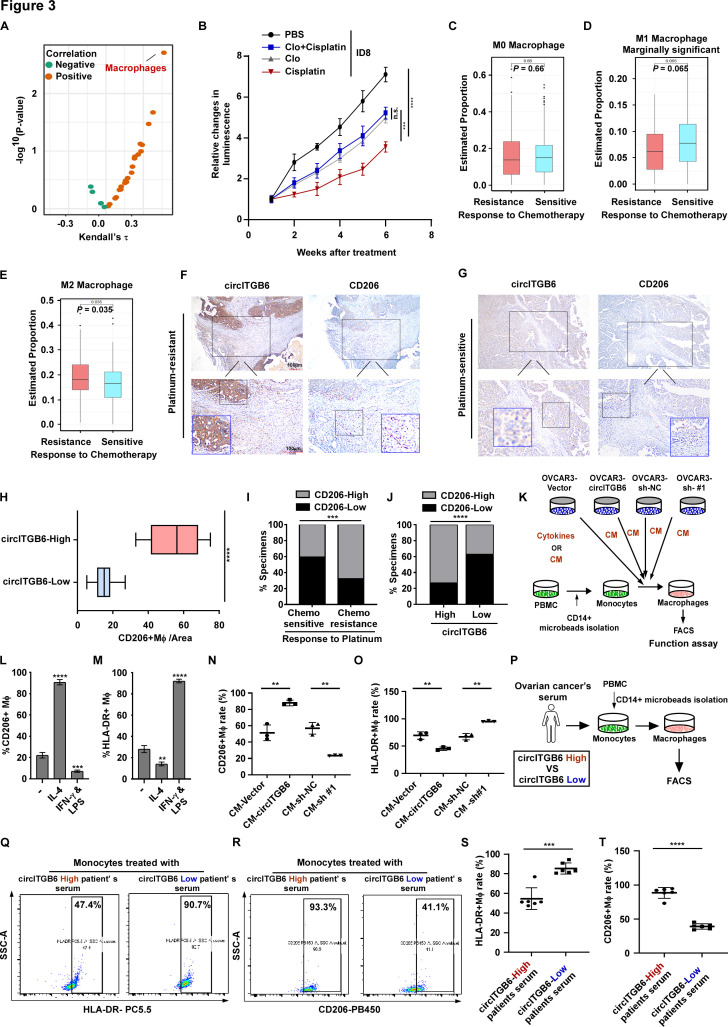
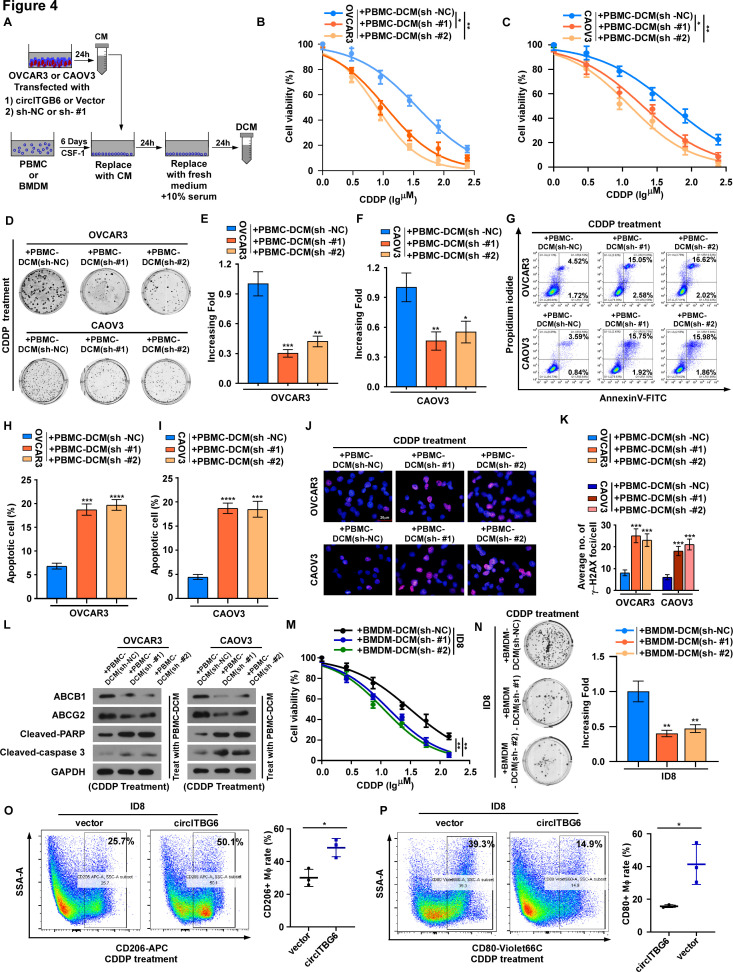
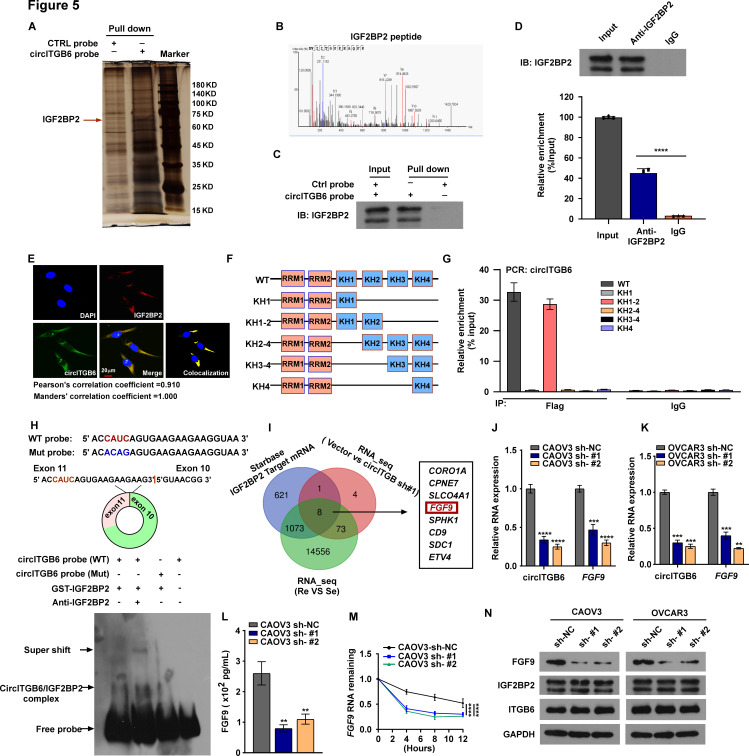
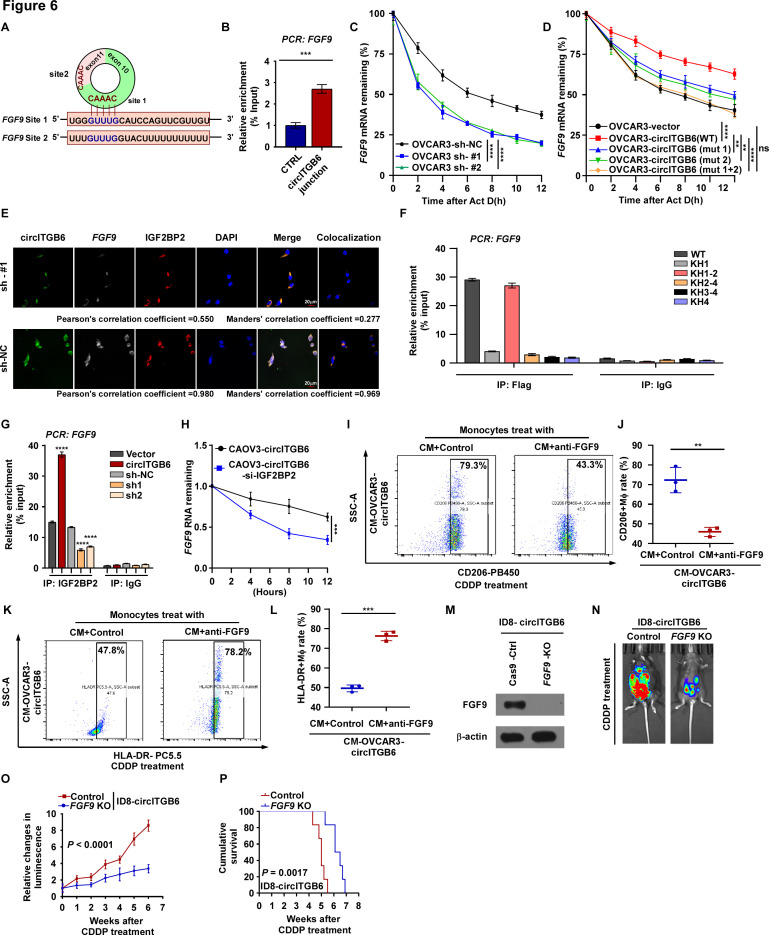
Platinum-resistant circRNAs were screened using circRNA deep sequencing and validated using in situ hybridization in OC tissues with or without platinum resistance. The role of circITGB6 in inducing cisplatin (CDDP) resistance was evaluated by clone formation, immunofluorescence and annexin V assays in vitro, and by intraperitoneal tumor model in vivo. The mechanism underlying circITGB6-mediated tumor-associated macrophage (TAM) polarization into M2 phenotype was investigated using RNA pull-down, luciferase reporter, electrophoretic mobility shift, RNA binding protein immunoprecipitation (RIP), ELISA and immunofluorescence assays.
We identified that a novel circRNA, circITGB6, robustly elevated in tumor tissues and serums from patients with OC with platinum resistance, was correlated with poor prognosis. circITGB6 overexpression promoted an M2 macrophage-dependent CDDP resistance in both vivo and vitro. Mechanistic research determined that circITGB6 directly interacted with IGF2BP2 and FGF9 mRNA to form a circITGB6/IGF2BP2/FGF9 RNA-protein ternary complex in the cytoplasm, thereby stabilizing FGF9 mRNA and inducing polarization of TAMs toward M2 phenotype. Importantly, blocking M2 macrophage polarization with an antisense oligonucleotide targeting circITGB6 markedly reversed the circITGB6-induced CDDP resistance of OC in vivo.
This study reveals a novel mechanism for platinum resistance in OC and demonstrates that circITGB6 may serve as a potential prognostic marker and a therapeutic target for patients with OC.
铂耐药是晚期卵巢癌(OC)临床治疗的主要挑战。越来越多的证据表明,肿瘤促进型 M2 巨噬细胞与包括 OC 在内的多种恶性肿瘤的化疗疗效受限有关。环状 RNA(circRNA)是一类新型的非编码 RNA,作为癌症生物学过程的关键调节因子发挥作用。然而,它们对 OC 中巨噬细胞极化和化疗耐药的影响尚不清楚。
使用 circRNA 深度测序筛选铂耐药相关的 circRNA,并通过原位杂交在有或没有铂耐药的 OC 组织中进行验证。通过体外克隆形成、免疫荧光和 Annexin V 检测以及体内腹腔肿瘤模型评估 circITGB6 在诱导顺铂(CDDP)耐药中的作用。通过 RNA 下拉、荧光素酶报告、电泳迁移率变动、RNA 结合蛋白免疫沉淀(RIP)、ELISA 和免疫荧光检测研究 circITGB6 介导的肿瘤相关巨噬细胞(TAM)向 M2 表型极化的机制。
我们发现一种新型 circRNA,circITGB6,在有铂耐药的 OC 患者的肿瘤组织和血清中大量升高,与预后不良相关。circITGB6 过表达在体内和体外均促进了 M2 巨噬细胞依赖的 CDDP 耐药。机制研究确定 circITGB6 可直接与 IGF2BP2 和 FGF9 mRNA 相互作用,在细胞质中形成 circITGB6/IGF2BP2/FGF9 RNA-蛋白三元复合物,从而稳定 FGF9 mRNA,并诱导 TAMs 向 M2 表型极化。重要的是,用靶向 circITGB6 的反义寡核苷酸阻断 M2 巨噬细胞极化可显著逆转体内 circITGB6 诱导的 OC 的 CDDP 耐药性。
本研究揭示了 OC 中铂耐药的新机制,并表明 circITGB6 可能作为 OC 患者的潜在预后标志物和治疗靶点。