Department of Biochemistry and Molecular Biology, School of Basic Medical Sciences, Nanchang University, Nanchang, Jiangxi, 330006, China.
Province Key Laboratory of Reproductive Physiology and Pathology, Nanchang University, Nanchang, Jiangxi, 330031, China.
Int J Biol Sci. 2022 Jan 16;18(4):1363-1380. doi: 10.7150/ijbs.65227. eCollection 2022.
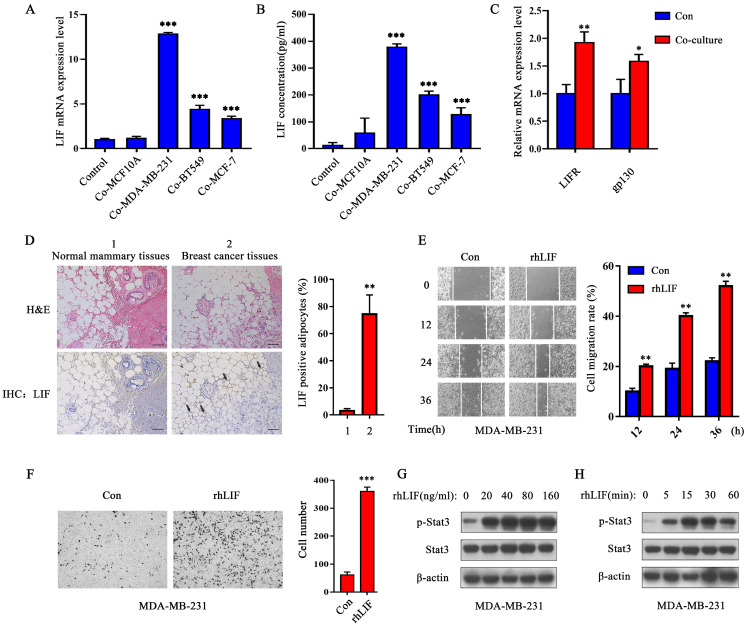
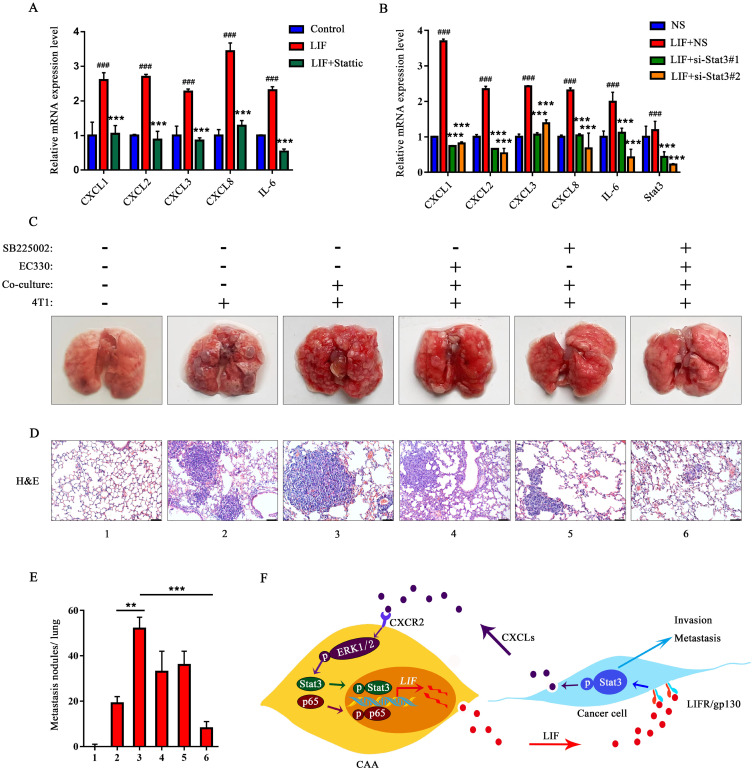
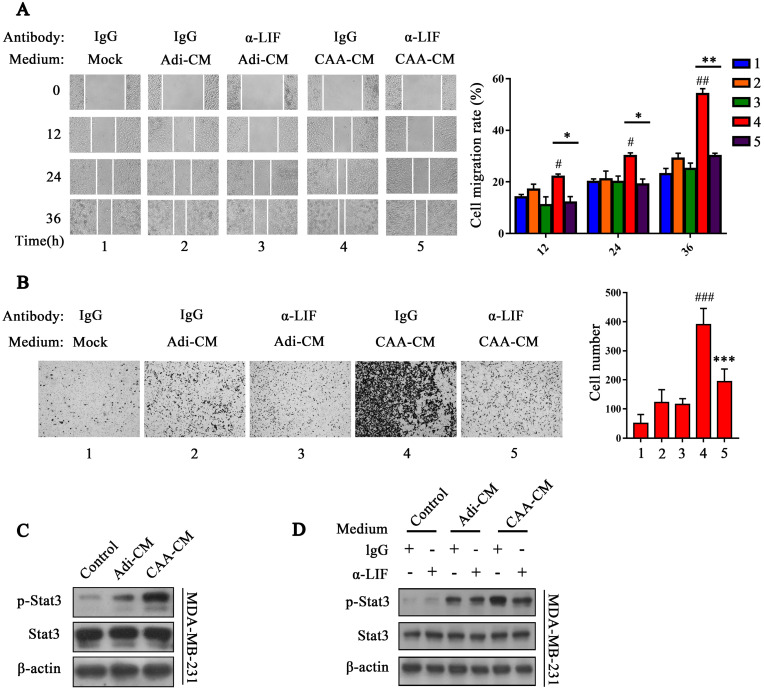
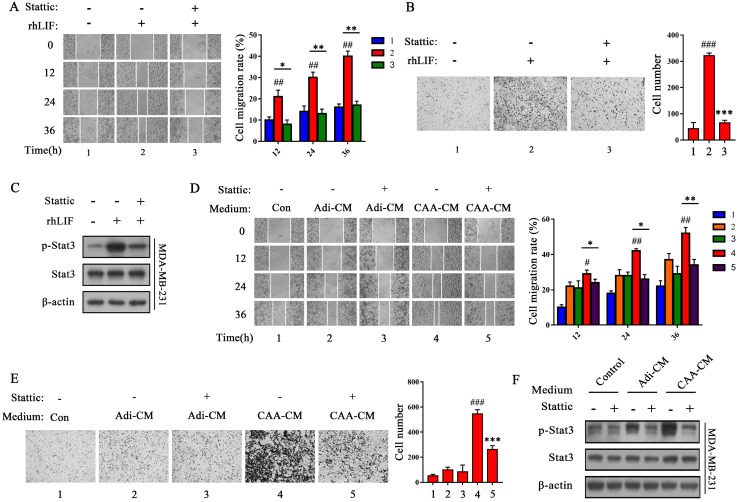
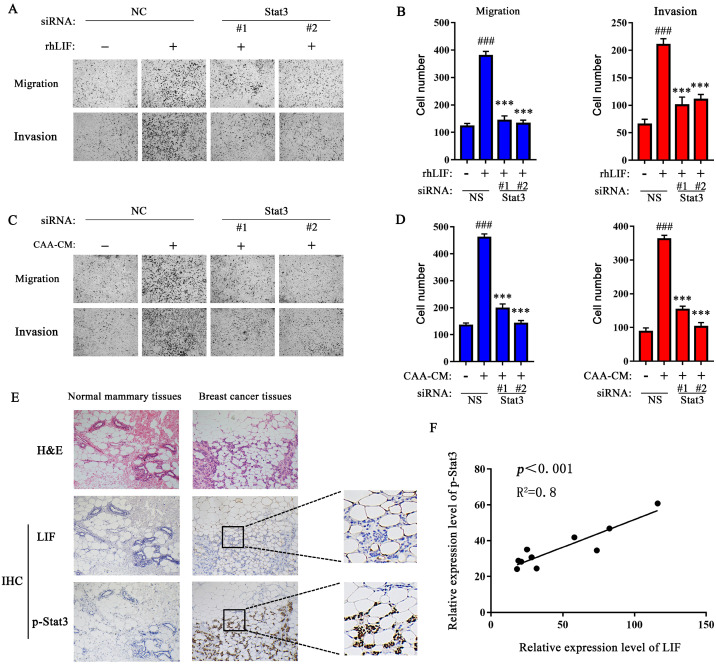
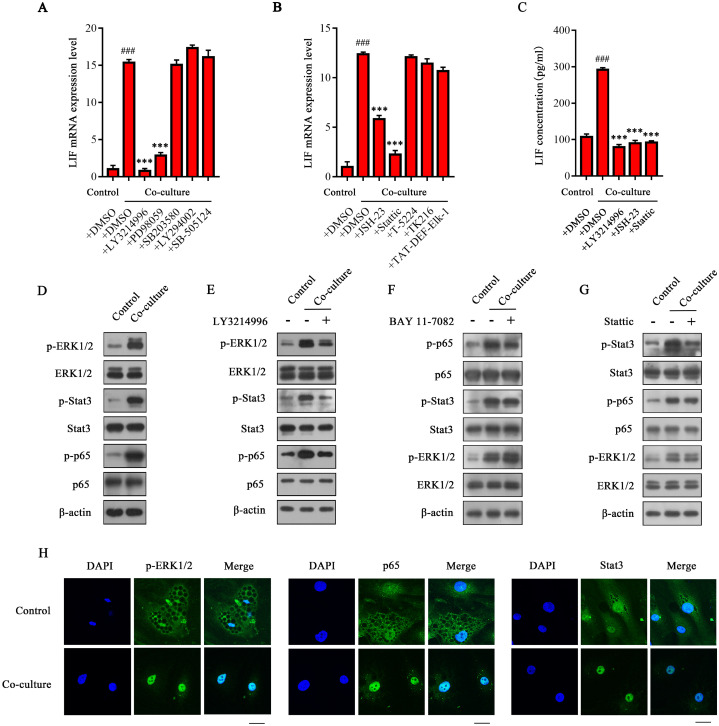
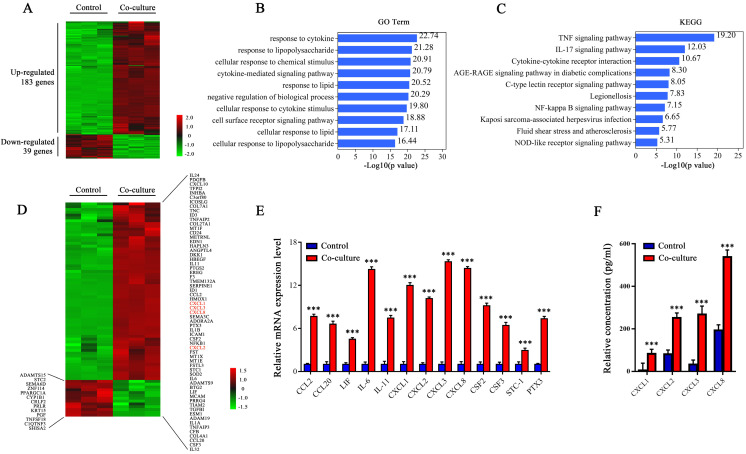
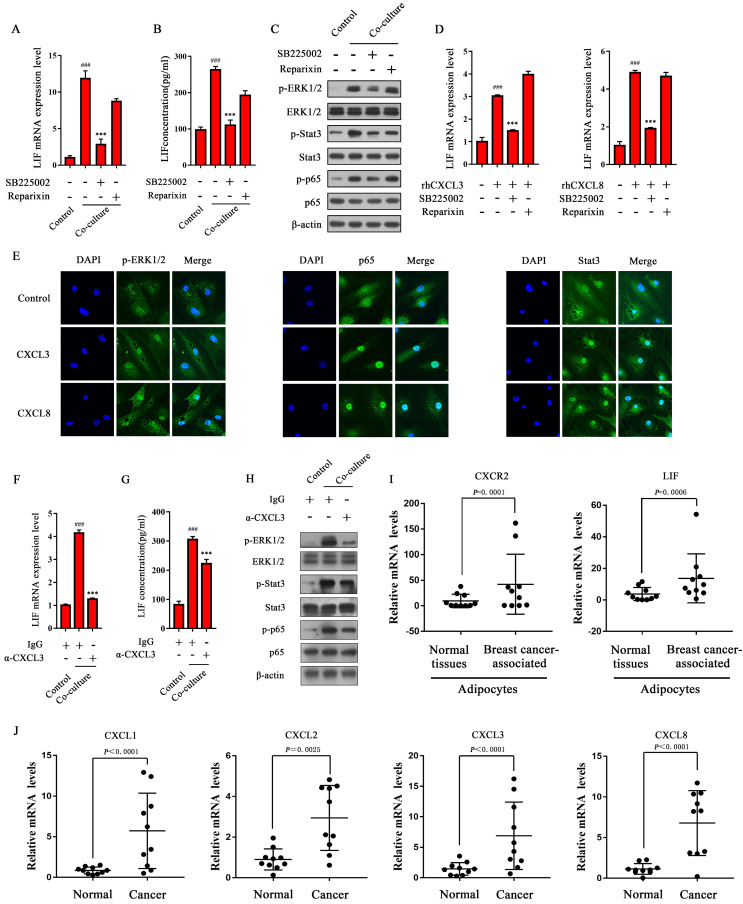
Cancer-associated adipocytes (CAAs), which are adipocytes transformed by cancer cells, are of great importance in promoting the progression of breast cancer. However, the underlying mechanisms involved in the crosstalk between cancer cells and adipocytes are still unknown. Here we report that CAAs and breast cancer cells communicate with each other by secreting the cytokines leukemia inhibitory factor (LIF) and C-X-C subfamily chemokines (CXCLs), respectively. LIF is a pro-inflammatory cytokine secreted by CAAs, which promotes migration and invasion of breast cancer cells via the Stat3 signaling pathway. The activation of Stat3 induced the secretion of glutamic acid-leucine-arginine (ELR) motif CXCLs (CXCL1, CXCL2, CXCL3 and CXCL8) in tumor cells. Interestingly, CXCLs in turn activated the ERK1/2/NF-κB/Stat3 signaling cascade to promote the expression of LIF in CAAs. In clinical breast cancer pathology samples, the up-regulation of LIF in paracancerous adipose tissue was positively correlated with the activation of Stat3 in breast cancer. Furthermore, we verified that adipocytes enhanced lung metastasis of breast cancer cells, and the combination of EC330 (targeting LIF) and SB225002 (targeting C-X-C motility chemokine receptor 2 (CXCR2)) significantly reduced lung metastasis of breast cancer cells . Our findings reveal that the interaction of adipocytes with breast cancer cells depends on a positive feedback loop between the cytokines LIF and CXCLs, which promotes breast cancer invasion and metastasis.
癌症相关脂肪细胞(CAAs)是癌细胞转化的脂肪细胞,在促进乳腺癌的进展中具有重要意义。然而,癌细胞与脂肪细胞之间相互作用的潜在机制仍不清楚。在这里,我们报告 CAAs 和乳腺癌细胞通过分别分泌细胞因子白血病抑制因子(LIF)和 C-X-C 亚家族趋化因子(CXCLs)相互交流。LIF 是由 CAAs 分泌的促炎细胞因子,通过 Stat3 信号通路促进乳腺癌细胞的迁移和侵袭。Stat3 的激活诱导肿瘤细胞中谷氨酸-亮氨酸-精氨酸(ELR) motif CXCLs(CXCL1、CXCL2、CXCL3 和 CXCL8)的分泌。有趣的是,CXCLs 反过来又激活了 ERK1/2/NF-κB/Stat3 信号级联反应,促进 CAAs 中 LIF 的表达。在临床乳腺癌病理样本中,旁癌脂肪组织中 LIF 的上调与乳腺癌中 Stat3 的激活呈正相关。此外,我们验证了脂肪细胞增强了乳腺癌细胞的肺转移,而 EC330(靶向 LIF)和 SB225002(靶向 C-X-C 运动趋化因子受体 2(CXCR2))的联合使用显著减少了乳腺癌细胞的肺转移。我们的研究结果表明,脂肪细胞与乳腺癌细胞的相互作用依赖于 LIF 和 CXCLs 之间的正反馈环,这促进了乳腺癌的侵袭和转移。