Ndulue Chinenye, Oyebode Oladapo, Iyer Ravishankar Subramani, Ganesh Anirudh, Ahmed Syed Ishtiaque, Orji Rita
Faculty of Computer Science, Dalhousie University, 6050 University Ave, Halifax, NS B3H 1W5 Canada.
Faculty of Computer Science, University of Toronto, Toronto, ON Canada.
User Model User-adapt Interact. 2022;32(1-2):165-214. doi: 10.1007/s11257-022-09319-w. Epub 2022 Mar 7.
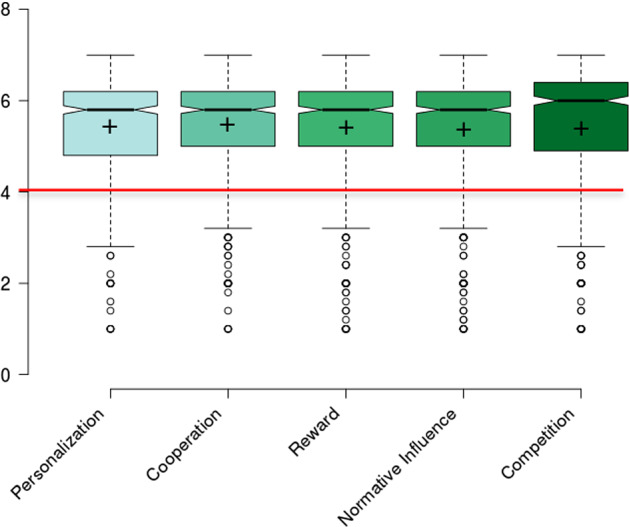
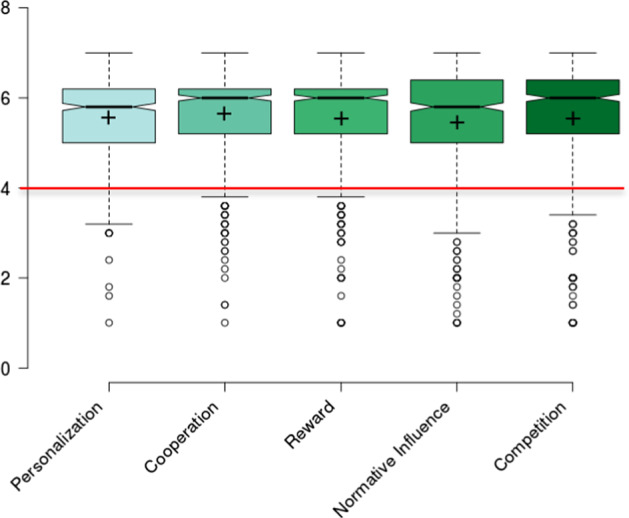
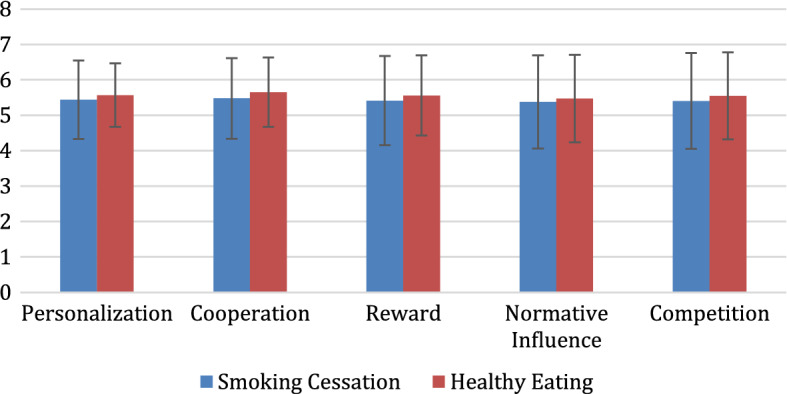
Persuasive gamified systems for health are interventions that promote behaviour change using various persuasive strategies. While research has shown that these strategies are effective at motivating behaviour change, there is little knowledge on whether and how the effectiveness of these strategies vary across multiple domains for people of distinct personality traits. To bridge this gap, we conducted a quantitative study with 568 participants to investigate (a) whether the effectiveness of the persuasive strategies implemented vary within each domain (b) whether the effectiveness of various strategies vary across two distinct domains, (c) how people belonging to different personality traits respond to these strategies, and (d) if people high in a personality trait would be influenced by a persuasive strategy within one domain and not in the other. Our results show that there are significant differences in the effectiveness of various strategies across domains and that people's personality plays a significant role in the perceived persuasiveness of different strategies both within and across distinct domains. The strategy (which involves incentivizing users for achieving specific milestones towards the desired behaviour) and the strategy (which involves allowing users to compete with each other to perform the desired behaviour) were effective for promoting healthy eating but not for smoking cessation for people high in Conscientiousness We provide design suggestions for developing persuasive gamified interventions for health targeting distinct domains and tailored to individuals depending on their personalities.
用于促进健康的有说服力的游戏化系统是利用各种说服策略来促进行为改变的干预措施。虽然研究表明这些策略在促进行为改变方面是有效的,但对于这些策略的有效性在不同领域中是否以及如何因不同性格特征的人而有所不同,我们知之甚少。为了弥补这一差距,我们对568名参与者进行了一项定量研究,以调查:(a)所实施的说服策略的有效性在每个领域内是否存在差异;(b)各种策略的有效性在两个不同领域之间是否存在差异;(c)属于不同性格特征的人如何对这些策略做出反应;(d)具有某种性格特征的人是否会在一个领域内受到说服策略的影响而在另一个领域则不会。我们的结果表明,不同策略在不同领域的有效性存在显著差异,并且人们的性格在不同领域内和跨领域的不同策略的感知说服力中都起着重要作用。对于高尽责性的人来说, 策略(即激励用户朝着期望行为实现特定里程碑)和 策略(即允许用户相互竞争以执行期望行为)在促进健康饮食方面有效,但在戒烟方面无效。我们为开发针对不同领域且根据个人性格量身定制的用于促进健康的有说服力的游戏化干预措施提供了设计建议。