Bragard Claude, Baptista Paula, Chatzivassiliou Elisavet, Di Serio Francesco, Gonthier Paolo, Jaques Miret Josep Anton, Justesen Annemarie Fejer, Magnusson Christer Sven, Milonas Panagiotis, Navas-Cortes Juan A, Parnell Stephen, Potting Roel, Reignault Philippe Lucien, Stefani Emilio, Thulke Hans-Hermann, Van der Werf Wopke, Vicent Civera Antonio, Yuen Jonathan, Zappalà Lucia, Grégoire Jean-Claude, Malumphy Chris, Kertesz Virag, Maiorano Andrea, MacLeod Alan
EFSA J. 2022 Mar 7;20(3):e07144. doi: 10.2903/j.efsa.2022.7144. eCollection 2022 Mar.
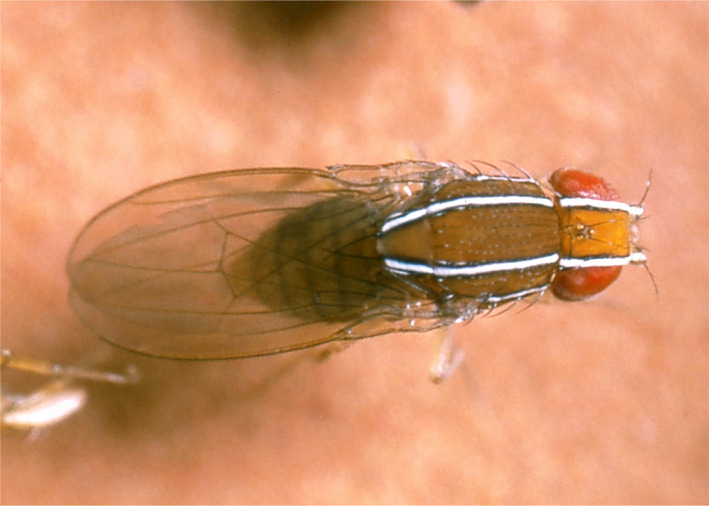
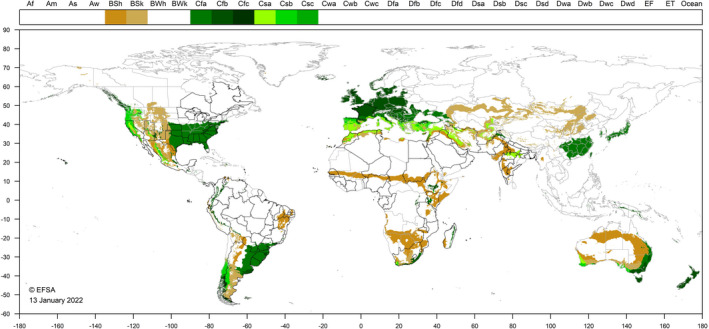
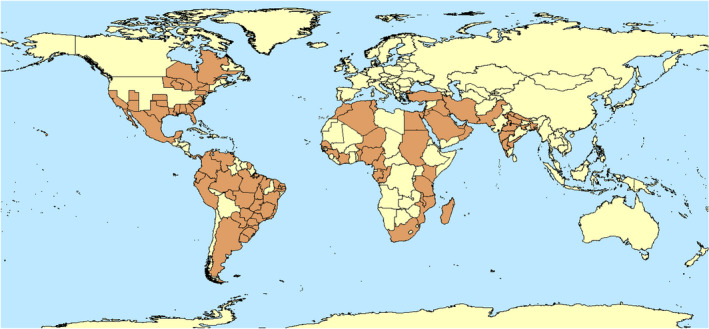
The EFSA Panel on Plant Health performed a pest categorisation of (Diptera: Drosophilidae), the African fig fly for the territory of the EU. This species successfully colonised the Indian subcontinent more than four decades ago, and more recently South and North America. Within the EU, the pest occurs in Cyprus, Malta, Portugal (Madeira) and Spain (Canary Islands and Andalusia). is not listed in Annex II of Commission Implementing Regulation (EU) 2019/2072. The larvae of this fly feed on more than 80 plant species both cultivated and non-cultivated. Females produce around 60-70 eggs. Egg laying mostly occurs in decaying fruit or fruit with injuries or mechanical damage. However, can oviposit on undamaged healthy fruit such as figs, strawberries and guavas which provide a potential pathway for entry into the EU. Lower temperature thresholds are around 9-10°C. Optimum development occurs at 28°C. The number of generations per year varies from 12 to 16. Climatic conditions in many EU member states and host plant availability in those areas are conducive for establishment. The introduction of is expected to have an economic impact in the EU especially on fig and strawberry production. Damage caused by other fruit flies (Drosophilidae and Tephritidae) could be increased by mixed infestations. Phytosanitary measures are available to reduce the likelihood of entry and further spread. satisfies all of the criteria that are within the remit of EFSA to assess for it to be regarded as a potential Union quarantine pest.
欧洲食品安全局植物健康专家组对欧盟境内的非洲无花果实蝇(双翅目:果蝇科)进行了有害生物分类。该物种在四十多年前成功定殖于印度次大陆,最近又在南美洲和北美洲定殖。在欧盟境内,该有害生物分布于塞浦路斯、马耳他、葡萄牙(马德拉)和西班牙(加那利群岛和安达卢西亚)。它未被列入委员会实施条例(欧盟)2019/2072的附件II。这种果蝇的幼虫取食80多种栽培和非栽培植物物种。雌蝇产卵约60 - 70枚。产卵大多发生在腐烂的果实或有伤口或机械损伤的果实上。然而,它也可在未受损的健康果实如无花果、草莓和番石榴上产卵,这为其进入欧盟提供了一条潜在途径。较低温度阈值约为9 - 10°C。最适发育温度为28°C。每年世代数从12代到16代不等。许多欧盟成员国的气候条件以及这些地区的寄主植物可利用性有利于其定殖。预计非洲无花果实蝇的传入将对欧盟产生经济影响,特别是对无花果和草莓生产。其他果蝇(果蝇科和实蝇科)造成的损害可能因混合侵染而增加。可采取植物卫生措施降低其传入和进一步扩散的可能性。非洲无花果实蝇符合欧洲食品安全局评估的所有标准,可被视为潜在的欧盟检疫性有害生物。