Bragard Claude, Baptista Paula, Chatzivassiliou Elisavet, Di Serio Francesco, Gonthier Paolo, Jaques Miret Josep Anton, Justesen Annemarie Fejer, Magnusson Christer Sven, Milonas Panagiotis, Navas-Cortes Juan A, Parnell Stephen, Potting Roel, Reignault Philippe Lucien, Stefani Emilio, Thulke Hans-Hermann, Van der Werf Wopke, Vicent Civera Antonio, Yuen Jonathan, Zappalà Lucia, Grégoire Jean-Claude, Malumphy Chris, Akrivou Antigoni, Kertesz Virag, Papachristos Dimitrios, Sfyra Oresteia, MacLeod Alan
EFSA J. 2024 May 24;22(5):e8806. doi: 10.2903/j.efsa.2024.8806. eCollection 2024 May.
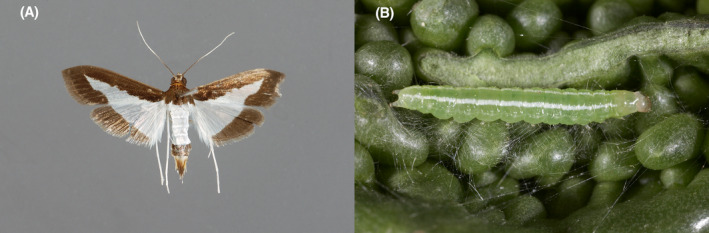
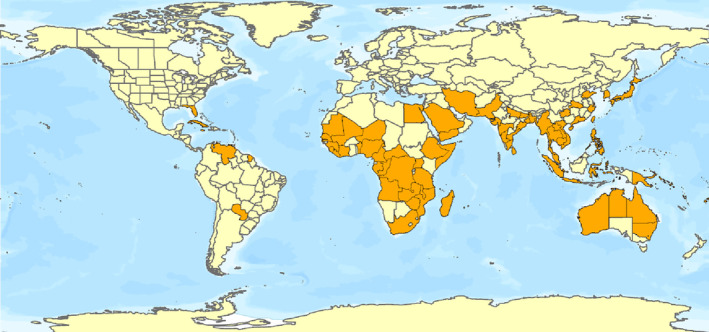
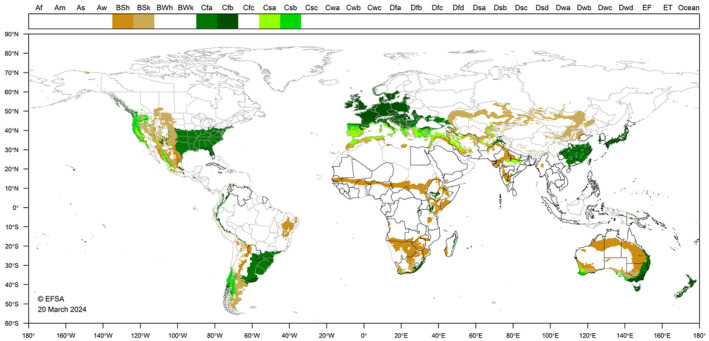
The EFSA Panel on Plant Health performed a pest categorisation of (Lepidoptera: Crambidae), the cucumber moth for the territory of the European Union (EU), following the commodity risk assessment of from Uganda, in which was identified as a pest of possible concern to the European Union. is native to South Asian countries and is now distributed in tropical and subtropical areas of the Americas, Africa, Asia and Oceania. In the EU, occurs in Madeira (Portugal). It is a polyphagous pest, feeding on 16 genera in 6 plant families, primarily on plants of the Cucurbitaceae family. Important cucurbit hosts in the EU include cucumber (), melon (), pumpkin (), summer squash () and watermelon (). Plants for planting, fruits and cut flowers provide potential pathways for entry into the EU. Climatic conditions and availability of host plants in southern EU countries would most probably allow this species to successfully establish and spread. Establishment could also occur in greenhouses in the northern parts of the EU. Economic impact in cultivated hosts, especially cucurbit crops is anticipated if establishment occurs. This insect is not listed in Annex II of Commission Implementing Regulation (EU) 2019/2072. Phytosanitary measures are available to reduce the likelihood of entry and further spread meets the criteria that are within the remit of EFSA to assess for this species to be regarded as a potential Union quarantine pest.
欧洲食品安全局植物健康小组根据来自乌干达的[某种害虫名称]的商品风险评估,对欧盟境内的黄瓜螟(鳞翅目:草螟科)进行了有害生物分类,其中[某种害虫名称]被确定为欧盟可能关注的有害生物。[某种害虫名称]原产于南亚国家,现分布于美洲、非洲、亚洲和大洋洲的热带和亚热带地区。在欧盟,[某种害虫名称]出现在马德拉群岛(葡萄牙)。它是一种多食性害虫,取食6个植物科的16个属,主要取食葫芦科植物。欧盟重要的葫芦科寄主包括黄瓜([黄瓜学名])、甜瓜([甜瓜学名])、南瓜([南瓜学名])、西葫芦([西葫芦学名])和西瓜([西瓜学名])。种植用植物、水果和切花为进入欧盟提供了潜在途径。欧盟南部国家的气候条件和寄主植物的可获得性很可能使该物种成功定殖和扩散。在欧盟北部的温室中也可能定殖。如果定殖发生,预计会对栽培寄主,特别是葫芦科作物造成经济影响。这种昆虫未列入委员会实施条例(欧盟)2019/2072的附件II。现有的植物检疫措施可降低其进入的可能性,且其进一步扩散符合欧洲食品安全局评估该物种被视为潜在欧盟检疫性有害生物职权范围内的标准。