Vogeti Sreekari, Boetzel Cindy, Herrmann Christoph S
Experimental Psychology Lab, Department of Psychology, European Medical School, Cluster for Excellence "Hearing for All", Carl von Ossietzky University, Oldenburg, Germany.
Neuroimaging Unit, European Medical School, Carl von Ossietzky University, Oldenburg, Germany.
Front Syst Neurosci. 2022 Feb 24;16:827353. doi: 10.3389/fnsys.2022.827353. eCollection 2022.
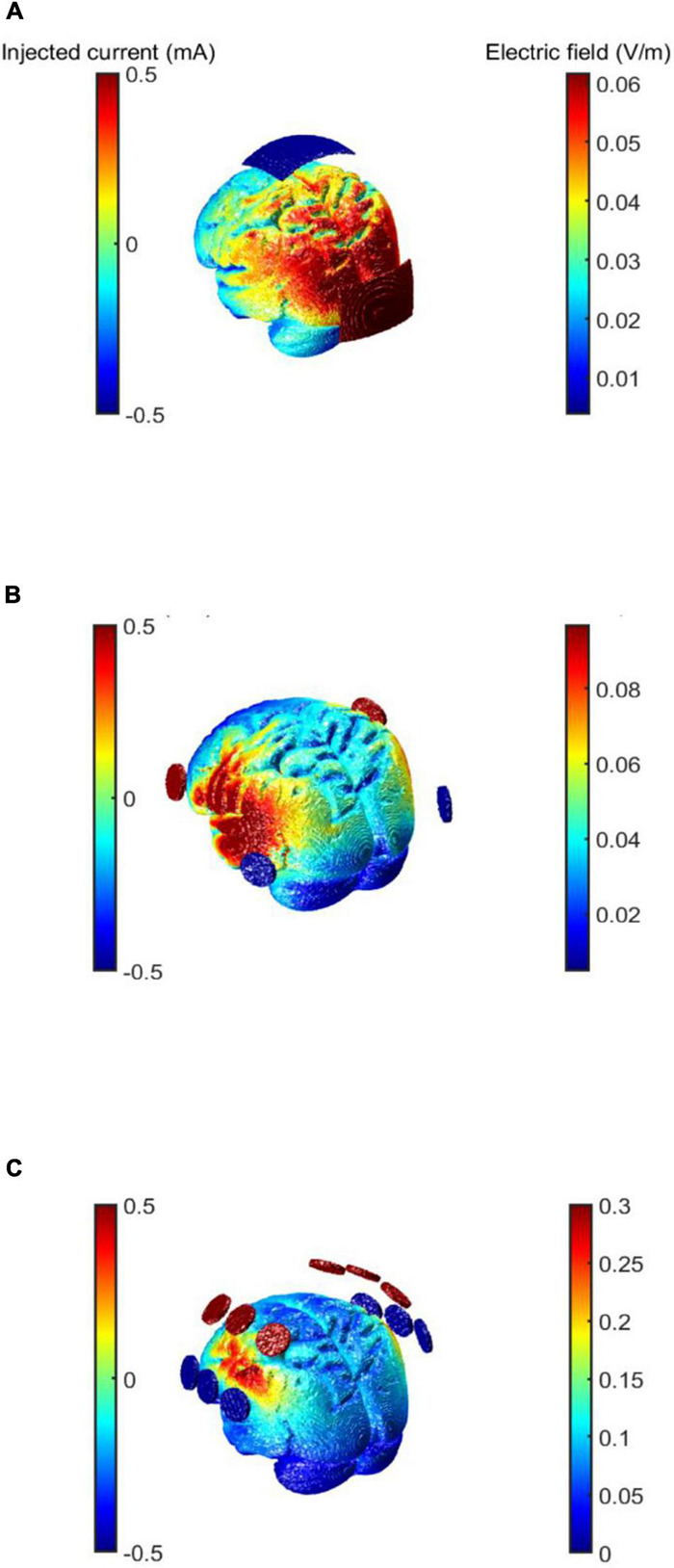
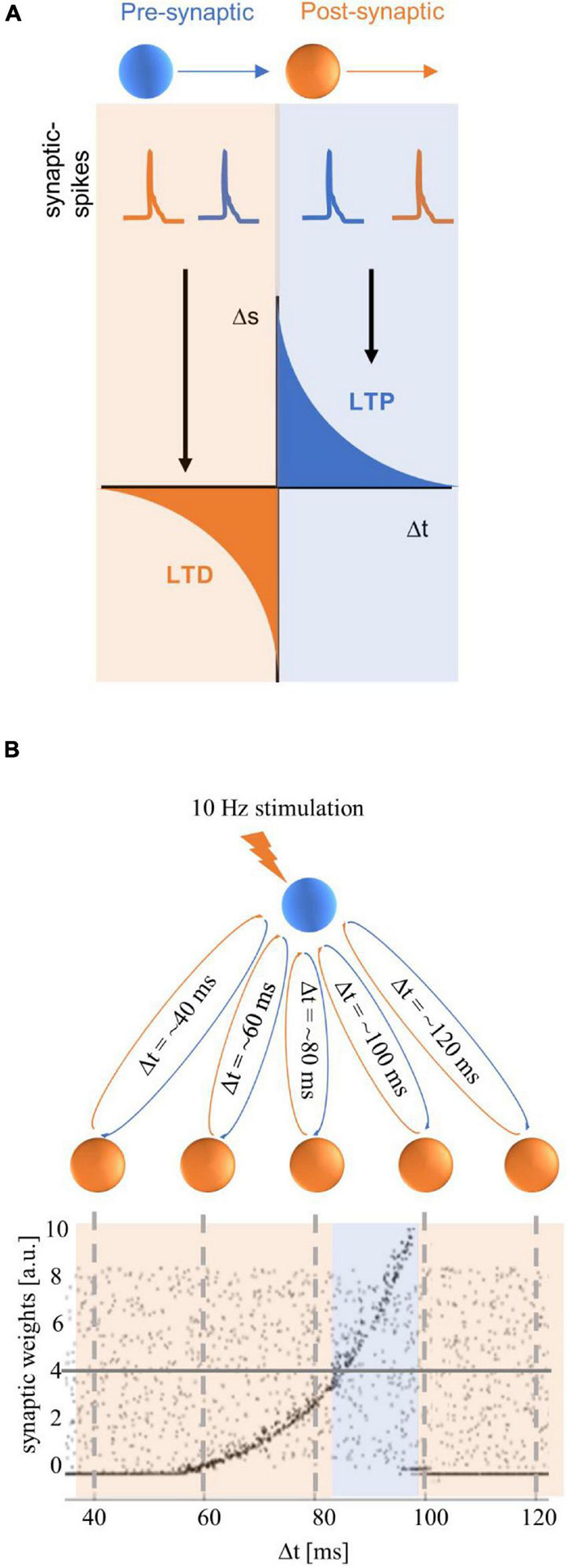
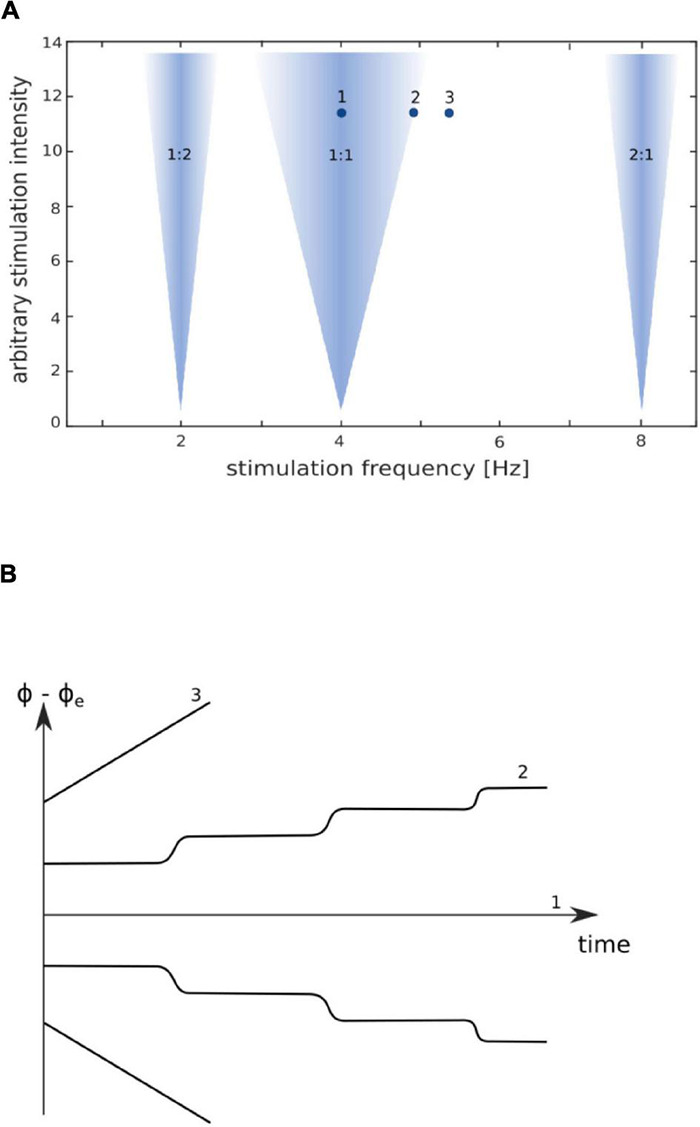
Specific frequency bands of neural oscillations have been correlated with a range of cognitive and behavioral effects (e.g., memory and attention). The causal role of specific frequencies may be investigated using transcranial alternating current stimulation (tACS), a non-invasive brain stimulation method. TACS involves applying a sinusoidal current between two or more electrodes attached on the scalp, above neural regions that are implicated in cognitive processes of interest. The theorized mechanisms by which tACS affects neural oscillations have implications for the exact stimulation frequency used, as well as its anticipated effects. This review outlines two main mechanisms that are thought to underlie tACS effects - entrainment, and spike-timing dependent plasticity (STDP). Entrainment suggests that the stimulated frequency synchronizes the ongoing neural oscillations, and is thought to be most effective when the stimulated frequency is at or close to the endogenous frequency of the targeted neural network. STDP suggests that stimulation leads to synaptic changes based on the timing of neuronal firing in the target neural network. According to the principles of STDP, synaptic strength is thought to increase when pre-synaptic events occur prior to post-synaptic events (referred to as long-term potentiation, LTP). Conversely, when post-synaptic events occur prior to pre-synaptic events, synapses are thought to be weakened (referred to as long-term depression, LTD). In this review, we summarize the theoretical frameworks and critically review the tACS evidence for each hypothesis. We also discuss whether each mechanism alone can account for tACS effects or whether a combined account is necessary.
神经振荡的特定频段已与一系列认知和行为效应(如记忆和注意力)相关联。特定频率的因果作用可通过经颅交流电刺激(tACS)来研究,这是一种非侵入性脑刺激方法。tACS包括在附着于头皮上的两个或更多电极之间施加正弦电流,这些电极位于与感兴趣的认知过程相关的神经区域上方。tACS影响神经振荡的理论机制对所使用的精确刺激频率及其预期效果都有影响。本综述概述了被认为是tACS效应基础的两种主要机制——夹带和峰时依赖可塑性(STDP)。夹带表明,刺激频率使正在进行的神经振荡同步,并且当刺激频率等于或接近目标神经网络的内源频率时,被认为是最有效的。STDP表明,刺激基于目标神经网络中神经元放电的时间导致突触变化。根据STDP的原理,当突触前事件先于突触后事件发生时(称为长时程增强,LTP),突触强度被认为会增加。相反,当突触后事件先于突触前事件发生时,突触被认为会减弱(称为长时程抑制,LTD)。在本综述中,我们总结了理论框架,并批判性地回顾了支持每个假设的tACS证据。我们还讨论了每种机制是否单独就能解释tACS效应,或者是否需要综合考虑。