Okado Kiyoshi, Adjou Moumouni Paul Franck, Lee Seung-Hun, Sivakumar Thillaiampalam, Yokoyama Naoaki, Fujisaki Kozo, Suzuki Hiroshi, Xuan Xuenan, Umemiya-Shirafuji Rika
National Research Center for Protozoan Diseases, Obihiro University of Agriculture and Veterinary Medicine, Hokkaido 080-8555, Japan.
National Agricultural and Food Research Organization, Kannondai 3-1-5, Ibaraki 305-0856, Japan.
Curr Res Parasitol Vector Borne Dis. 2021 Nov 11;1:100059. doi: 10.1016/j.crpvbd.2021.100059. eCollection 2021.
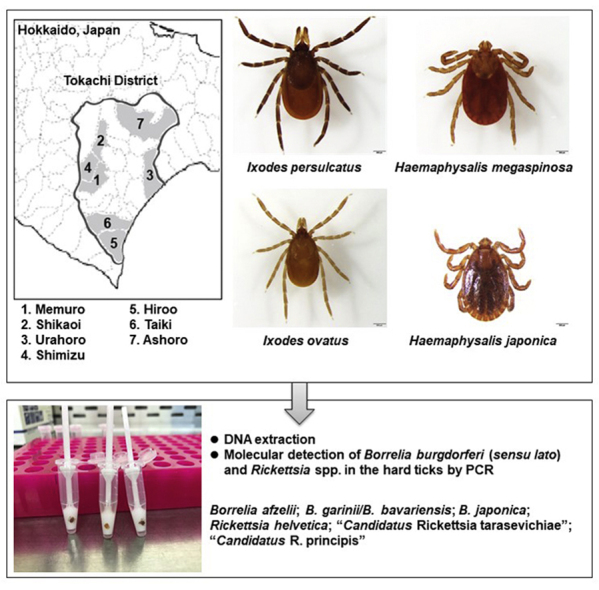
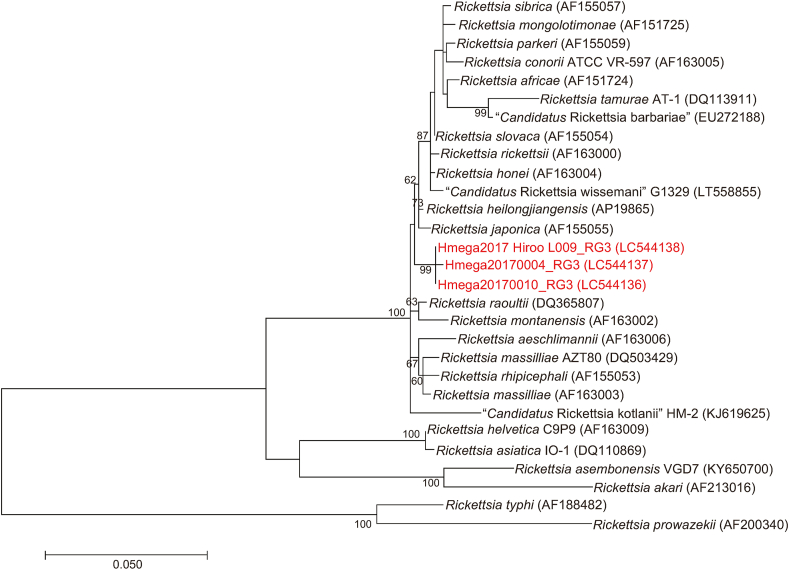
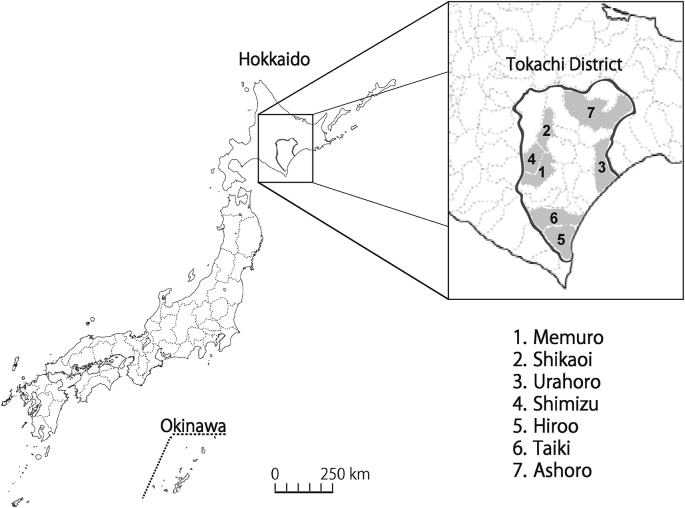
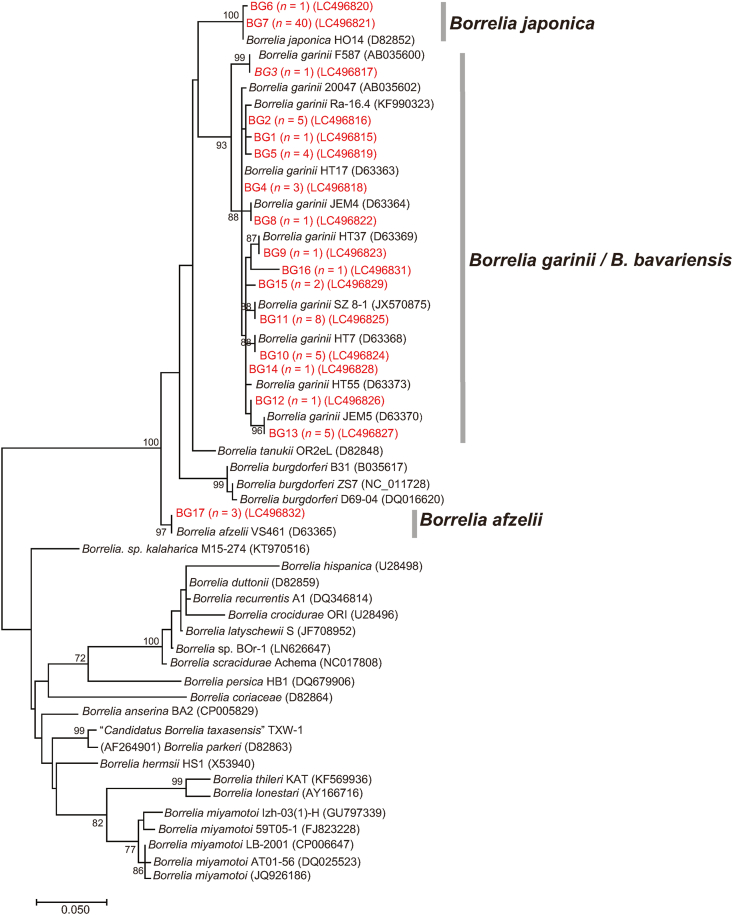
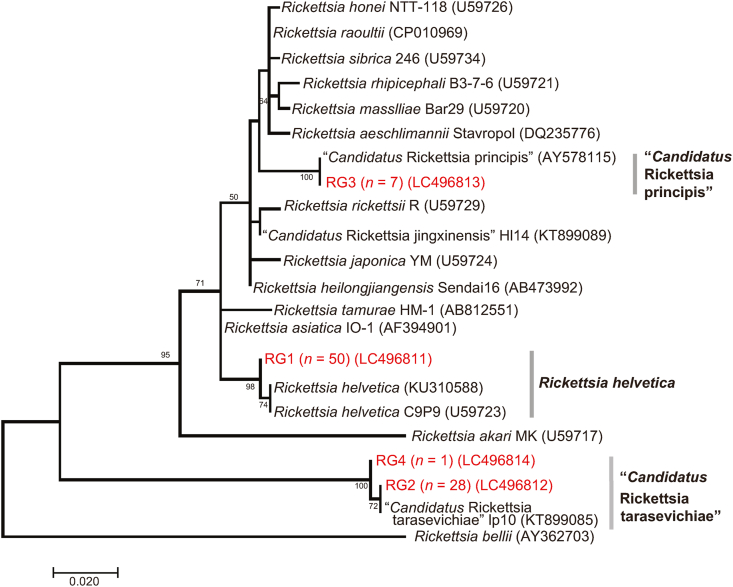
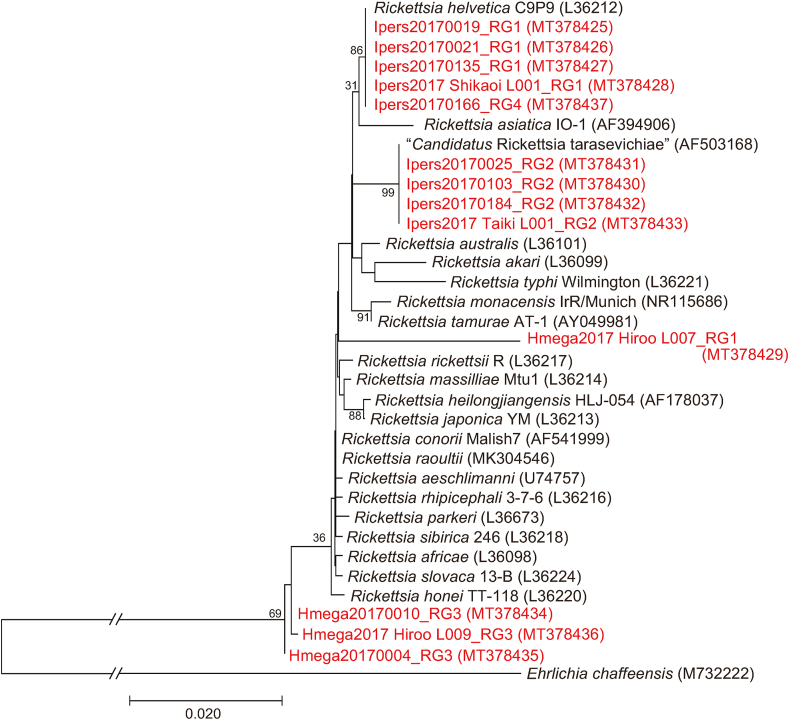
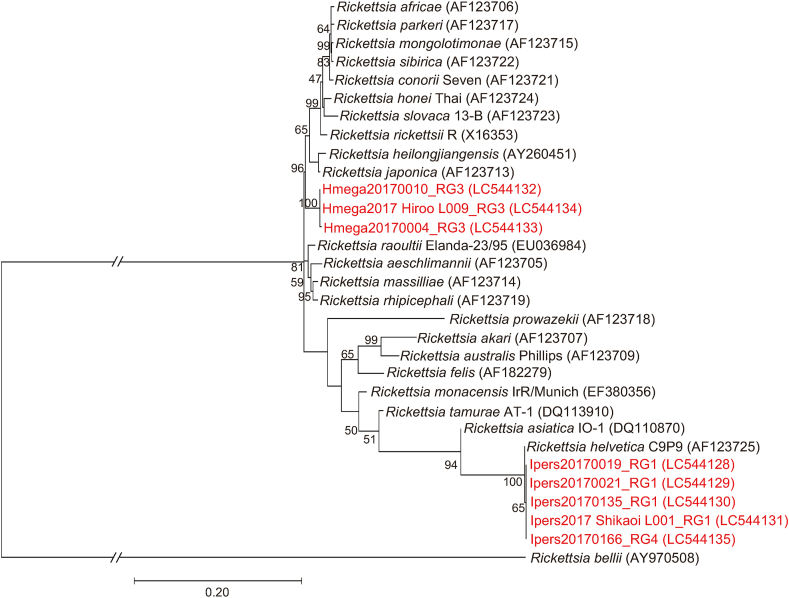
Ticks transmit various pathogens, including parasites, bacteria and viruses to humans and animals. To investigate the ticks and the potentially zoonotic pathogens that they may carry, questing ticks were collected in 2017 from 7 sites in Tokachi District, eastern Hokkaido, Japan. A total of 1563 ticks including adults (male and female), nymphs and larvae were collected. Four species of ticks were identified: , , and . Of the 1563 ticks, 1155 were used for DNA extraction. In total, 527 individual tick DNA samples prepared from adults ( = 484), nymphs ( = 41) and larvae ( = 2); and 67 pooled tick DNA samples prepared from larval stages ( = 628) were examined using PCR methods and sequencing to detect () and spp. The phylogenetic analysis of spp. gene sequences showed the presence of the human pathogenic () species (, and ) in . , whereas the non-pathogenic species was found only in . In . , and/or its closely related species was detected in both adults and nymphs at a prevalence of 21.9% whereas was found only in adults (1.8%). The prevalence of in adult . was 21.8%. species were identified through phylogenetic analysis based on , 16S rRNA, and genes. Four genotypes were detected in the samples which were classified into three species. The prevalence of human pathogenic was 26.0% in adults and nymphs, 55.6% in larval pools, and 1.7% in larval pools. The prevalence of " R. tarasevichiae" was 15.4% in adults and nymphs and 33.3% in larval pools. The prevalence of " R. principis" in adults and nymphs was 11.1% whereas it was detected in 3.4% of the larval pools. These results indicate that most of the risks of Lyme borreliosis and spotted fever group rickettsiosis infection in eastern Hokkaido, Japan, are restricted to .
蜱虫会将包括寄生虫、细菌和病毒在内的多种病原体传播给人类和动物。为了调查蜱虫及其可能携带的潜在人畜共患病原体,2017年在日本北海道东部十胜地区的7个地点采集了觅食蜱虫。共采集到1563只蜱虫,包括成虫(雄性和雌性)、若虫和幼虫。鉴定出四种蜱虫: 、 、 和 。在这1563只蜱虫中,1155只用于DNA提取。总共,使用PCR方法和测序对从成虫( = 484)、若虫( = 41)和幼虫( = 2)制备的527个单个蜱虫DNA样本,以及从幼虫阶段( = 628)制备的67个混合蜱虫DNA样本进行检测,以检测 ( )和 属。对 属 基因序列的系统发育分析表明,在 中存在人类致病性 ( 、 和 )物种,而仅在 中发现了非致病性物种 。在 中,在成虫和若虫中均检测到 和/或其密切相关物种 ,患病率为21.9%,而 仅在成虫中发现(1.8%)。成虫 中 的患病率为21.8%。通过基于 、16S rRNA、 和 基因的系统发育分析鉴定出 属物种。在样本中检测到四种基因型,它们被分类为三个物种。人类致病性 在 成虫和若虫中的患病率为26.0%,在 幼虫混合样本中的患病率为55.6%,在 幼虫混合样本中的患病率为1.7%。“塔拉谢维奇疏螺旋体”在 成虫和若虫中的患病率为15.4%,在 幼虫混合样本中的患病率为33.3%。“普氏立克次体”在 成虫和若虫中的患病率为11.1%,而在 的3.4%幼虫混合样本中检测到。这些结果表明,日本北海道东部莱姆病和斑点热群立克次体病感染的大部分风险仅限于 。