Rar Vera, Livanova Natalia, Tkachev Sergey, Kaverina Galina, Tikunov Artem, Sabitova Yuliya, Igolkina Yana, Panov Victor, Livanov Stanislav, Fomenko Nataliya, Babkin Igor, Tikunova Nina
Institute of Chemical Biology and Fundamental Medicine, SB RAS, Novosibirsk, Russian Federation.
Institute of Systematics and Ecology of Animals SB RAS, Novosibirsk, Russian Federation.
Parasit Vectors. 2017 May 25;10(1):258. doi: 10.1186/s13071-017-2186-5.
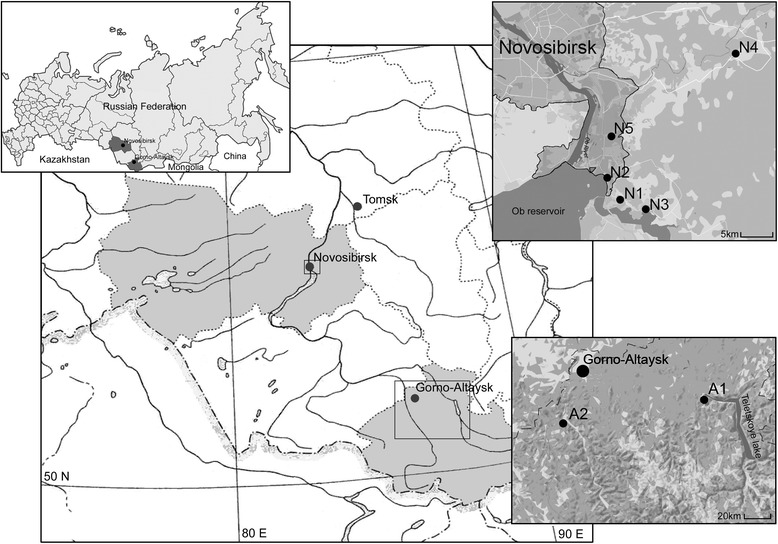
The Ixodes pavlovskyi tick species, a member of the I. persulcatus/I. ricinus group, was discovered in the middle of the 20 century in the Russian Far East. Limited data have been reported on the detection of infectious agents in this tick species. The aim of this study was to investigate the prevalence and genetic variability of a wide range of infectious agents in I. pavlovskyi ticks collected in their traditional and recently invaded habitats, the Altai Mountains and Novosibirsk Province, respectively, which are both located within the Western Siberian part of the I. pavlovskyi distribution area.
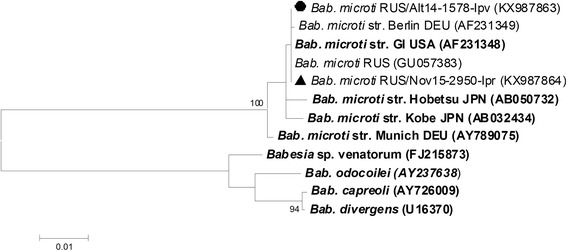
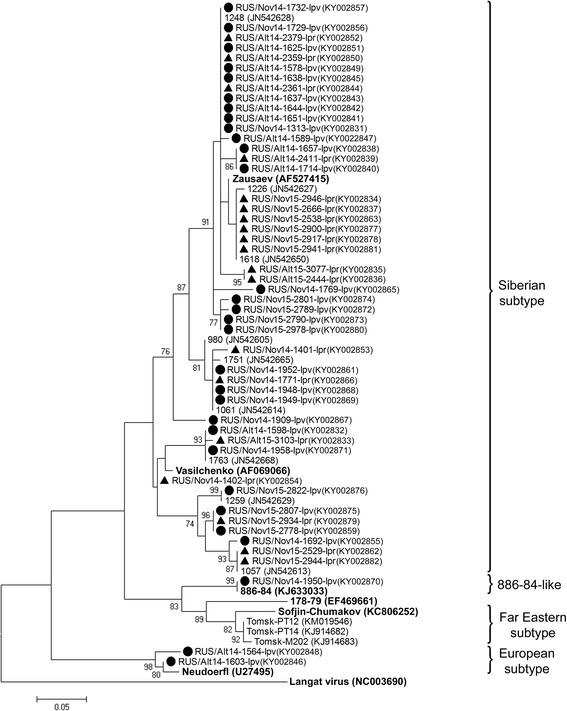
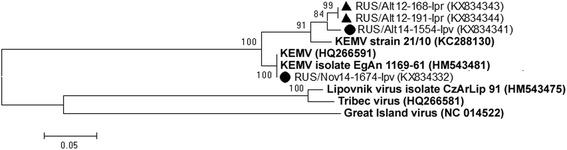
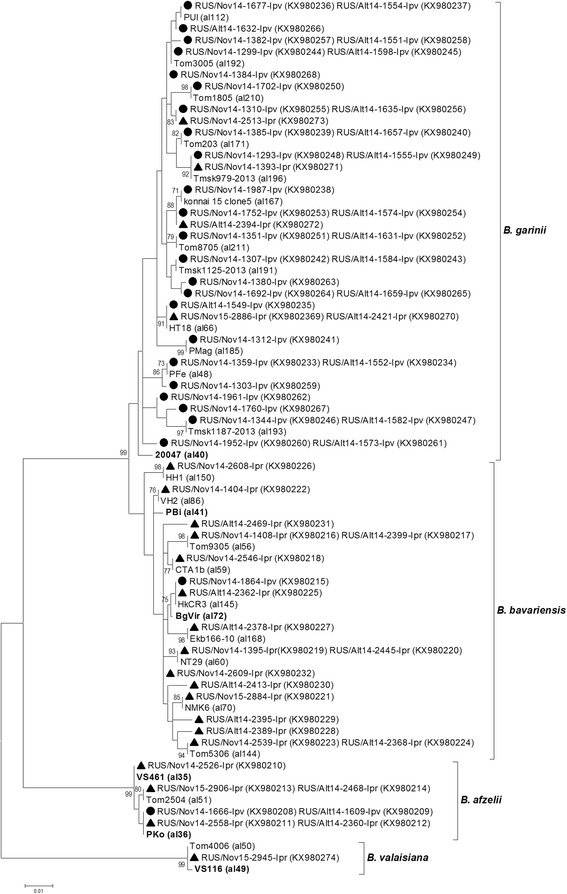
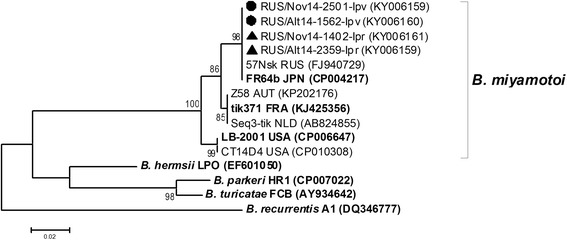
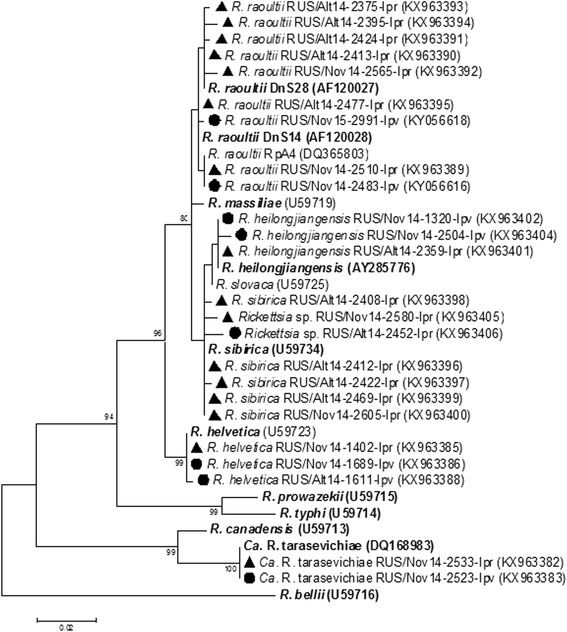
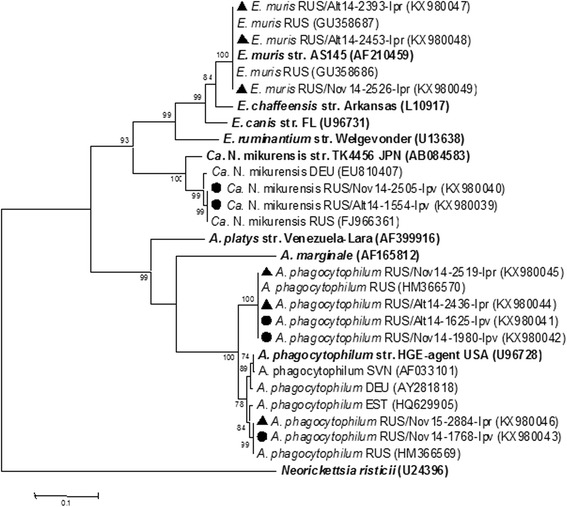
This study reports the novel discovery of Borrelia bavariensis, Rickettsia helvetica, R. heilongjiangensis, R. raoultii, "Candidatus Rickettsia tarasevichiae", Anaplasma phagocytophilum, Ehrlichia muris, "Candidatus Neoehrlichia mikurensis" and Babesia microti in I. pavlovskyi ticks. In addition, we confirmed the previous identification of B. afzelii, B. garinii and B. miyamotoi, as well as tick-borne encephalitis and Kemerovo viruses in this tick species. The prevalence and some genetic characteristics of all of the tested agents were compared with those found in I. persulcatus ticks that were collected at the same time in the same locations, where these tick species occur in sympatry. It was shown that the prevalence and genotypes of many of the identified pathogens did not significantly differ between I. pavlovskyi and I. persulcatus ticks. However, I. pavlovskyi ticks were significantly more often infected by B. garinii and less often by B. bavariensis, B. afzelii, "Ca. R. tarasevichiae", and E. muris than I. persulcatus ticks in both studied regions. Moreover, new genetic variants of B. burgdorferi (sensu lato) and Rickettsia spp. as well as tick-borne encephalitis and Kemerovo viruses were found in both I. pavlovskyi and I. persulcatus ticks.
Almost all pathogens that were previously detected in I. persulcatus ticks were identified in I. pavlovskyi ticks; however, the distribution of species belonging to the B. burgdorferi (sensu lato) complex, the genus Rickettsia, and the family Anaplasmataceae was different between the two tick species. Several new genetic variants of viral and bacterial agents were identified in I. pavlovskyi and I. persulcatus ticks.
帕氏硬蜱(Ixodes pavlovskyi)是全沟硬蜱(I. persulcatus)/蓖麻硬蜱(I. ricinus)种群的成员之一,于20世纪中叶在俄罗斯远东地区被发现。关于该蜱种中感染因子检测的报道数据有限。本研究的目的是调查分别在其传统栖息地和最近入侵栖息地采集的帕氏硬蜱中多种感染因子的流行情况和遗传变异性,这两个栖息地分别是阿尔泰山脉和新西伯利亚省,均位于帕氏硬蜱分布区的西西伯利亚部分。
本研究报告了在帕氏硬蜱中首次发现巴伐利亚疏螺旋体(Borrelia bavariensis)、瑞士立克次体(Rickettsia helvetica)、黑龙江立克次体(R. heilongjiangensis)、拉乌尔立克次体(R. raoultii)、“塔拉舍维奇亚立克次体(Candidatus Rickettsia tarasevichiae)”、嗜吞噬细胞无形体(Anaplasma phagocytophilum)、鼠埃立克体(Ehrlichia muris)、“新埃立克体(Candidatus Neoehrlichia mikurensis)”和微小巴贝斯虫(Babesia microti)。此外,我们证实了此前在该蜱种中鉴定出的阿氏疏螺旋体(B. afzelii)、加氏疏螺旋体(B. garinii)和 Miyamoto 疏螺旋体(B. miyamotoi),以及蜱传脑炎病毒和克麦罗沃病毒。将所有检测病原体的流行情况和一些遗传特征与同时在相同地点采集的全沟硬蜱中的情况进行了比较,这两种蜱在同一地点共存。结果表明,帕氏硬蜱和全沟硬蜱中许多已鉴定病原体的流行情况和基因型没有显著差异。然而,在两个研究区域中,帕氏硬蜱感染加氏疏螺旋体的频率明显高于全沟硬蜱,而感染巴伐利亚疏螺旋体、阿氏疏螺旋体、“塔拉舍维奇亚立克次体”和鼠埃立克体的频率则低于全沟硬蜱。此外,在帕氏硬蜱和全沟硬蜱中均发现了伯氏疏螺旋体(狭义)(Borrelia burgdorferi (sensu lato))和立克次体属(Rickettsia spp.)以及蜱传脑炎病毒和克麦罗沃病毒的新遗传变体。
几乎所有先前在全沟硬蜱中检测到的病原体都在帕氏硬蜱中被鉴定出来;然而,伯氏疏螺旋体(狭义)复合体、立克次体属和无形体科的物种分布在这两种蜱之间有所不同。在帕氏硬蜱和全沟硬蜱中鉴定出了病毒和细菌病原体的几种新遗传变体。