Department of Systems Biology, Blavatnik Institute at Harvard Medical School, Boston, MA, USA.
Laboratory of Systems Pharmacology, Blavatnik Institute at Harvard Medical School, Boston, MA, USA.
Mol Syst Biol. 2022 Mar;18(3):e10588. doi: 10.15252/msb.202110588.
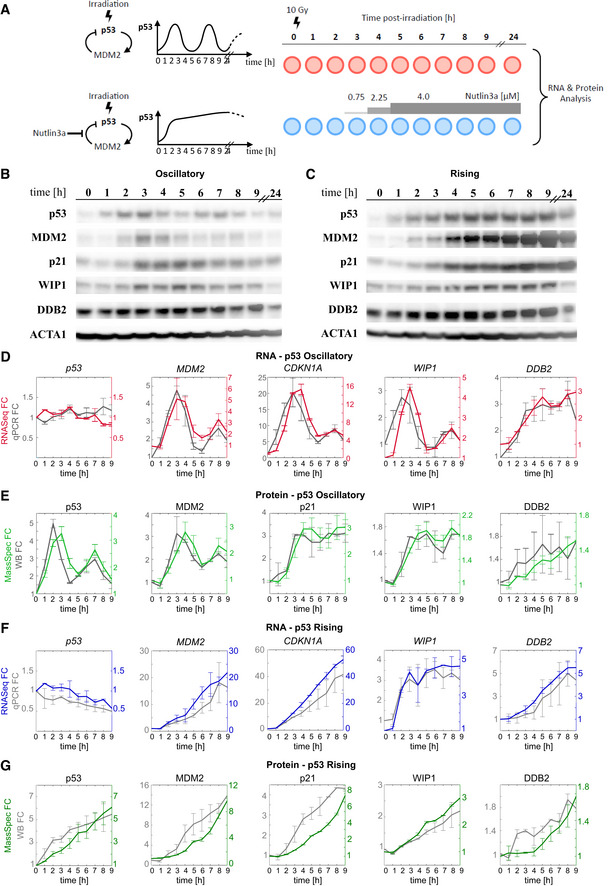
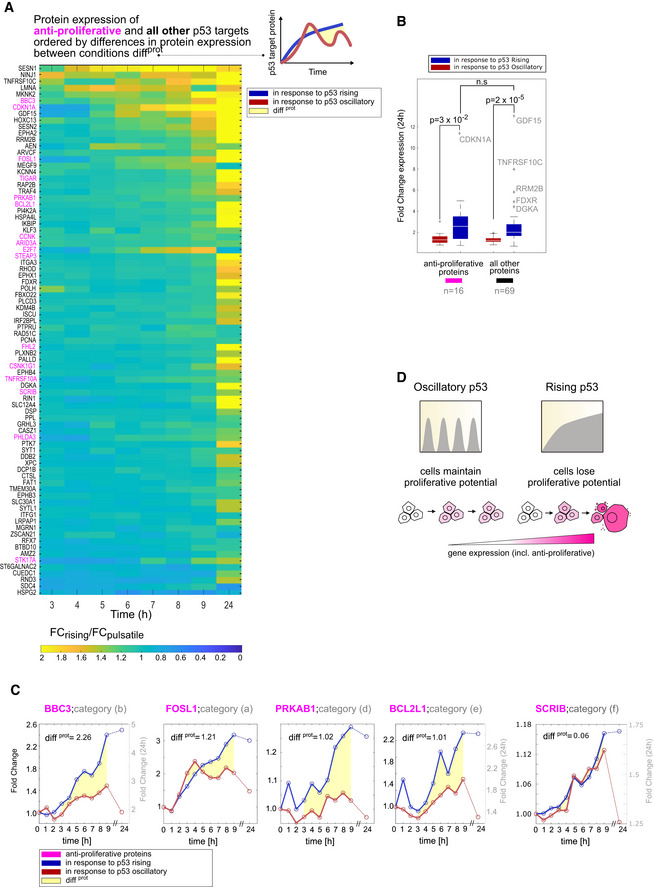
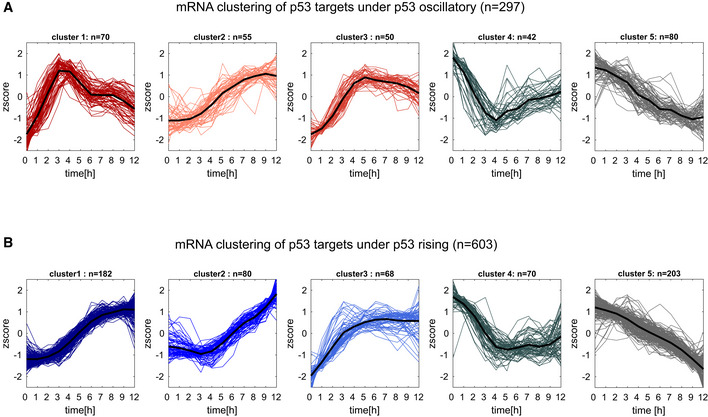
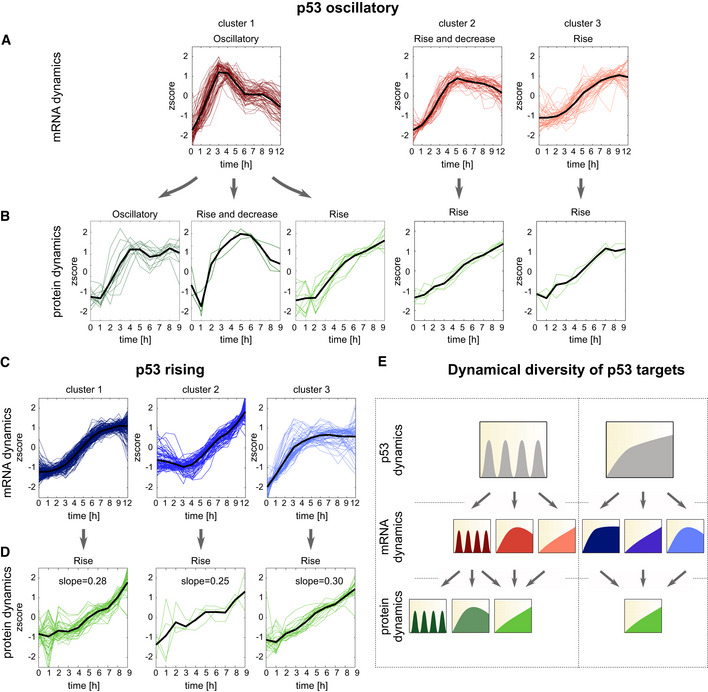
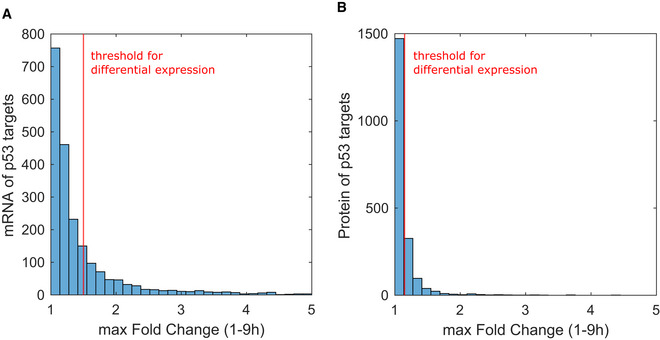
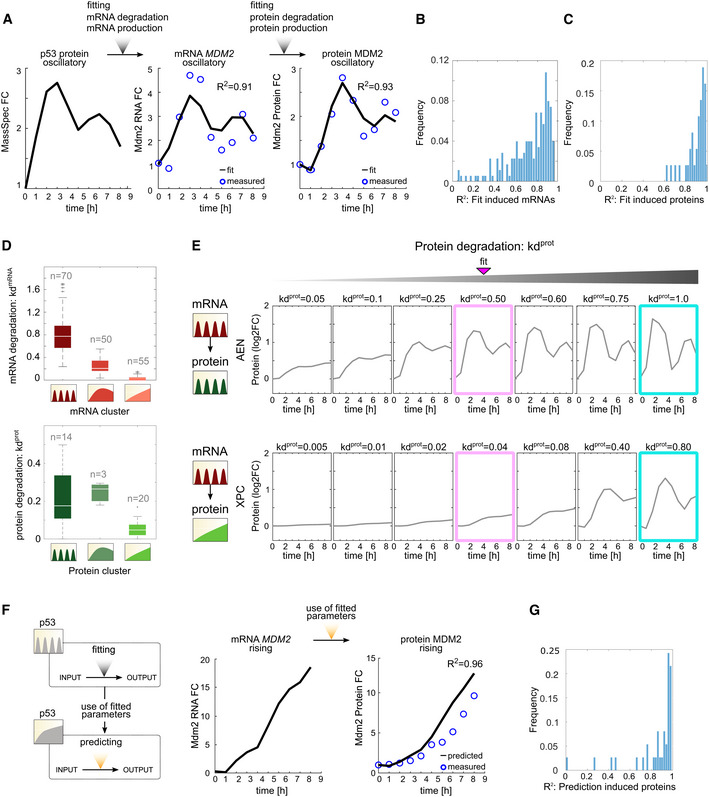
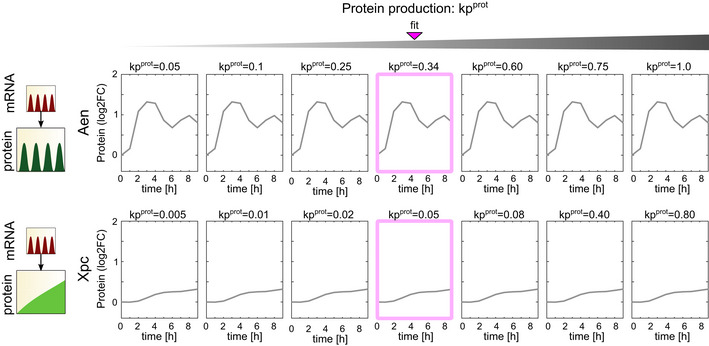
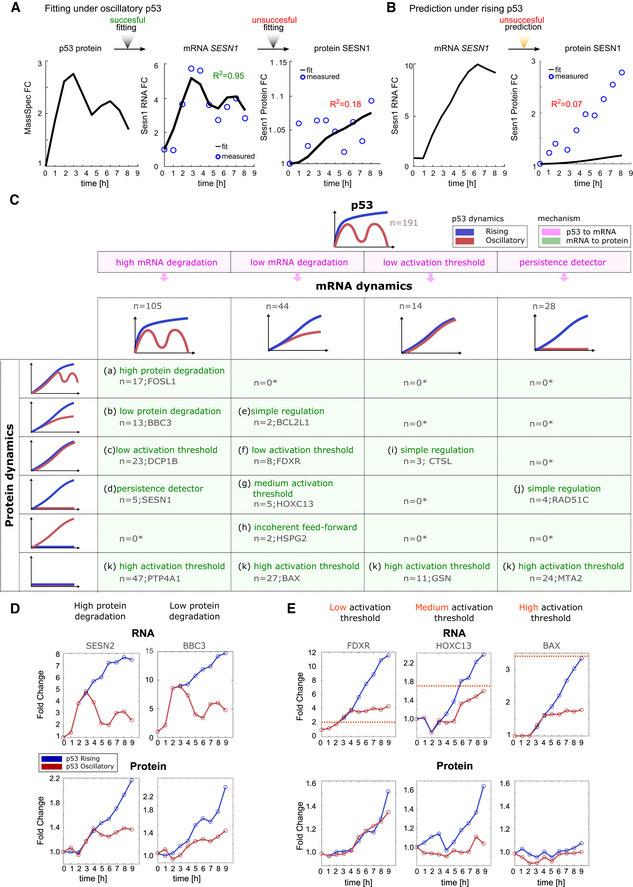
The cell stress-responsive transcription factor p53 influences the expression of its target genes and subsequent cellular responses based in part on its dynamics (changes in level over time). The mechanisms decoding p53 dynamics into subsequent target mRNA and protein dynamics remain unclear. We systematically quantified p53 target mRNA and protein expression over time under two p53 dynamical regimes, oscillatory and rising, using RNA-sequencing and TMT mass spectrometry. Oscillatory dynamics allowed for a greater variety of dynamical patterns for both mRNAs and proteins. Mathematical modeling of empirical data revealed three distinct mechanisms that decode p53 dynamics. Specific combinations of these mechanisms at the transcriptional and post-transcriptional levels enabled exclusive induction of proteins under particular dynamics. In addition, rising induction of p53 led to higher induction of proteins regardless of their functional class, including proteins promoting arrest of proliferation, the primary cellular outcome under rising p53. Our results highlight the diverse mechanisms cells employ to distinguish complex transcription factor dynamics to regulate gene expression.
细胞应激反应转录因子 p53 根据其动态变化(随时间的变化)影响其靶基因的表达和随后的细胞反应。将 p53 动力学解码为随后的靶 mRNA 和蛋白质动力学的机制仍不清楚。我们使用 RNA 测序和 TMT 质谱法,在两种 p53 动力学状态(振荡和上升)下,系统地定量了 p53 靶 mRNA 和蛋白质随时间的表达。振荡动力学为 mRNA 和蛋白质的动力学模式提供了更大的多样性。对经验数据的数学建模揭示了三种不同的机制,可以对 p53 动力学进行解码。在转录和转录后水平上这些机制的特定组合能够在特定动力学下特异性诱导蛋白质的表达。此外,p53 的上升诱导导致无论其功能类别如何,蛋白质的诱导都更高,包括促进增殖停滞的蛋白质,这是 p53 上升时的主要细胞结果。我们的研究结果强调了细胞用于区分复杂转录因子动力学以调节基因表达的多种机制。