Immunology and Pathogenesis Branch, Influenza Division, National Center for Immunization & Respiratory Diseases, Centers for Disease Control & Prevention, Atlanta, Georgia, USA.
Food and Drug Administration, Center for Biologics Evaluation and Research, DBPAP, Silver Spring, Maryland, USA.
mBio. 2022 Apr 26;13(2):e0298321. doi: 10.1128/mbio.02983-21. Epub 2022 Mar 14.
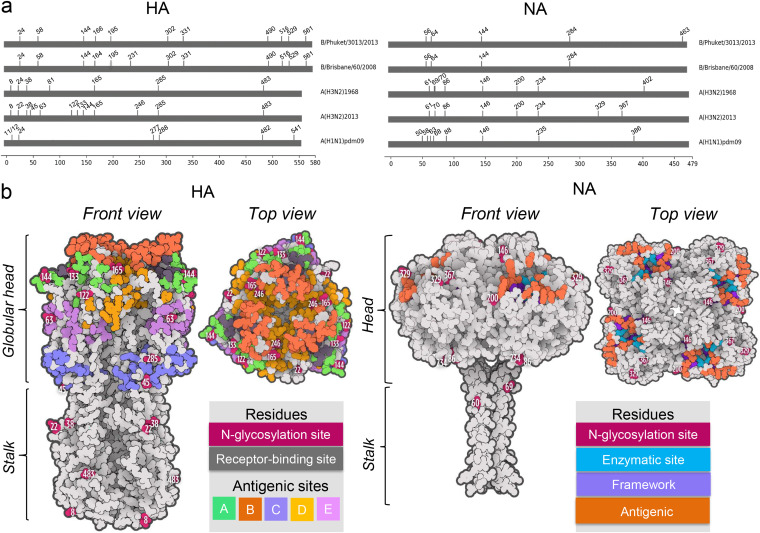
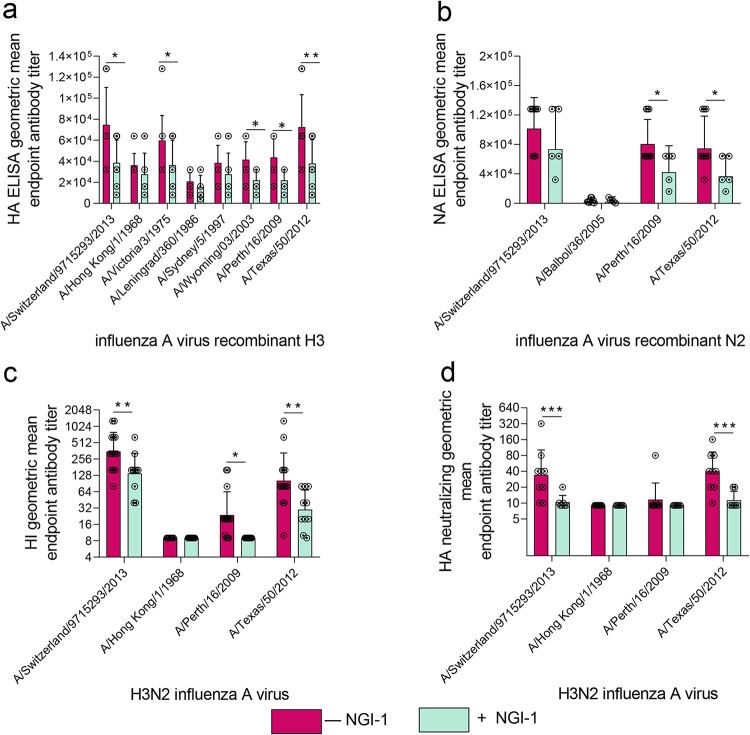
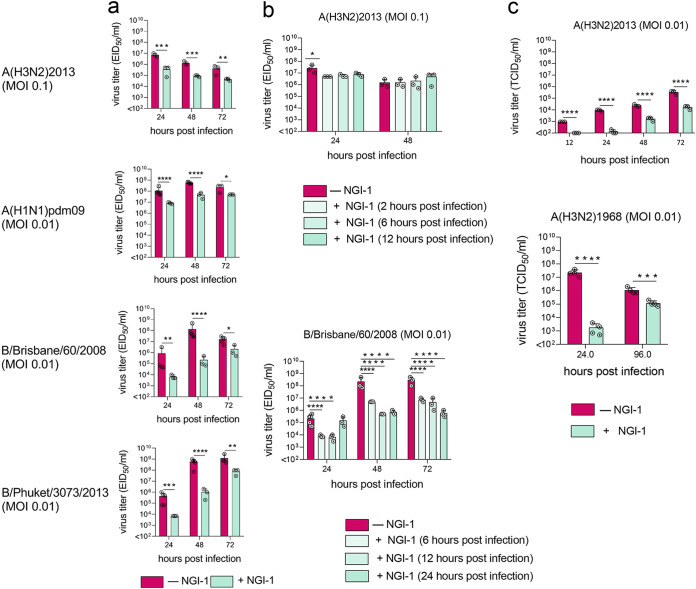
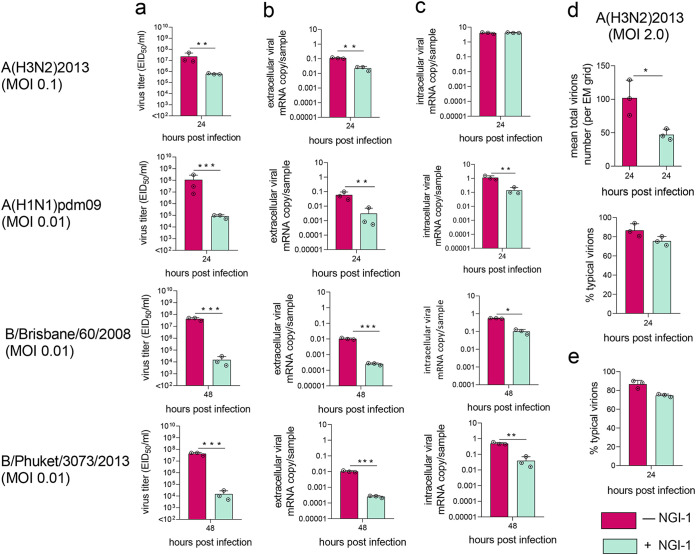
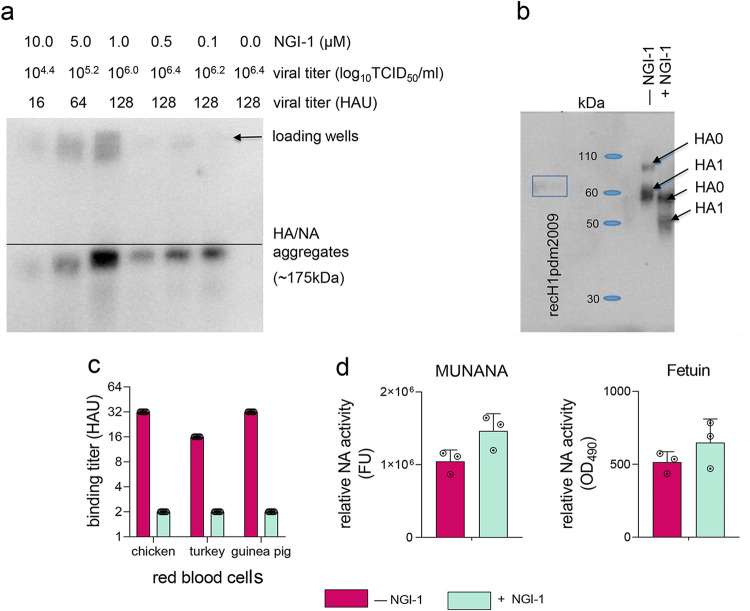
Individuals with metabolic dysregulation of cellular glycosylation often experience severe influenza disease, with a poor immune response to the virus and low vaccine efficacy. Here, we investigate the consequences of aberrant cellular glycosylation for the glycome and the biology of influenza virus. We transiently induced aberrant N-linked glycosylation in cultured cells with an oligosaccharyltransferase inhibitor, NGI-1. Cells treated with NGI-1 produced morphologically unaltered viable influenza virus with sequence-neutral glycosylation changes (primarily reduced site occupancy) in the hemagglutinin and neuraminidase proteins. Hemagglutinin with reduced glycan occupancy required a higher concentration of surfactant protein D (an important innate immunity respiratory tract collectin) for inhibition compared to that with normal glycan occupancy. Immunization of mice with NGI-1-treated virus significantly reduced antihemagglutinin and antineuraminidase titers of total serum antibody and reduced hemagglutinin protective antibody responses. Our data suggest that aberrant cellular glycosylation may increase the risk of severe influenza as a result of the increased ability of glycome-modified influenza viruses to evade the immune response. People with disorders such as cancer, autoimmune disease, diabetes, or obesity often have metabolic dysregulation of cellular glycosylation and also have more severe influenza disease, a reduced immune response to the virus, and reduced vaccine efficacy. Since influenza viruses that infect such people do not show consistent genomic variations, it is generally assumed that the altered biology is mainly related to host factors. However, since host cells are responsible for glycosylation of influenza virus hemagglutinin and neuraminidase, and glycosylation is important for interactions of these proteins with the immune system, the viruses may have functional differences that are not reflected by their genomic sequence. Here, we show that imbalanced cellular glycosylation can modify the viral glycome without genomic changes, leading to reduced innate and adaptive host immune responses to infection. Our findings link metabolic dysregulation of host glycosylation to increased risk of severe influenza and reduced influenza virus vaccine efficacy.
患有细胞糖基化代谢失调的个体常患有严重流感,对病毒的免疫反应差,疫苗效果低。在这里,我们研究了细胞糖基化异常对糖组学和流感病毒生物学的影响。我们使用寡糖基转移酶抑制剂 NGI-1 短暂诱导培养细胞中的异常 N 连接糖基化。用 NGI-1 处理的细胞产生形态未改变的、具有序列中性糖基化变化的活流感病毒(主要是降低的糖基化位点占有率),在血凝素和神经氨酸酶蛋白中。与正常糖基化占有率相比,具有降低糖基化占有率的血凝素需要更高浓度的表面活性剂蛋白 D(一种重要的先天免疫呼吸道集合素)才能被抑制。用 NGI-1 处理的病毒免疫接种小鼠,显著降低了总血清抗体中的抗血凝素和抗神经氨酸酶滴度,并降低了血凝素保护抗体反应。我们的数据表明,异常的细胞糖基化可能会增加严重流感的风险,因为糖基化修饰的流感病毒逃避免疫反应的能力增加。患有癌症、自身免疫性疾病、糖尿病或肥胖等疾病的人通常存在细胞糖基化代谢失调,也会患有更严重的流感,对病毒的免疫反应降低,疫苗效果降低。由于感染这些人的流感病毒没有显示出一致的基因组变异,因此通常认为改变的生物学主要与宿主因素有关。然而,由于宿主细胞负责流感病毒血凝素和神经氨酸酶的糖基化,糖基化对于这些蛋白质与免疫系统的相互作用很重要,因此病毒可能具有功能差异,而这些差异并不反映在它们的基因组序列中。在这里,我们表明,失衡的细胞糖基化可以在没有基因组变化的情况下修饰病毒糖组,从而降低宿主对感染的先天和适应性免疫反应。我们的发现将宿主糖基化代谢失调与严重流感风险增加和流感病毒疫苗效果降低联系起来。