Department of Physiology and Biophysics, University of Washington, Seattle, United States.
Elife. 2022 Mar 14;11:e70611. doi: 10.7554/eLife.70611.
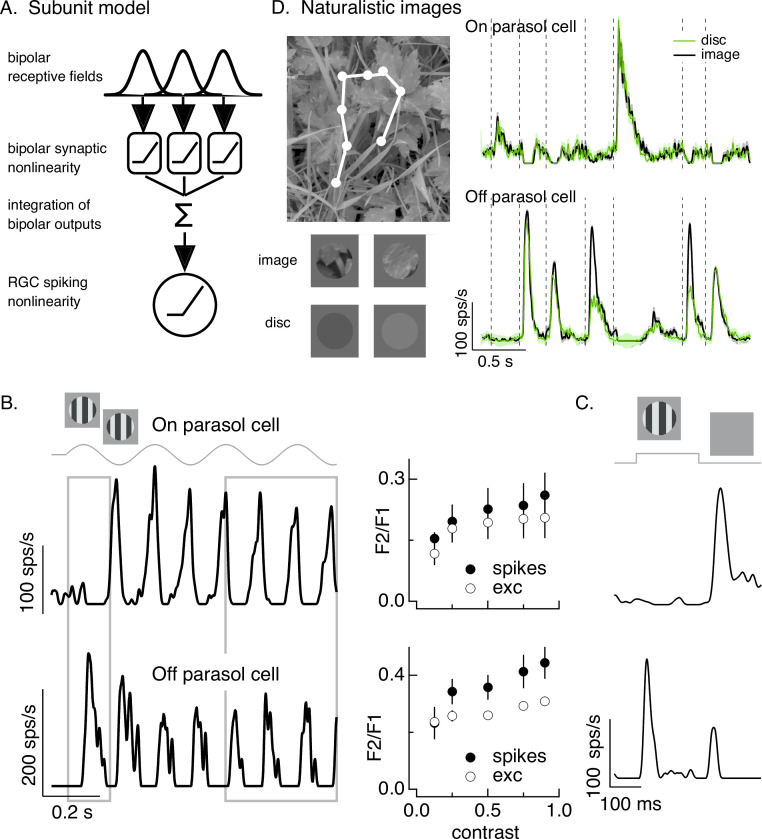
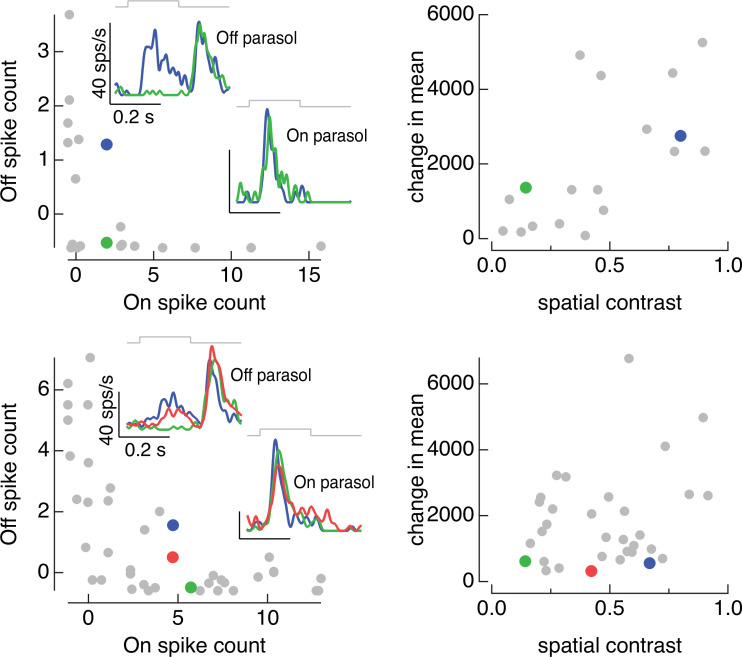
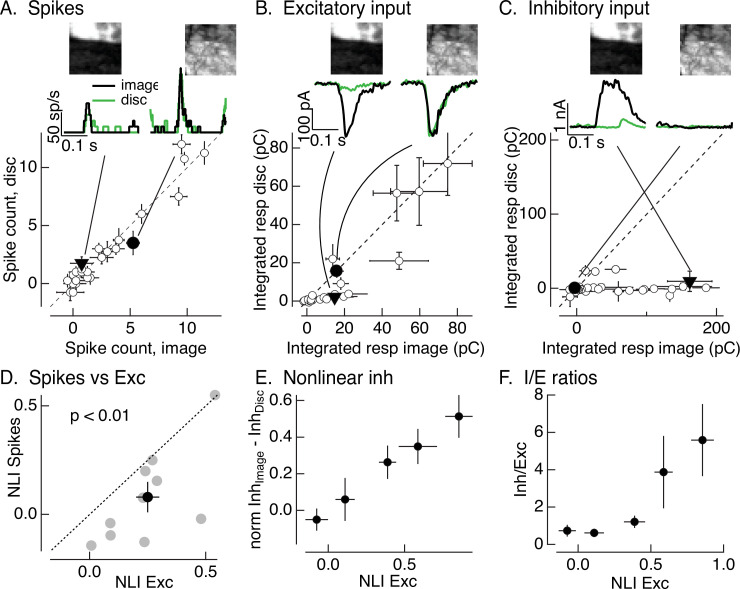
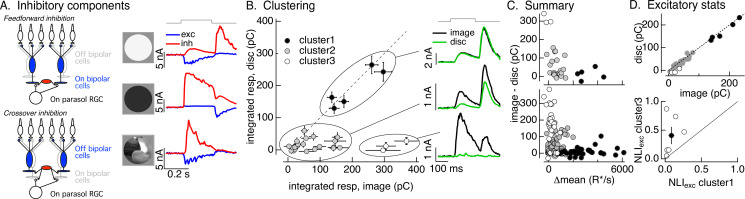
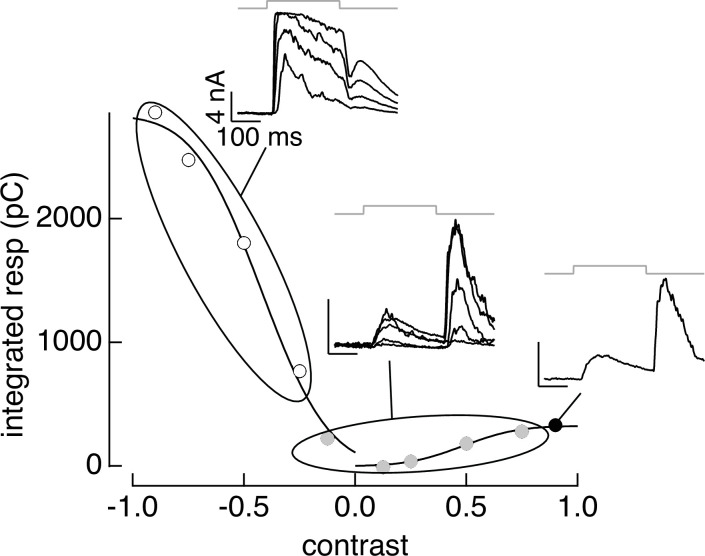
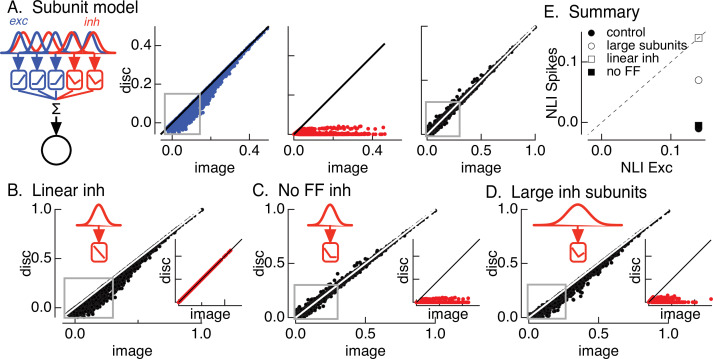
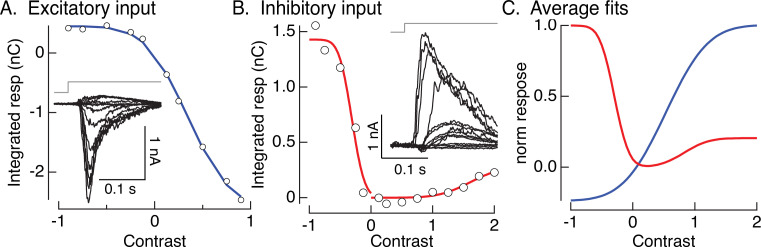
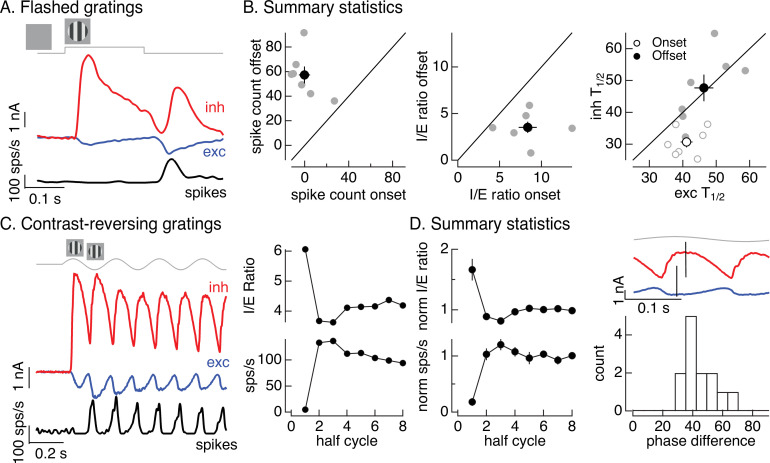
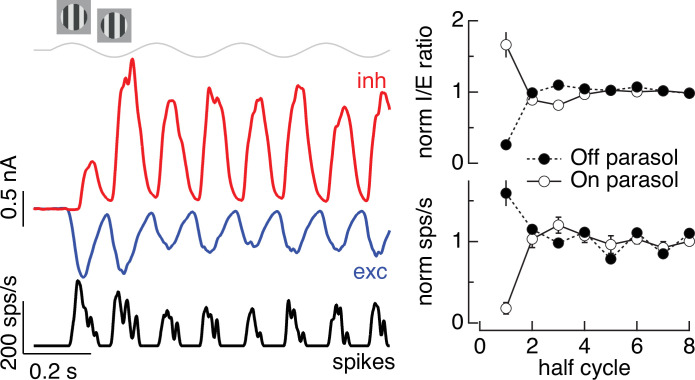
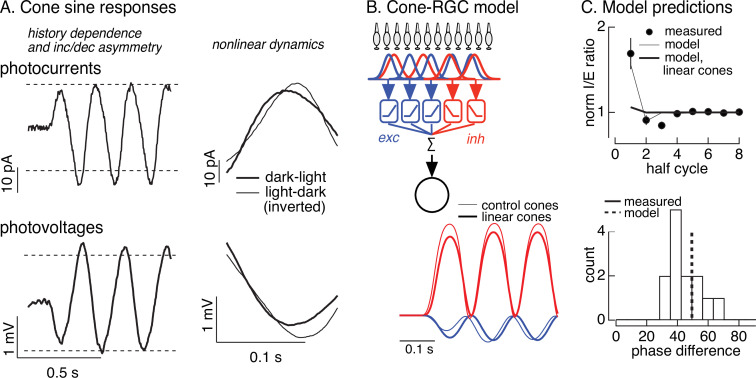
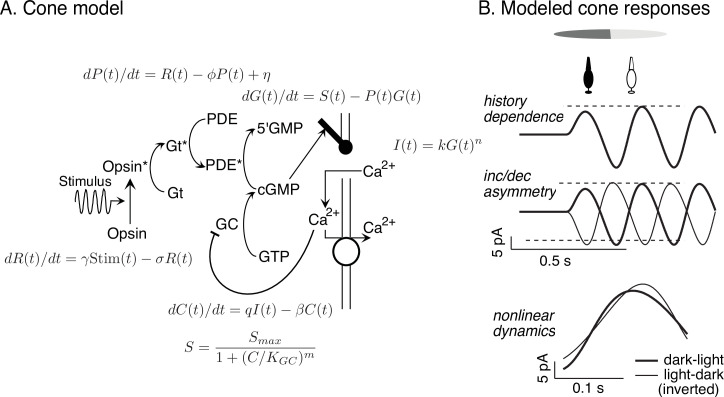
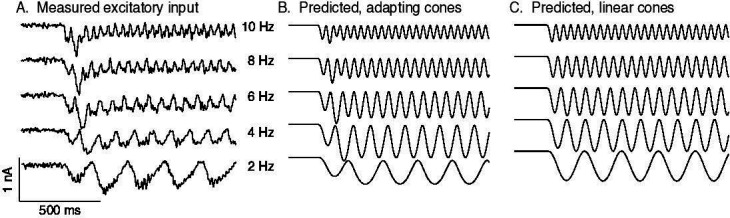
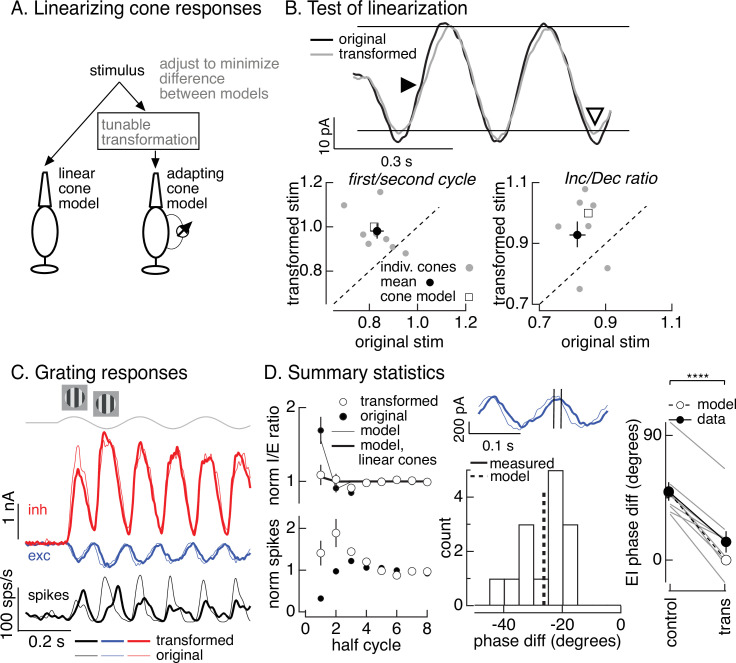
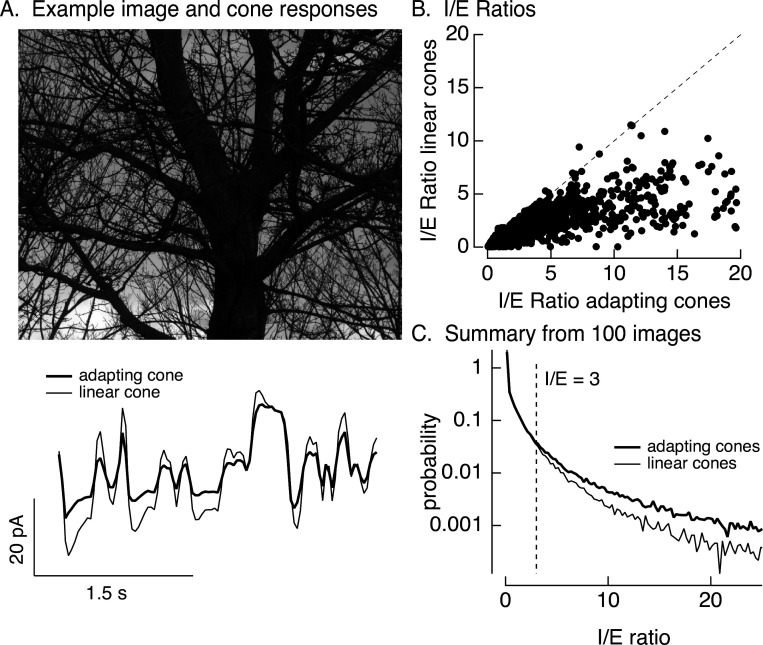
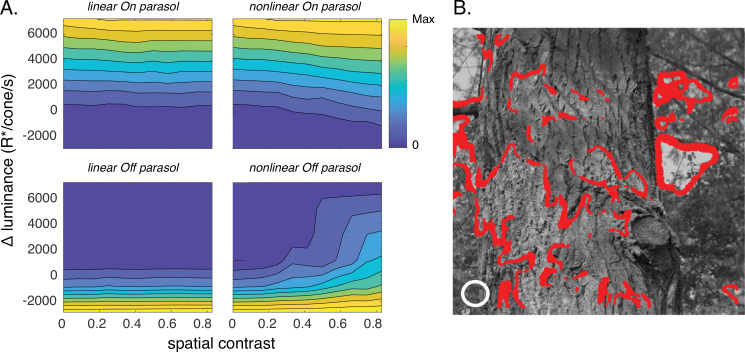
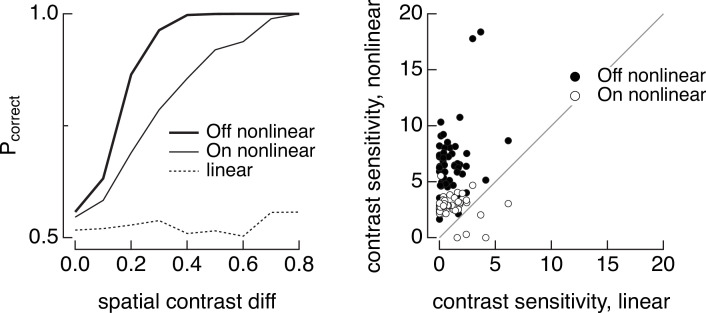
Neural circuits are constructed from nonlinear building blocks, and not surprisingly overall circuit behavior is often strongly nonlinear. But neural circuits can also behave near linearly, and some circuits shift from linear to nonlinear behavior depending on stimulus conditions. Such control of nonlinear circuit behavior is fundamental to neural computation. Here, we study a surprising stimulus dependence of the responses of macaque On (but not Off) parasol retinal ganglion cells: these cells respond nonlinearly to spatial structure in some stimuli but near linearly to spatial structure in others, including natural inputs. We show that these differences in the linearity of the integration of spatial inputs can be explained by a shift in the balance of excitatory and inhibitory synaptic inputs that originates at least partially from adaptation in the cone photoreceptors. More generally, this highlights how subtle asymmetries in signaling - here in the cone signals - can qualitatively alter circuit computation.
神经回路由非线性元件构成,因此整体回路行为通常具有很强的非线性,这并不奇怪。但神经回路也可以表现出近线性,并且一些回路的行为会根据刺激条件从线性转变为非线性。这种对非线性回路行为的控制是神经计算的基础。在这里,我们研究了猕猴 On(而非 Off)伞状视网膜神经节细胞反应的一个令人惊讶的刺激依赖性:这些细胞对某些刺激中的空间结构呈非线性反应,但对其他刺激中的空间结构呈近线性反应,包括自然输入。我们表明,这种空间输入整合的线性差异可以通过兴奋性和抑制性突触输入之间平衡的转移来解释,这种转移至少部分源于锥状光感受器的适应。更一般地说,这突出了信号中的细微不对称性(此处为锥状信号)如何从根本上改变电路计算。