Guo Yu-Qing, Wang Qiang, Wang Jun-Guo, Gu Ya-Jun, Song Pan-Pan, Wang Shou-Yu, Qian Xiao-Yun, Gao Xia
Medical School of Nanjing University, Nanjing, 210093, Jiangsu, China.
Department of Hepatobiliary Surgery, Affiliated Drum Tower Hospital, Medical School of Nanjing University, Nanjing, 210008, China.
Exp Hematol Oncol. 2022 Mar 14;11(1):14. doi: 10.1186/s40164-022-00256-3.
N6-methyladenosine (m6A) RNA methylation and its methyltransferase METTL3 have been widely reported to be involved in different cancers by regulating RNA metabolism and function. Here, we aimed to explore the biological function and clinical significance of m6A modification and METTL3 in head and neck squamous cell carcinoma (HNSCC).
The prognostic value of METTL3 expression was evaluated using tissue microarray and immunohistochemical staining analyses in a human HNSCC cohort. The biological role and mechanism of METTL3 in HNSCC tumour growth, metastasis and angiogenesis were determined in vitro and in vivo.
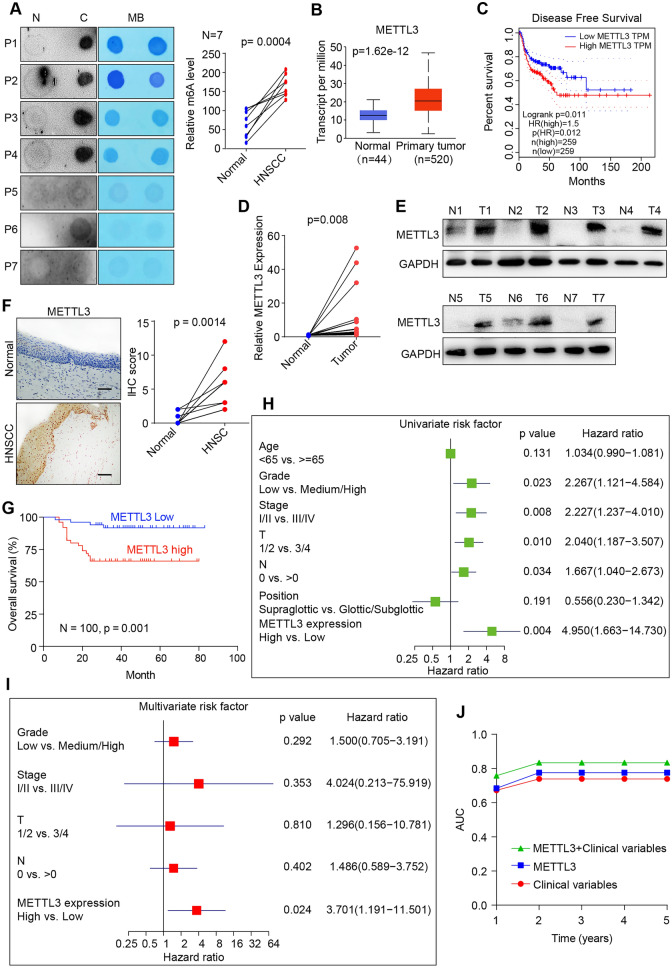
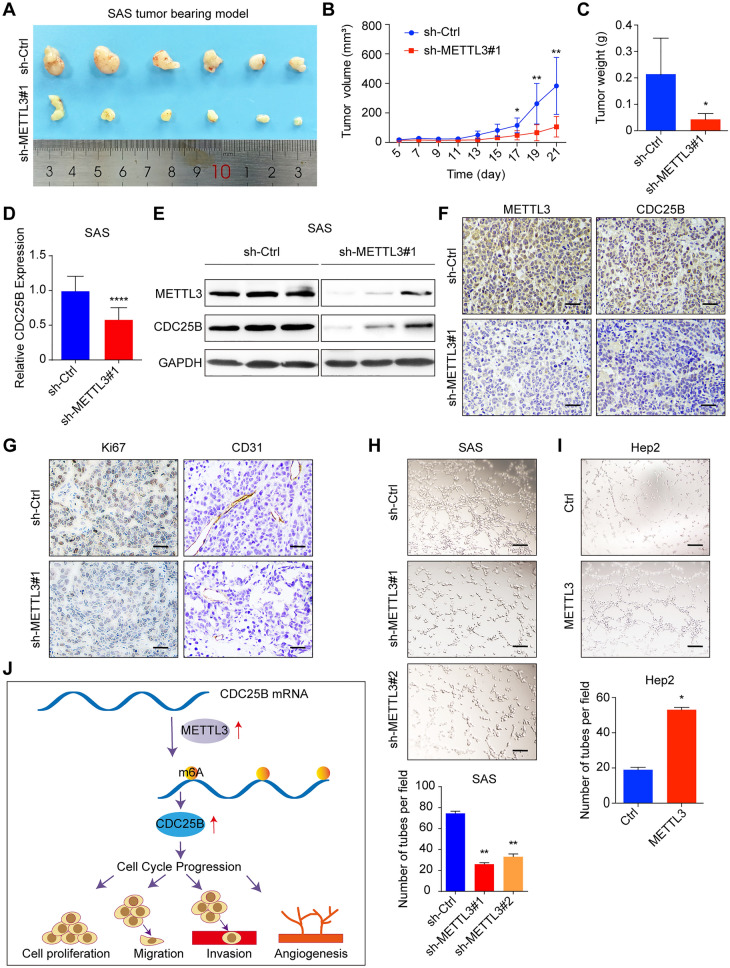
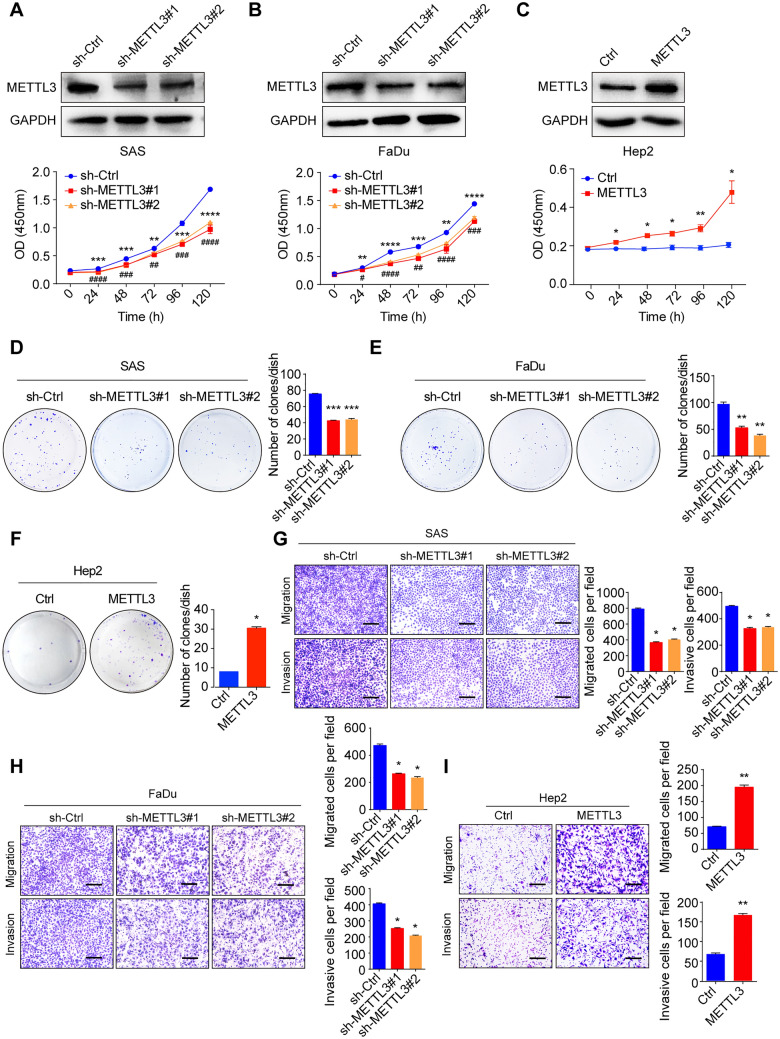
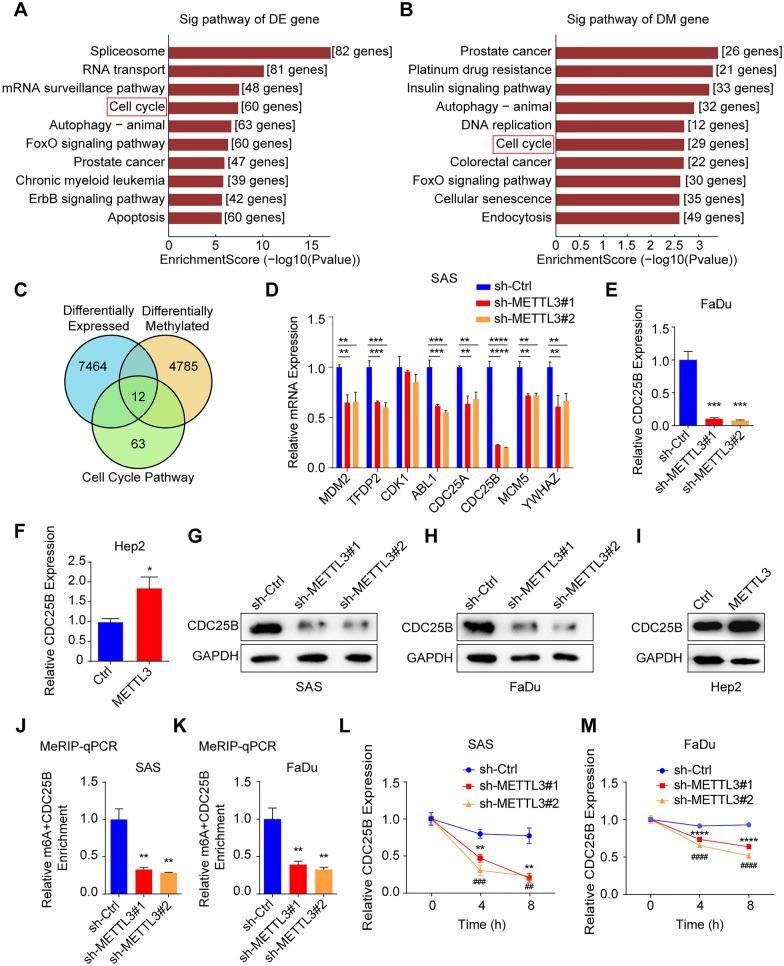
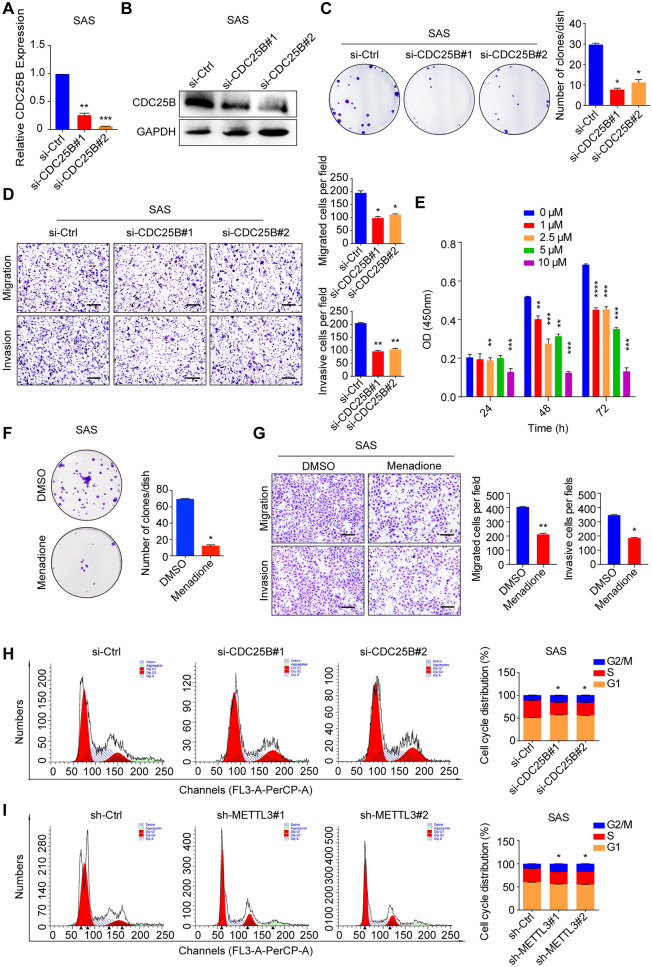
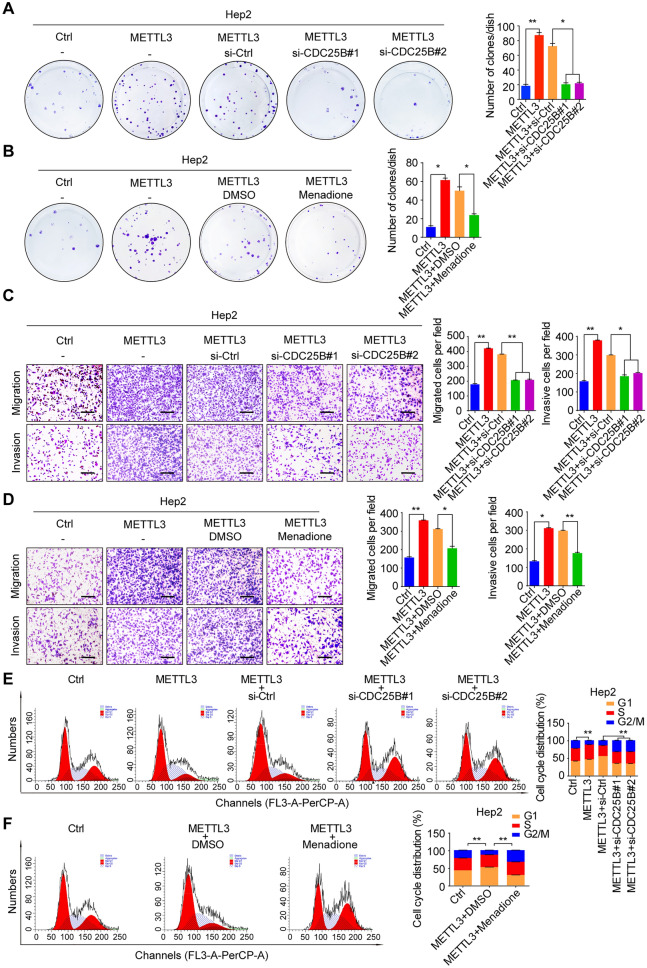
M6A levels and METTL3 expressions in HNSCC tissues were significantly increased compared with paired adjacent tissues. Meanwhile, METTL3 was an independent risk factor for the prognosis of HNSCC patients. Moreover, METTL3 overexpression promoted HNSCC cell proliferation, migration, invasion, and angiogenesis, while knockdown of METTL3 had an opposite effect in vivo and in vitro. Mechanistically, METTL3 enhanced the m6A modification of CDC25B mRNA, which maintained its stability and upregulated its expression, thereby activating G2/M phase of cell cycle and leading to HNSCC malignant progression.
METTL3 may be a potential prognostic biomarker and therapeutic target for HNSCC.
N6-甲基腺苷(m6A)RNA甲基化及其甲基转移酶METTL3已被广泛报道通过调节RNA代谢和功能参与不同癌症。在此,我们旨在探讨m6A修饰和METTL3在头颈部鳞状细胞癌(HNSCC)中的生物学功能和临床意义。
使用组织芯片和免疫组化染色分析评估METTL3表达在人类HNSCC队列中的预后价值。在体外和体内确定METTL3在HNSCC肿瘤生长、转移和血管生成中的生物学作用和机制。
与配对的相邻组织相比,HNSCC组织中的m6A水平和METTL3表达显著增加。同时,METTL3是HNSCC患者预后的独立危险因素。此外,METTL3过表达促进HNSCC细胞增殖、迁移、侵袭和血管生成,而敲低METTL3在体内和体外具有相反的作用。机制上,METTL3增强了CDC25B mRNA 的m6A修饰,维持其稳定性并上调其表达,从而激活细胞周期的G2/M期并导致HNSCC恶性进展。
METTL3可能是HNSCC的潜在预后生物标志物和治疗靶点。