Liu Zhiting, Zhou Yingyu, Lu Jia, Gong Ting, Ibáñez Elena, Cifuentes Alejandro, Lu Weihong
School of Medicine and Health, Harbin Institute of Technology, 92 Xidazhi Street, Nangang District, Harbin, 150001, China.
National and Local Joint Engineering Laboratory for Synthesis Transformation and Separation of Extreme Environmental Nutrients, 92 Xidazhi Street, Nangang District, Harbin, 150001, China.
Biomark Res. 2024 Dec 5;12(1):153. doi: 10.1186/s40364-024-00697-4.
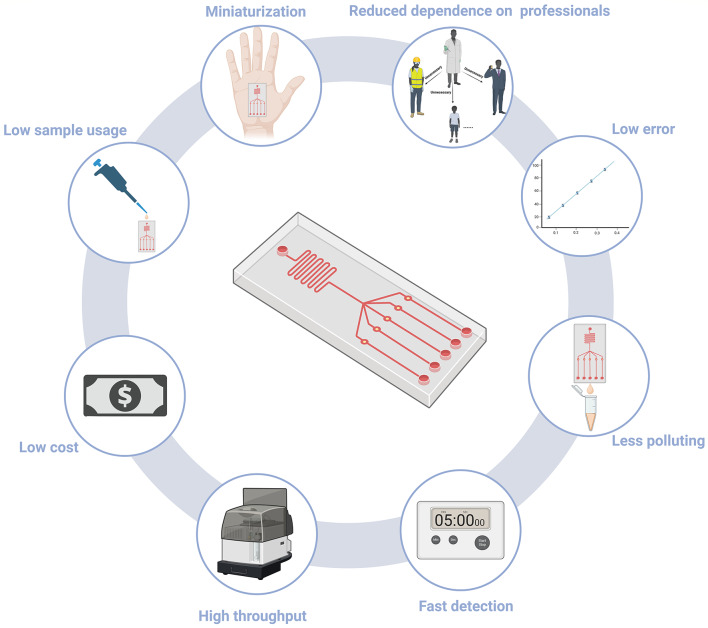
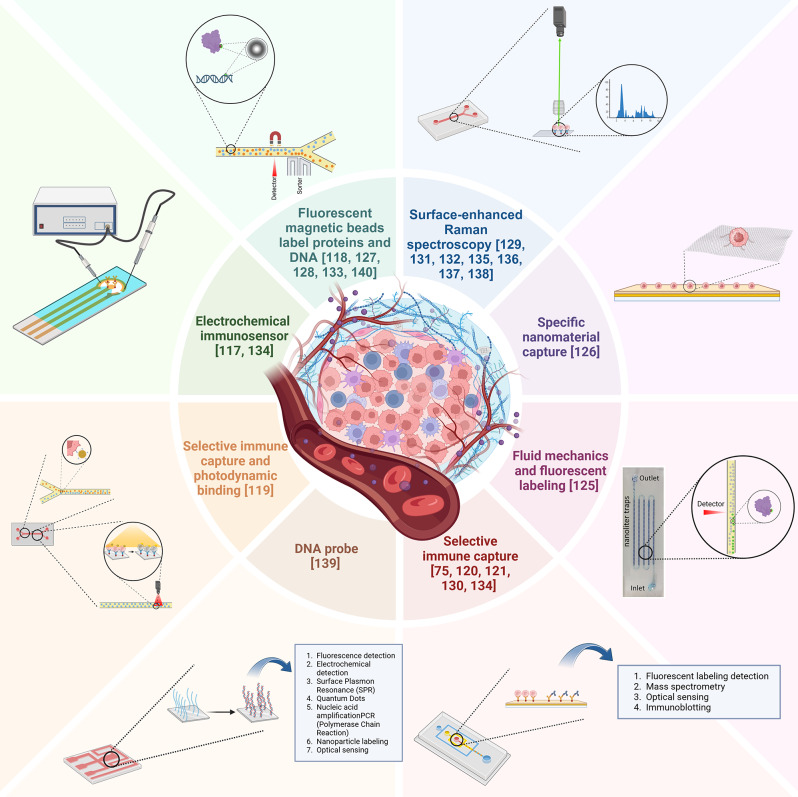
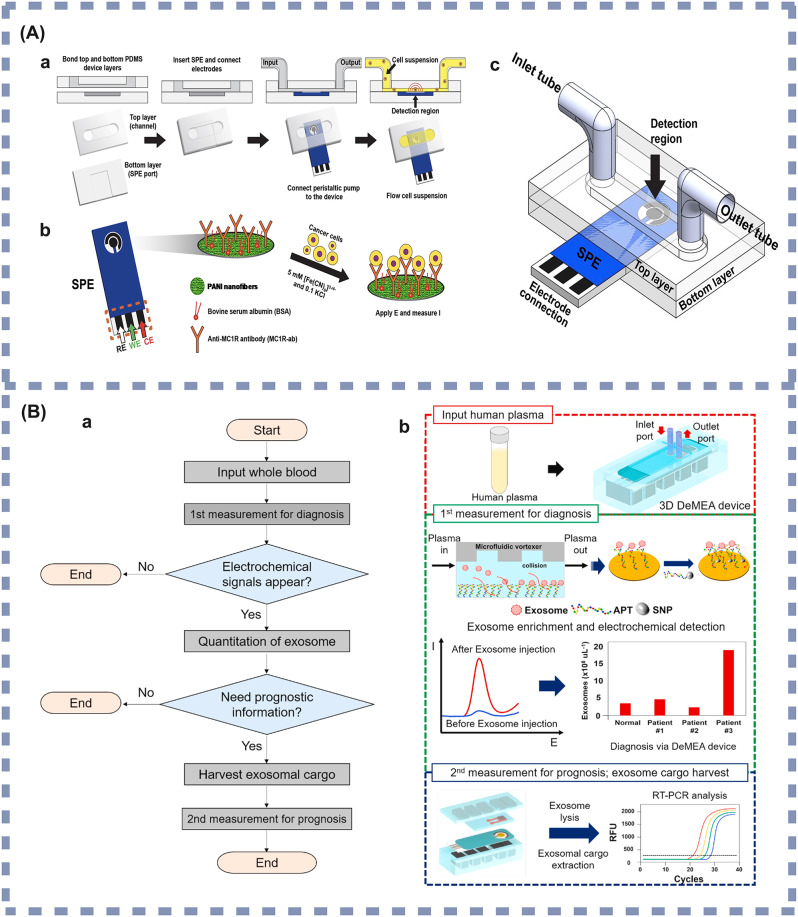
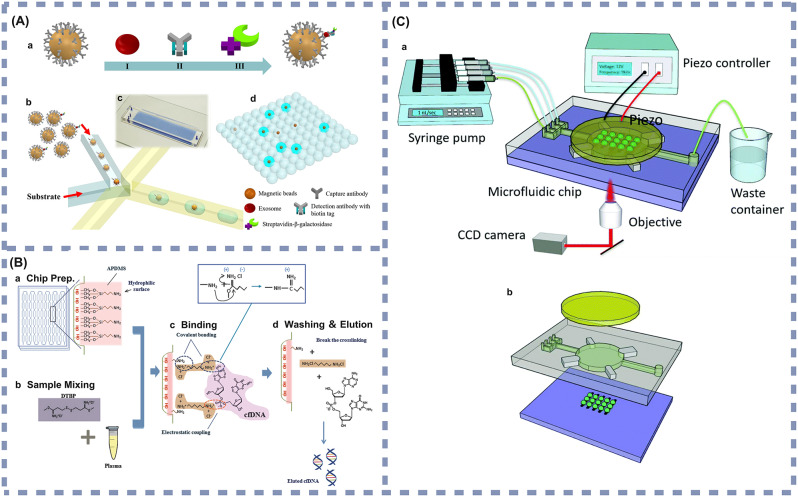
Early detection of cancer significantly improves patient outcomes, with biomarkers offering a promising avenue for earlier and more precise diagnoses. Microfluidic biosensors have emerged as a powerful tool for detecting these biomarkers in body fluids, providing enhanced sensitivity, specificity, and rapid analysis. This review focuses on recent advances in microfluidic biosensors from 2018 to 2024, detailing their operational principles, fabrication techniques, and integration with nanotechnology for cancer biomarker detection. Additionally, we have reviewed recent innovations in several aspects of microfluidic biosensors, such as novel detection technologies, nanomaterials and novel microfluidic chip structures, which significantly enhance detection capabilities. We highlight key biomarkers pertinent to early cancer detection and explore how these innovations in biosensor technology contribute to the evolving landscape of personalized medicine. We further explore how these technologies could be incorporated into clinical cancer diagnostic workflows to improve early detection and treatment outcomes. These innovations could help enable more precise and personalized cancer diagnostics. In addition, this review addresses several important issues such as enhancing the scalability and sensitivity of these biosensors in clinical settings and points out future possibilities of combining artificial intelligence diagnostics with microfluidic biosensors to optimize their practical applications. This overview aims to guide future research and clinical applications by addressing current challenges and identifying opportunities for further development in the field of biomarker research.
癌症的早期检测显著改善患者预后,生物标志物为更早、更精确的诊断提供了一条有前景的途径。微流控生物传感器已成为检测体液中这些生物标志物的强大工具,具有更高的灵敏度、特异性和快速分析能力。本综述聚焦于2018年至2024年微流控生物传感器的最新进展,详细阐述其工作原理、制造技术以及与纳米技术集成用于癌症生物标志物检测的情况。此外,我们还综述了微流控生物传感器几个方面的近期创新,如新型检测技术、纳米材料和新型微流控芯片结构,这些显著增强了检测能力。我们重点介绍与早期癌症检测相关的关键生物标志物,并探讨生物传感器技术的这些创新如何推动个性化医疗不断发展。我们进一步探讨如何将这些技术纳入临床癌症诊断工作流程,以改善早期检测和治疗效果。这些创新有助于实现更精确和个性化的癌症诊断。此外,本综述还讨论了几个重要问题,如提高这些生物传感器在临床环境中的可扩展性和灵敏度,并指出将人工智能诊断与微流控生物传感器相结合以优化其实际应用的未来可能性。本概述旨在通过应对当前挑战和确定生物标志物研究领域进一步发展的机会,指导未来的研究和临床应用。