Department of Biochemistry, University of Oxford, South Parks Road, Oxford, OX1 3QU, United Kingdom.
School of Chemistry, University of Bristol, Cantock's Close, Bristol, BS8 1TS, United Kingdom.
Nat Commun. 2022 Mar 14;13(1):1314. doi: 10.1038/s41467-022-28934-0.
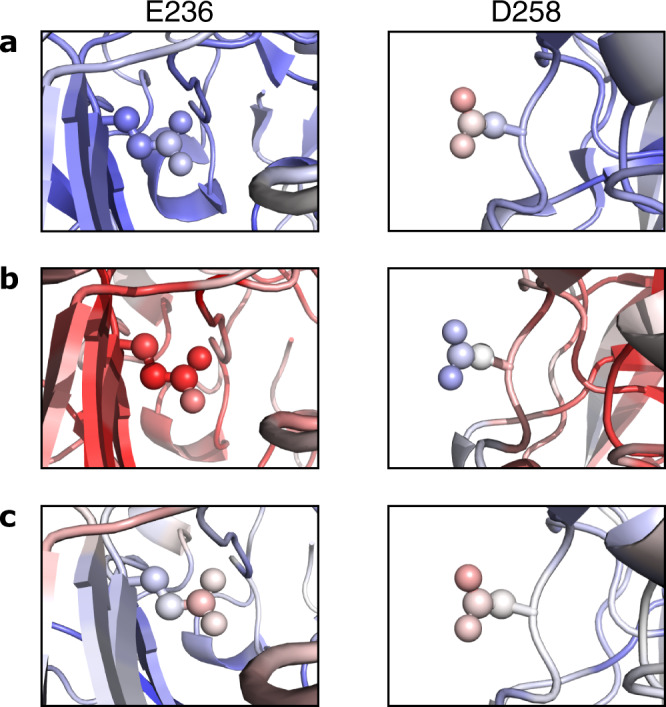
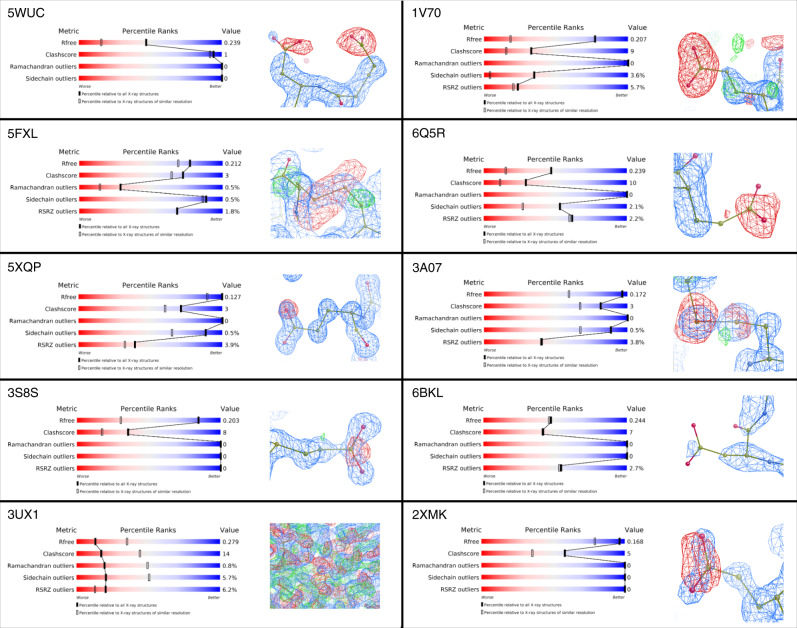
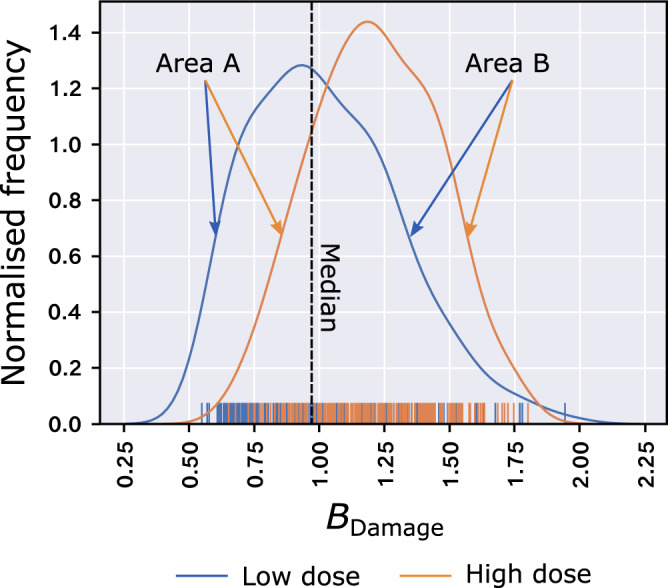
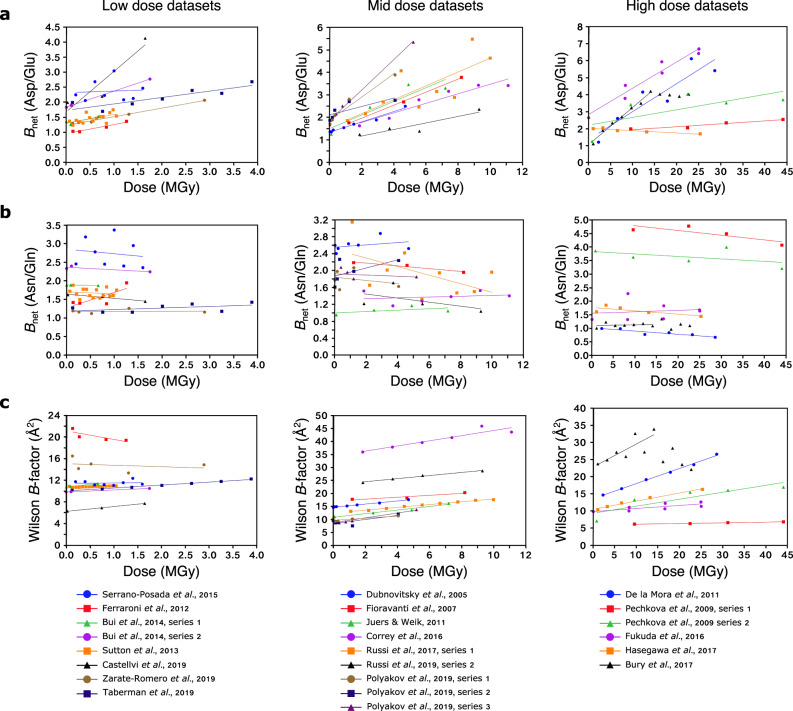
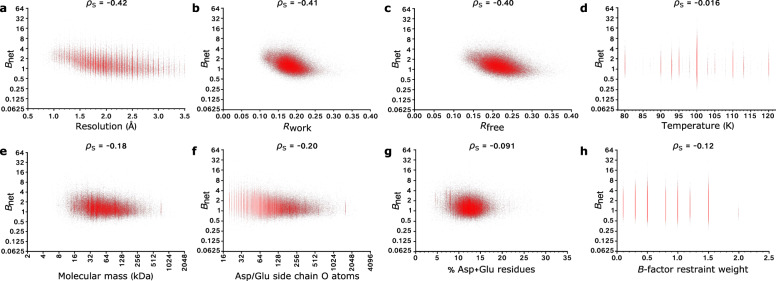
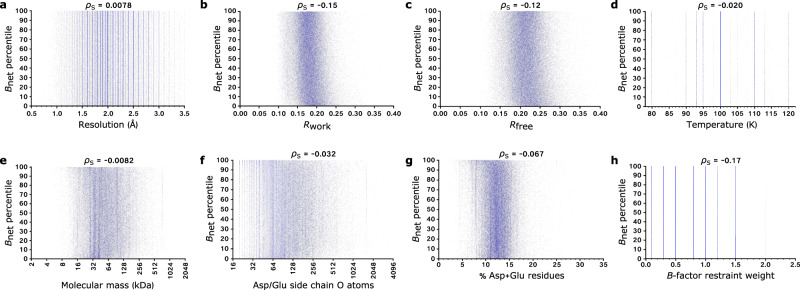
Radiation damage remains one of the major bottlenecks to accurate structure solution in protein crystallography. It can induce structural and chemical changes in protein crystals, and is hence an important consideration when assessing the quality and biological veracity of crystal structures in repositories like the Protein Data Bank (PDB). However, detection of radiation damage artefacts has traditionally proved very challenging. To address this, here we introduce the B metric. B summarises in a single value the extent of damage suffered by a crystal structure by comparing the B-factor values of damage-prone and non-damage-prone atoms in a similar local environment. After validating that B successfully detects damage in 23 different crystal structures previously characterised as damaged, we calculate B values for 93,978 PDB crystal structures. Our metric highlights a range of damage features, many of which would remain unidentified by the other summary statistics typically calculated for PDB structures.
辐射损伤仍然是蛋白质晶体学中准确结构解析的主要瓶颈之一。它会导致蛋白质晶体发生结构和化学变化,因此在评估蛋白质数据库(PDB)等存储库中晶体结构的质量和生物学真实性时,必须考虑这一点。然而,传统上证明检测辐射损伤伪影非常具有挑战性。为了解决这个问题,我们在这里引入了 B 指标。B 通过比较相似局部环境中易受损原子和非易受损原子的 B 因子值,以单个值的形式总结晶体结构所遭受的损伤程度。在验证 B 成功检测到 23 种先前被表征为受损的不同晶体结构的损伤后,我们为 93978 个 PDB 晶体结构计算了 B 值。我们的指标突出了一系列损伤特征,其中许多特征将无法通过通常为 PDB 结构计算的其他汇总统计信息来识别。