Wilson David Jay, DuBois Raymond N
College of Medicine, Medical University of South Carolina, Charleston, South Carolina.
Department of Biochemistry and Molecular Biology, Medical University of South Carolina, Charleston, South Carolina.
Cancer Prev Res (Phila). 2022 Jun 2;15(6):355-363. doi: 10.1158/1940-6207.CAPR-22-0038.
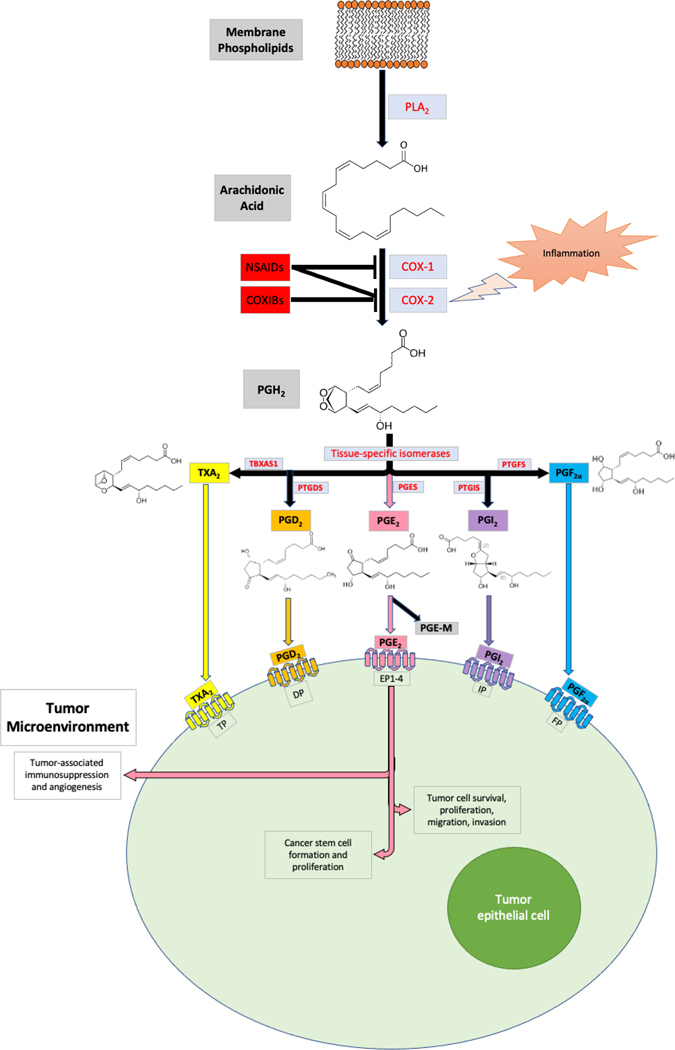
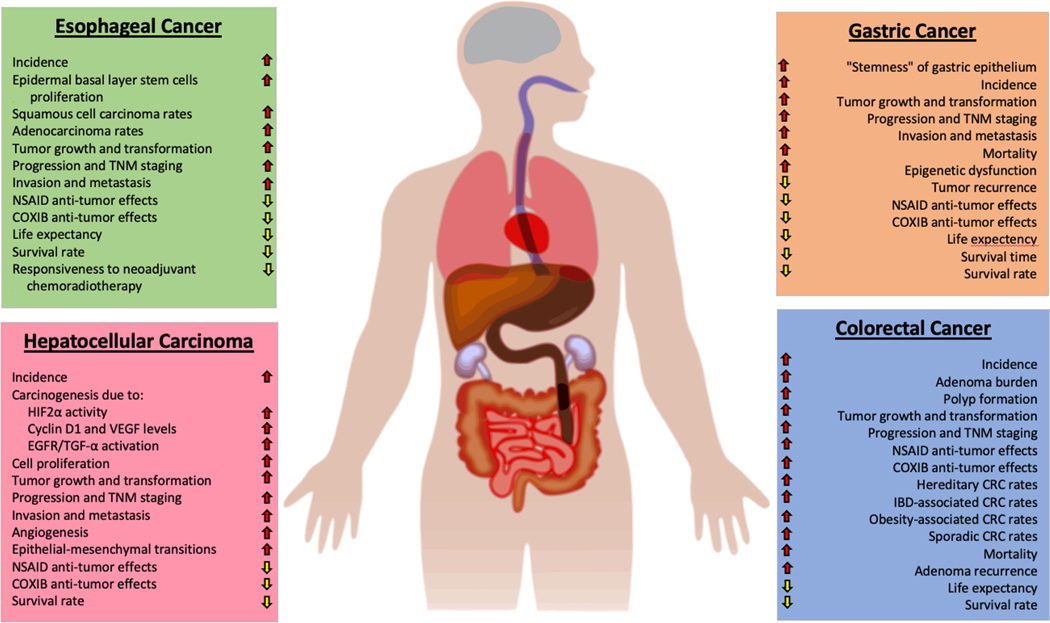
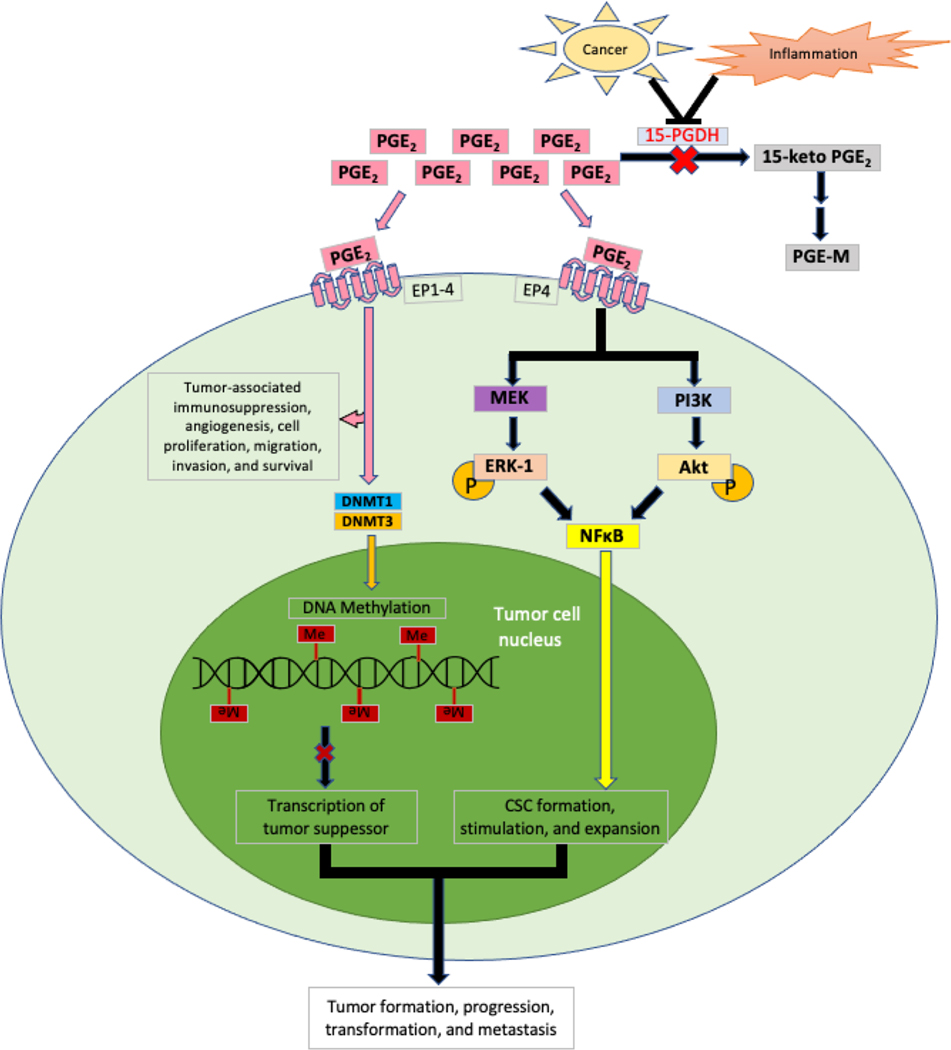
Chronic inflammation is a well-established risk factor for several diseases, including cancer. It influences tumor cell biology and the type and density of immune cells in the tumor microenvironment (TME), promoting cancer development. While proinflammatory cytokines and chemokines modulate cancer development, emerging evidence has shown that prostaglandin E2 (PGE2) is a known mediator connecting chronic inflammation to cancerization. This review highlights recent advances in our understanding of how the elevation of PGE2 production promotes gastrointestinal cancer initiation, progression, invasion, metastasis, and recurrence, including modulation of immune checkpoint signaling and the type and density of immune cells in the tumor/tissue microenvironment.
慢性炎症是包括癌症在内的多种疾病公认的危险因素。它影响肿瘤细胞生物学以及肿瘤微环境(TME)中免疫细胞的类型和密度,促进癌症发展。虽然促炎细胞因子和趋化因子可调节癌症发展,但新出现的证据表明,前列腺素E2(PGE2)是将慢性炎症与癌变联系起来的已知介质。本综述重点介绍了我们在理解PGE2产生增加如何促进胃肠道癌症的起始、进展、侵袭、转移和复发方面的最新进展,包括免疫检查点信号的调节以及肿瘤/组织微环境中免疫细胞的类型和密度。