Institute of Translational Immunology and Research Center for Immune Therapy, University Medical Center, Johannes Gutenberg-University Mainz, 55131 Mainz, Germany.
Department of Internal Medicine I, University Medical Center, Johannes Gutenberg-University Mainz, 55131 Mainz, Germany.
Proc Natl Acad Sci U S A. 2022 Mar 22;119(12):e2122310119. doi: 10.1073/pnas.2122310119. Epub 2022 Mar 15.
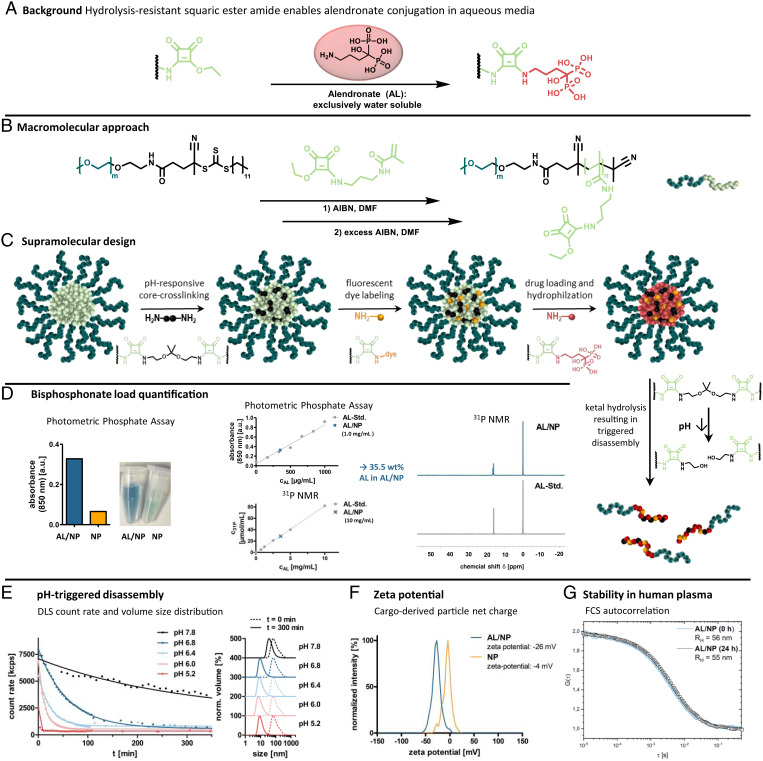
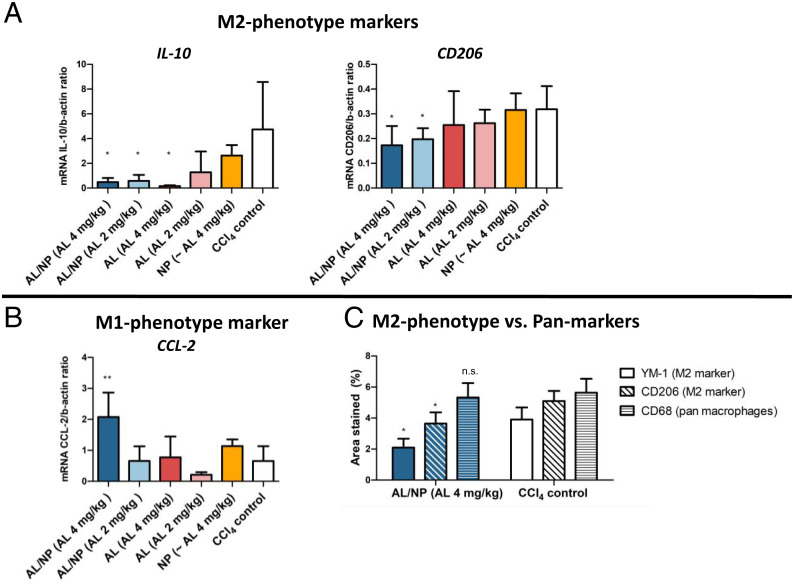
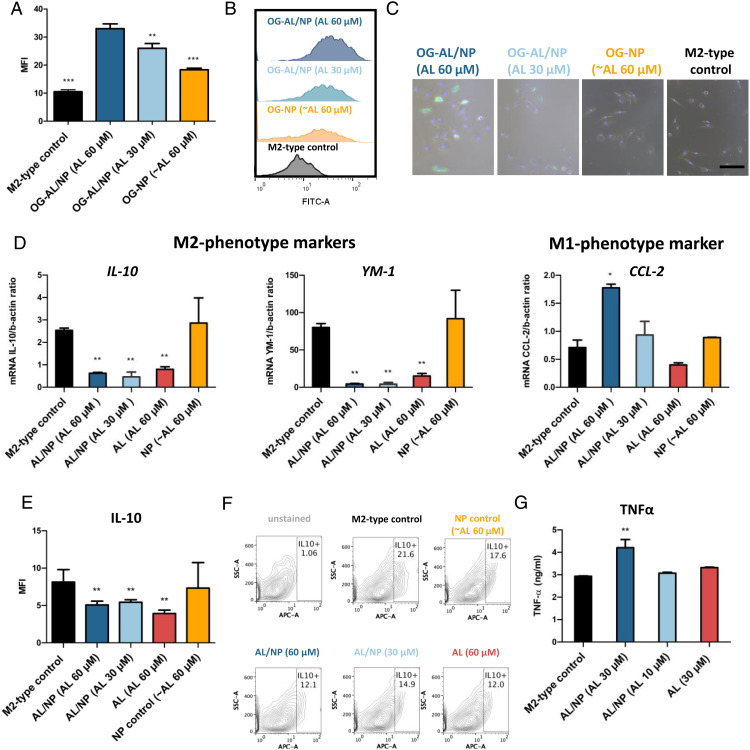
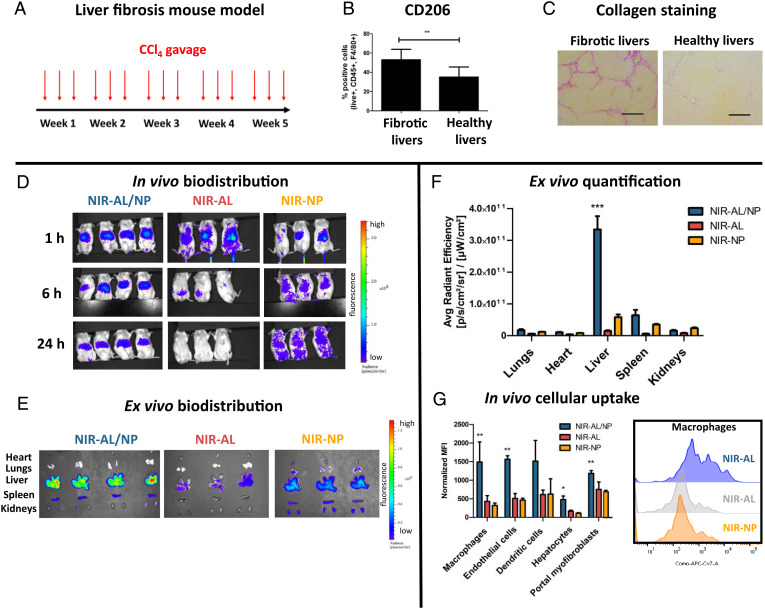
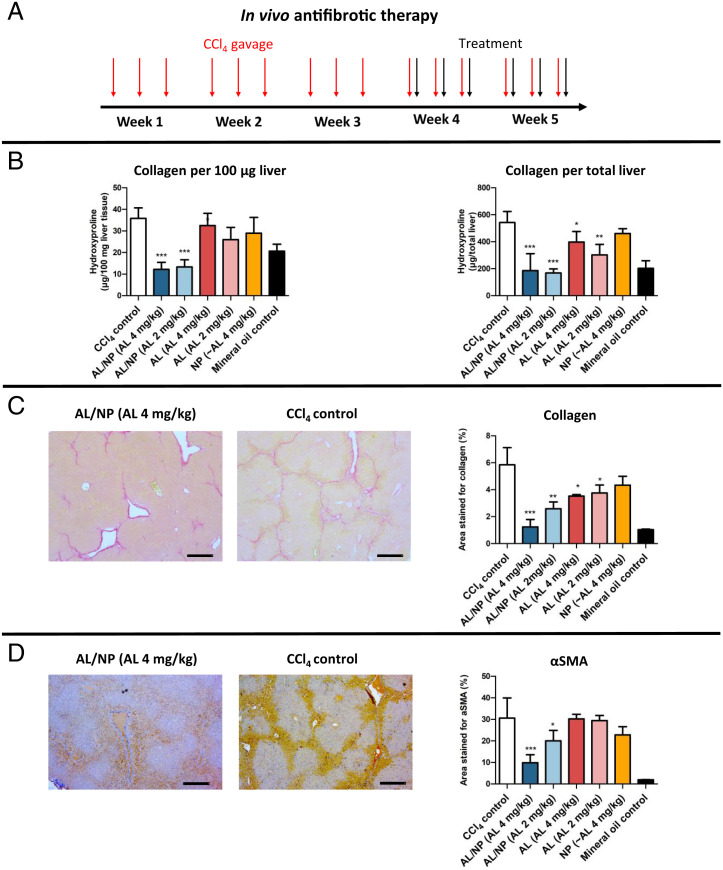
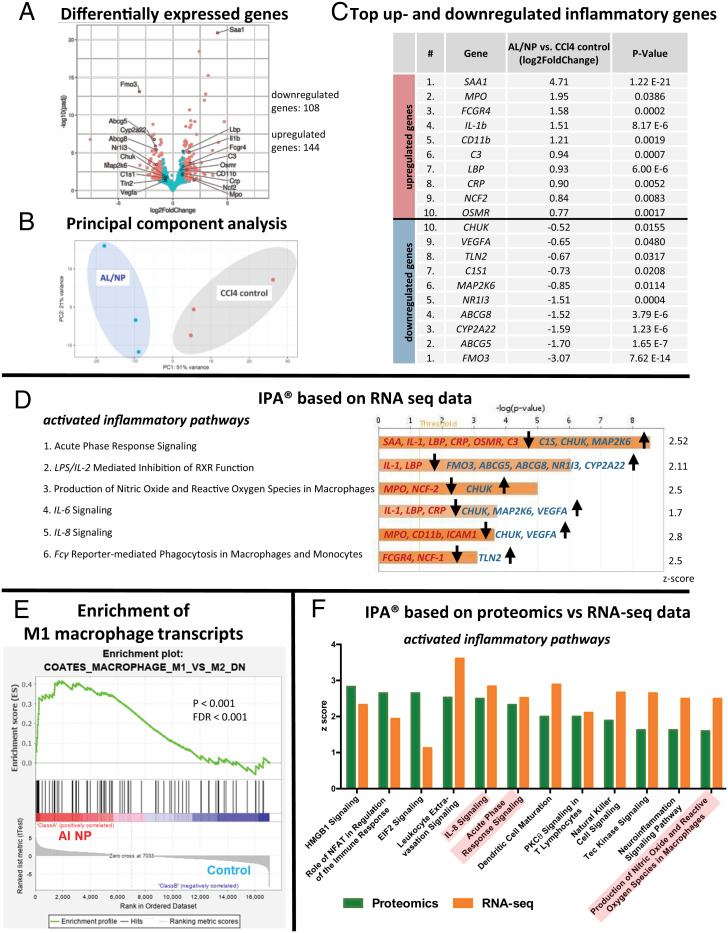
Immune-suppressive (M2-type) macrophages can contribute to the progression of cancer and fibrosis. In chronic liver diseases, M2-type macrophages promote the replacement of functional parenchyma by collagen-rich scar tissue. Here, we aim to prevent liver fibrosis progression by repolarizing liver M2-type macrophages toward a nonfibrotic phenotype by applying a pH-degradable, squaric ester–based nanogel carrier system. This nanotechnology platform enables a selective conjugation of the highly water-soluble bisphosphonate alendronate, a macrophage-repolarizing agent that intrinsically targets bone tissue. The covalent delivery system, however, promotes the drug’s safe and efficient delivery to nonparenchymal cells of fibrotic livers after intravenous administration. The bisphosphonate payload does not eliminate but instead reprograms profibrotic M2- toward antifibrotic M1-type macrophages in vitro and potently prevents liver fibrosis progression in vivo, mainly via induction of a fibrolytic phenotype, as demonstrated by transcriptomic and proteomic analyses. Therefore, the alendronate-loaded squaric ester–based nanogels represent an attractive approach for nanotherapeutic interventions in fibrosis and other diseases driven by M2-type macrophages, including cancer.
免疫抑制(M2 型)巨噬细胞可促进癌症和纤维化的进展。在慢性肝病中,M2 型巨噬细胞促进富含胶原的瘢痕组织取代功能性实质。在这里,我们旨在通过应用 pH 可降解的、基于丁二酸酯的纳米凝胶载体系统,将肝 M2 型巨噬细胞重新极化为非纤维化表型,从而阻止肝纤维化的进展。该纳米技术平台能够选择性地结合高度水溶性的双膦酸盐阿仑膦酸盐,这是一种内在靶向骨组织的巨噬细胞重极化剂。然而,该共价递送系统促进了药物在静脉给药后安全有效地递送至纤维化肝脏的非实质细胞。双膦酸盐有效负载不会消除而是重新编程致纤维化的 M2 型巨噬细胞向抗纤维化的 M1 型巨噬细胞,在体外和体内均能有效阻止肝纤维化的进展,主要通过诱导纤维溶解表型来实现,这可以通过转录组学和蛋白质组学分析来证明。因此,载有阿仑膦酸盐的丁二酸酯基纳米凝胶代表了一种有吸引力的纳米治疗方法,可用于由 M2 型巨噬细胞驱动的纤维化和其他疾病,包括癌症。