Max Planck Institute for Polymer Research, Ackermannweg 10, 55128 Mainz, Germany.
Institute for Translational Immunology and Research Center for Immune Therapy, University Medical Center, Johannes Gutenberg University, 55131 Mainz, Germany.
Biomacromolecules. 2022 Mar 14;23(3):1065-1074. doi: 10.1021/acs.biomac.1c01407. Epub 2022 Jan 21.
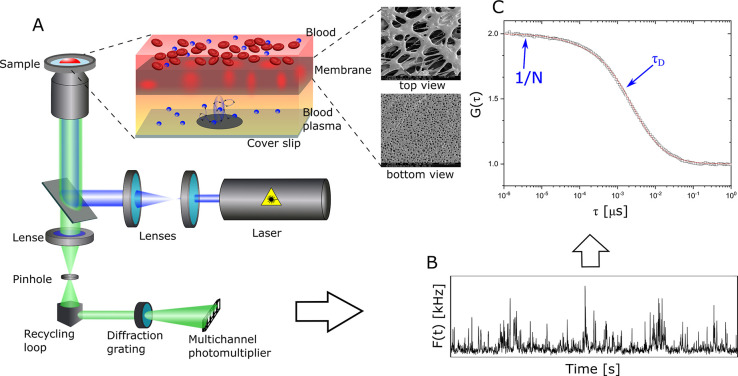
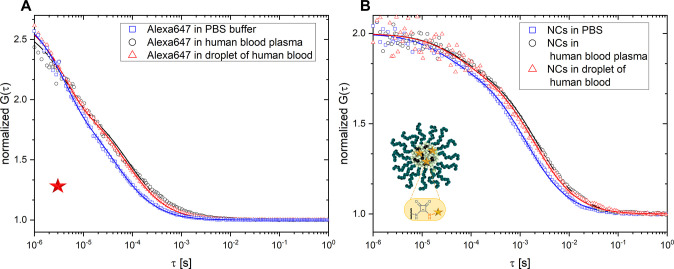
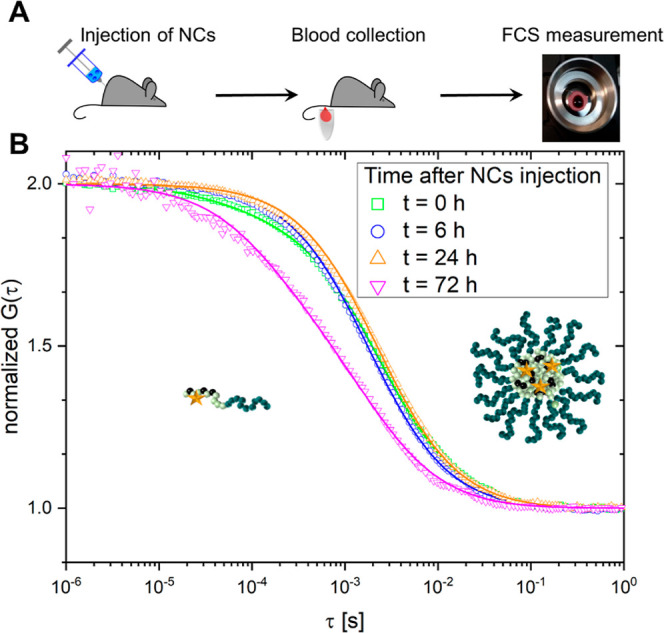
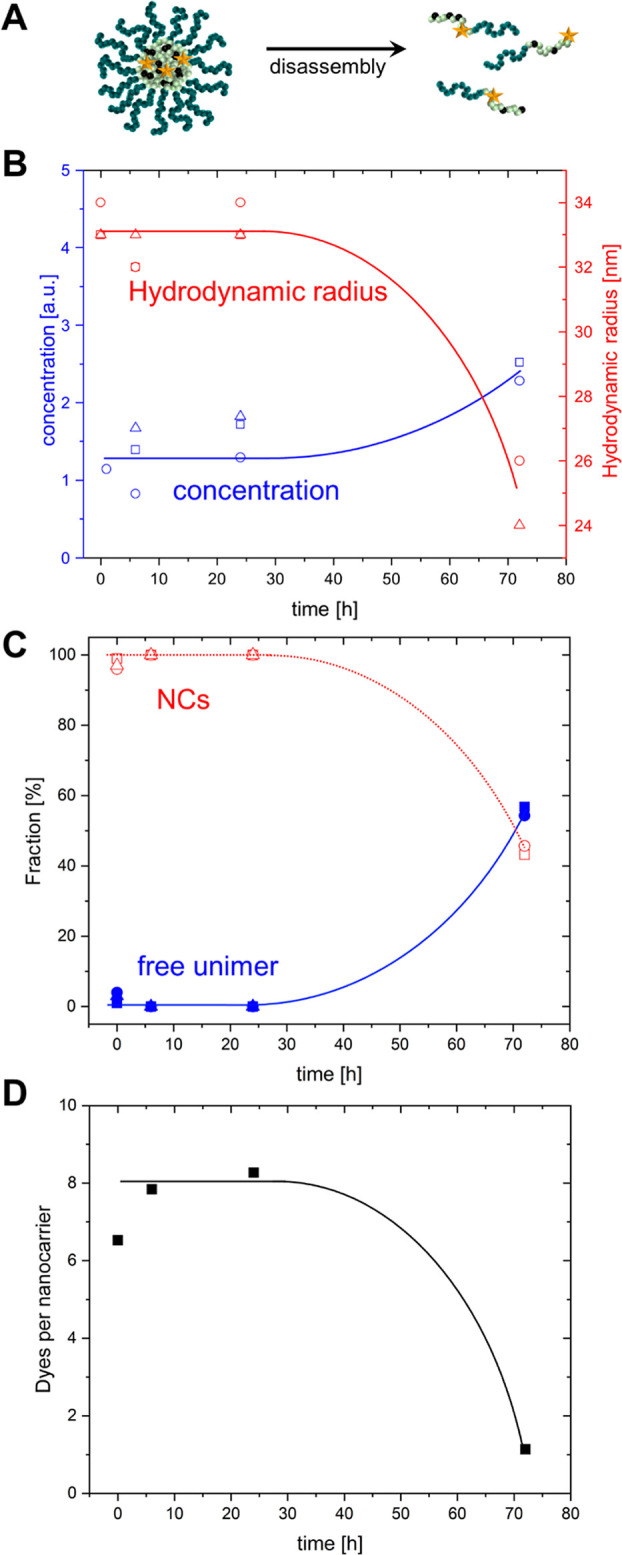
The use of nanoparticles as carriers to deliver pharmacologically active compounds to specific parts of the body via the bloodstream is a promising therapeutic approach for the effective treatment of various diseases. To reach their target sites, nanocarriers (NCs) need to circulate in the bloodstream for prolonged periods without aggregation, degradation, or cargo loss. However, it is very difficult to identify and monitor small-sized NCs and their cargo in the dense and highly complex blood environment. Here, we present a new fluorescence correlation spectroscopy-based method that allows the precise characterization of fluorescently labeled NCs in samples of less than 50 μL of whole blood. The NC size, concentration, and loading efficiency can be measured to evaluate circulation times, stability, or premature drug release. We apply the new method to follow the fate of pH-degradable fluorescent cargo-loaded nanogels in the blood of live mice for periods of up to 72 h.
将纳米颗粒用作载体,通过血液将具有药理活性的化合物递送到身体的特定部位,这是一种很有前途的治疗方法,可以有效治疗各种疾病。为了到达靶部位,纳米载体(NCs)需要在血液中长时间循环,而不会聚集、降解或货物损失。然而,在密集且高度复杂的血液环境中,非常难以识别和监测小尺寸的 NCs 和它们的货物。在这里,我们提出了一种新的基于荧光相关光谱的方法,该方法允许对少于 50 μL 的全血样品中的荧光标记的 NCs 进行精确表征。可以测量 NC 的大小、浓度和装载效率,以评估循环时间、稳定性或过早的药物释放。我们应用新方法来跟踪在活小鼠血液中 pH 可降解荧光货物负载的纳米凝胶长达 72 小时的命运。