Liang Leilei, Li Jian, Yu Jing, Liu Jing, Xiu Lin, Zeng Jia, Wang Tiantian, Li Ning, Wu Lingying
Department of Gynecologic Oncology, National Cancer Center/National Clinical Research Center for Cancer/Cancer Hospital, Chinese Academy of Medical Sciences and Peking Union Medical College, Beijing, 100021, China.
Cancer Cell Int. 2022 Mar 15;22(1):118. doi: 10.1186/s12935-022-02502-4.
Ovarian cancer (OC) is an invasive gynaecologic cancer with a high cancer-related death rate. The purpose of this study was to establish an invasion-related multigene signature to predict the prognostic risk of OC.
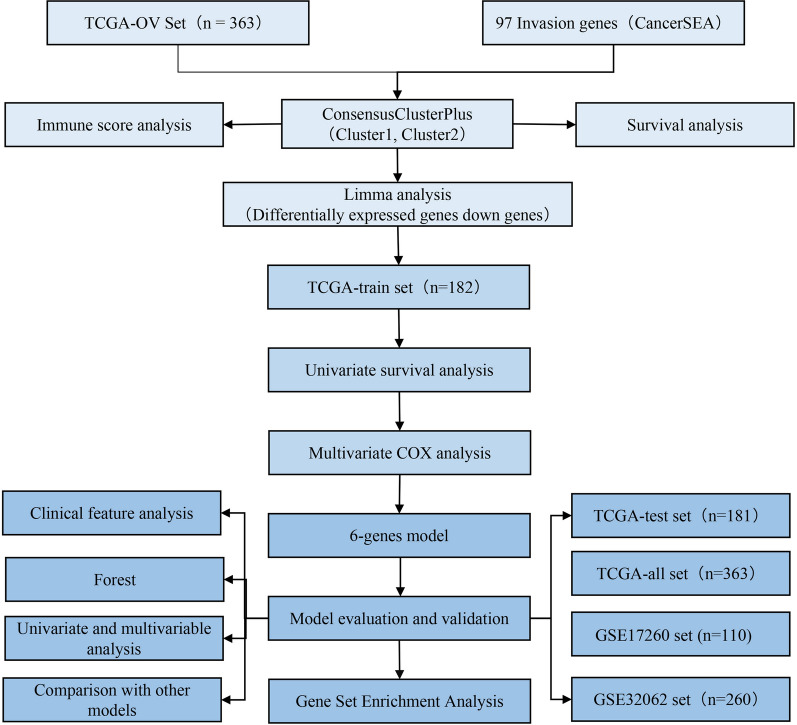
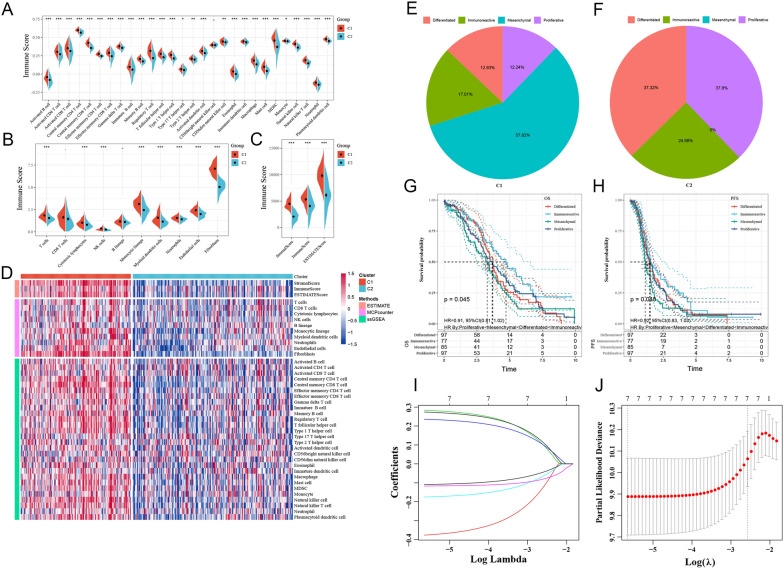
We extracted 97 invasion-related genes from The Cancer Genome Atlas (TCGA) database. Then, the ConsensusClusterPlus and limma packages were used to calculate differentially expressed genes (DEGs). To calculate the immune scores of the molecular subtypes, we used ESTIMATE to evaluate the stromal score, immune score and ESTIMATE score. MCP-counter and the GSVA package ssgsea were used to evaluate the types of infiltrating immune cells. Survival and nomogram analyses were performed to explore the prognostic value of the signature. Finally, qPCR, immunohistochemistry staining and functional assays were used to evaluate the expression and biological abilities of the signature genes in OC.
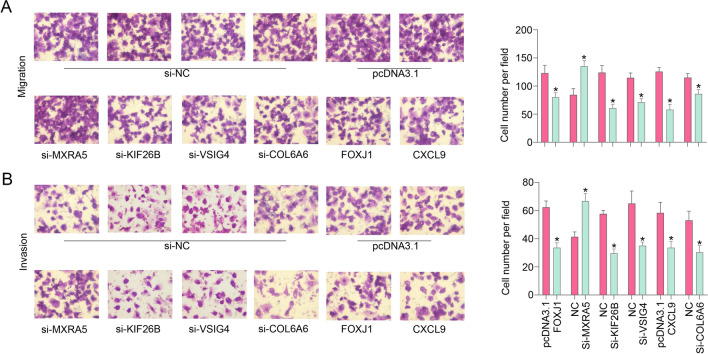
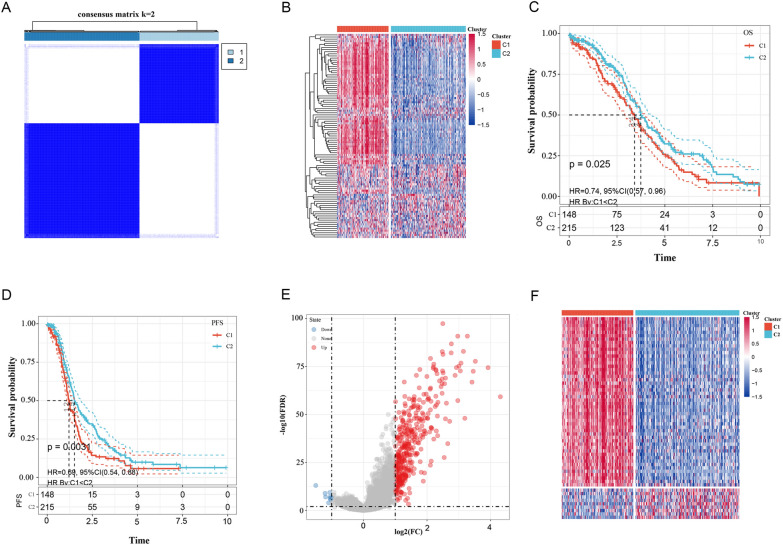
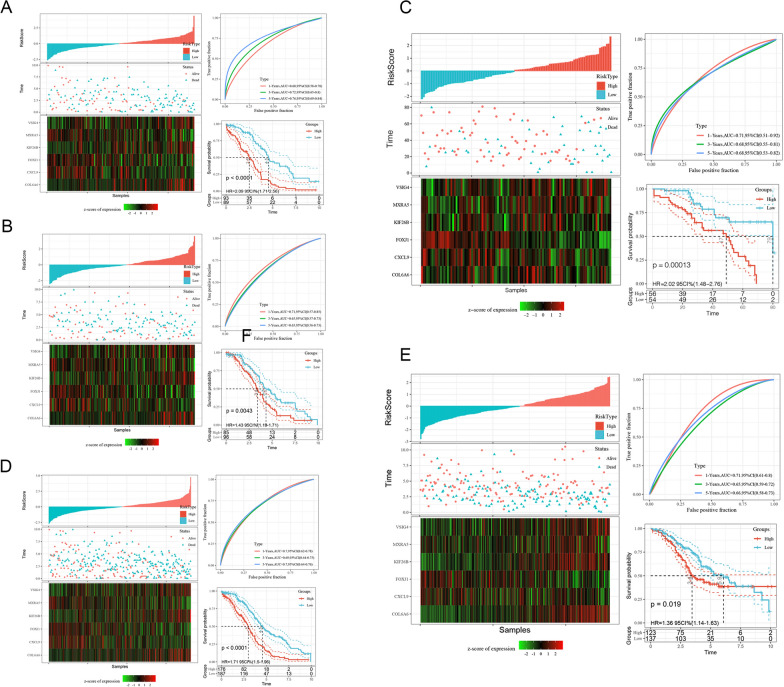
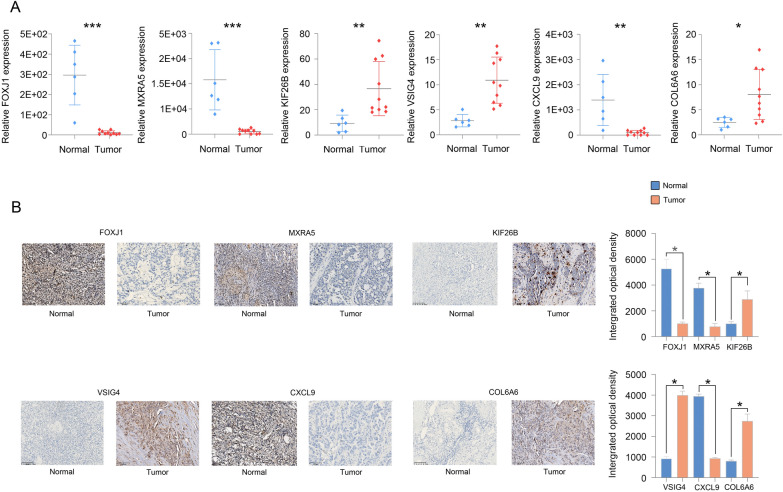
Based on the consistent clustering of invasion-related genes, cases in the OC datasets were divided into two subtypes. A significant difference was observed in prognosis between the two subtypes. Most genes were highly expressed in the C1 group. Based on the C1 group genes, we constructed an invasion-related 6-gene prognostic risk model. Furthermore, to verify the signature, we used the TCGA-test and GSE32062 and GSE17260 chip datasets for testing and finally obtained a good risk prediction effect in those datasets. Moreover, the results of the qPCR and immunohistochemistry staining assays revealed that KIF26B, VSIG4 and COL6A6 were upregulated and that FOXJ1, MXRA5 and CXCL9 were downregulated in OC tissues. The functional study showed that the expression of KIF26B, VSIG4, COL6A6, FOXJ1, MXRA5 and CXCL9 can regulate the migration and invasion abilities of OC cells.
We developed a 6-gene prognostic stratification system (FOXJ1, MXRA5, KIF26B, VSIG4, CXCL9 and COL6A6) that is independent of clinical features. These results suggest that the signature could potentially be used to evaluate the prognostic risk of OC patients.
卵巢癌(OC)是一种侵袭性妇科癌症,癌症相关死亡率很高。本研究的目的是建立一种与侵袭相关的多基因特征,以预测OC的预后风险。
我们从癌症基因组图谱(TCGA)数据库中提取了97个与侵袭相关的基因。然后,使用ConsensusClusterPlus和limma软件包计算差异表达基因(DEG)。为了计算分子亚型的免疫评分,我们使用ESTIMATE评估基质评分、免疫评分和ESTIMATE评分。使用MCP-counter和GSVA软件包ssgsea评估浸润免疫细胞的类型。进行生存分析和列线图分析以探索该特征的预后价值。最后,使用qPCR、免疫组织化学染色和功能测定来评估OC中特征基因的表达和生物学能力。
基于与侵袭相关基因的一致性聚类,将OC数据集中的病例分为两个亚型。两个亚型之间的预后存在显著差异。大多数基因在C1组中高表达。基于C1组基因,我们构建了一个与侵袭相关的6基因预后风险模型。此外,为了验证该特征,我们使用TCGA测试集以及GSE32062和GSE17260芯片数据集进行测试,最终在这些数据集中获得了良好的风险预测效果。此外,qPCR和免疫组织化学染色分析结果显示,OC组织中KIF26B、VSIG4和COL6A6上调,而FOXJ1、MXRA5和CXCL9下调。功能研究表明,KIF26B、VSIG4、COL6A6、FOXJ1、MXRA5和CXCL9的表达可调节OC细胞的迁移和侵袭能力。
我们开发了一种独立于临床特征的6基因预后分层系统(FOXJ1、MXRA5、KIF26B、VSIG4、CXCL9和COL6A6)。这些结果表明,该特征可能可用于评估OC患者的预后风险。