Tian Xiongfei, Shen Ling, Gao Pengfei, Huang Li, Liu Guangyi, Zhou Liqian, Peng Lihong
School of Computer Science, Hunan University of Technology, Zhuzhou, China.
College of Life Sciences and Chemistry, Hunan University of Technology, Zhuzhou, China.
Front Microbiol. 2022 Feb 28;13:740382. doi: 10.3389/fmicb.2022.740382. eCollection 2022.
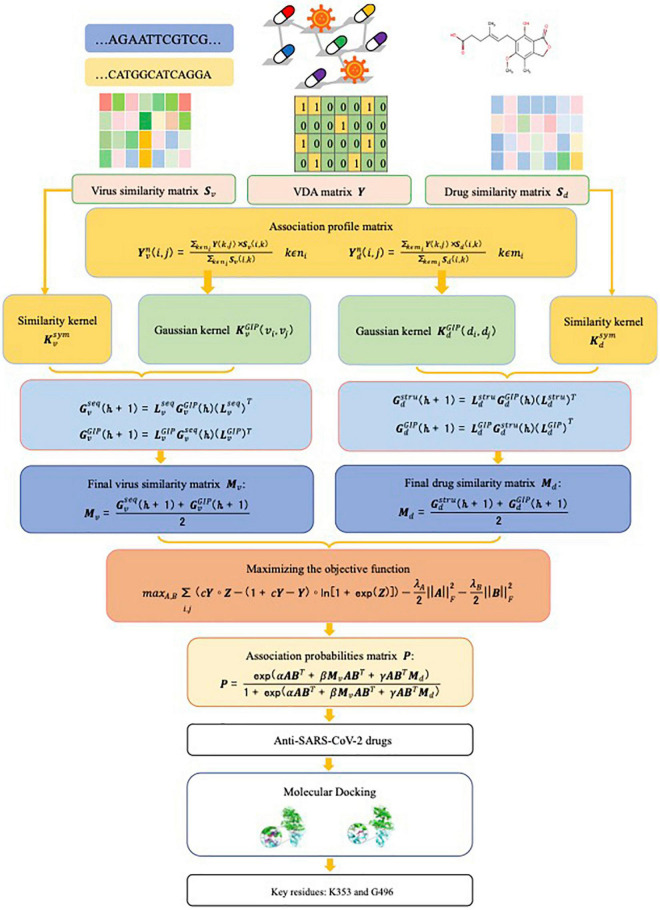
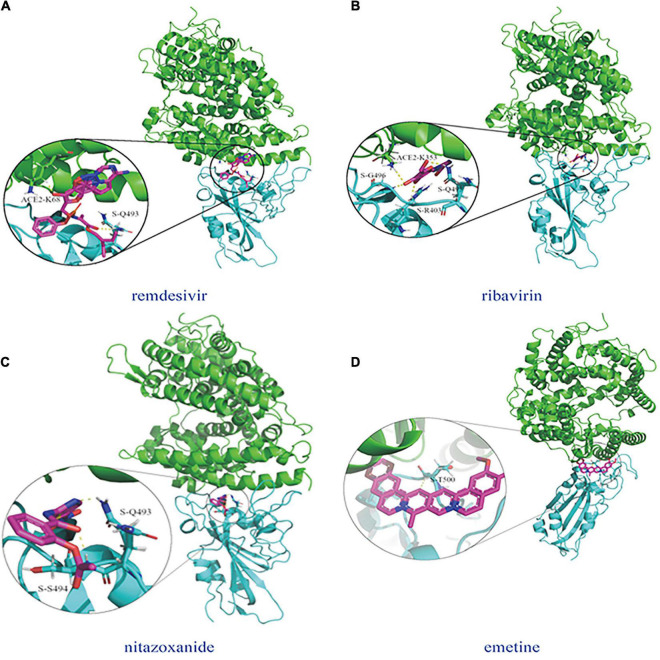
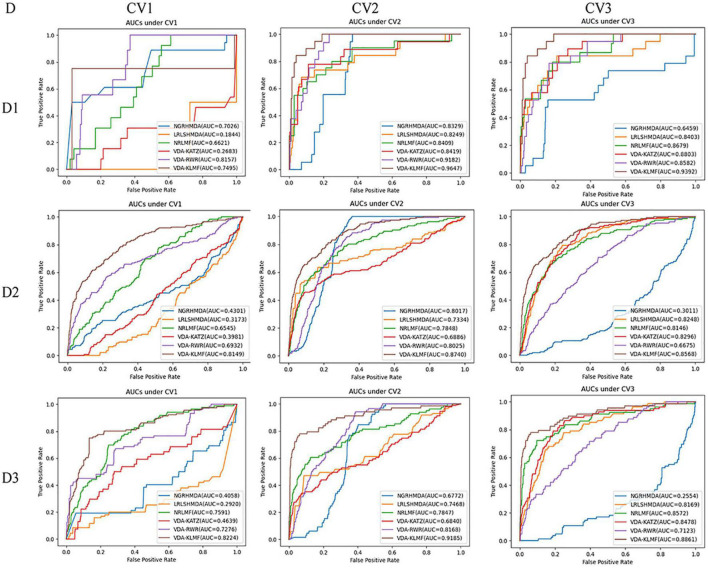
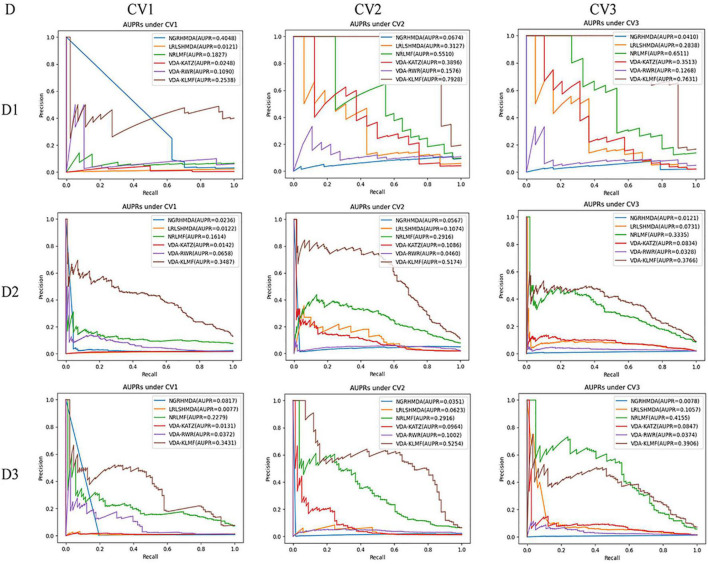
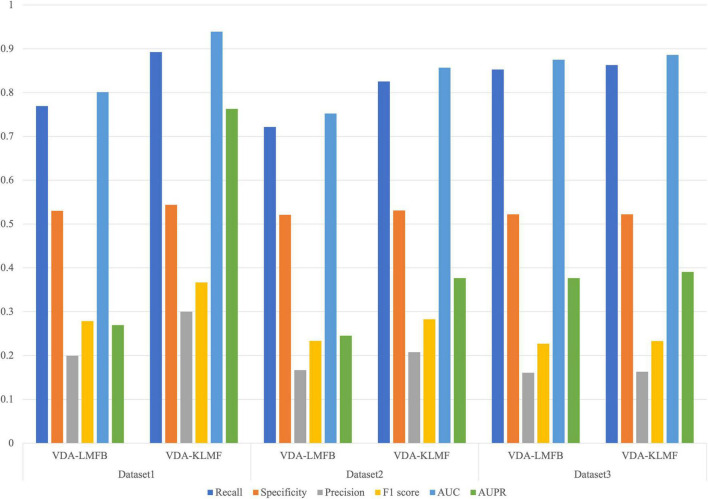
Coronavirus disease 2019 (COVID-19) is rapidly spreading. Researchers around the world are dedicated to finding the treatment clues for COVID-19. Drug repositioning, as a rapid and cost-effective way for finding therapeutic options from available FDA-approved drugs, has been applied to drug discovery for COVID-19. In this study, we develop a novel drug repositioning method (VDA-KLMF) to prioritize possible anti-SARS-CoV-2 drugs integrating virus sequences, drug chemical structures, known Virus-Drug Associations, and Logistic Matrix Factorization with Kernel diffusion. First, Gaussian kernels of viruses and drugs are built based on known VDAs and nearest neighbors. Second, sequence similarity kernel of viruses and chemical structure similarity kernel of drugs are constructed based on biological features and an identity matrix. Third, Gaussian kernel and similarity kernel are diffused. Forth, a logistic matrix factorization model with kernel diffusion is proposed to identify potential anti-SARS-CoV-2 drugs. Finally, molecular dockings between the inferred antiviral drugs and the junction of SARS-CoV-2 spike protein-ACE2 interface are implemented to investigate the binding abilities between them. VDA-KLMF is compared with two state-of-the-art VDA prediction models (VDA-KATZ and VDA-RWR) and three classical association prediction methods (NGRHMDA, LRLSHMDA, and NRLMF) based on 5-fold cross validations on viruses, drugs, and VDAs on three datasets. It obtains the best recalls, AUCs, and AUPRs, significantly outperforming other five methods under the three different cross validations. We observe that four chemical agents coming together on any two datasets, that is, remdesivir, ribavirin, nitazoxanide, and emetine, may be the clues of treatment for COVID-19. The docking results suggest that the key residues K353 and G496 may affect the binding energies and dynamics between the inferred anti-SARS-CoV-2 chemical agents and the junction of the spike protein-ACE2 interface. Integrating various biological data, Gaussian kernel, similarity kernel, and logistic matrix factorization with kernel diffusion, this work demonstrates that a few chemical agents may assist in drug discovery for COVID-19.
2019冠状病毒病(COVID-19)正在迅速传播。世界各地的研究人员都致力于寻找COVID-19的治疗线索。药物重新定位作为一种从美国食品药品监督管理局(FDA)批准的现有药物中寻找治疗方案的快速且经济高效的方法,已被应用于COVID-19的药物研发。在本研究中,我们开发了一种新型药物重新定位方法(VDA-KLMF),通过整合病毒序列、药物化学结构、已知的病毒-药物关联以及基于核扩散的逻辑矩阵分解,来对可能的抗SARS-CoV-2药物进行优先级排序。首先,基于已知的病毒-药物关联和最近邻构建病毒和药物的高斯核。其次,基于生物学特征和单位矩阵构建病毒的序列相似性核和药物的化学结构相似性核。第三,对高斯核和相似性核进行扩散。第四,提出一种带核扩散的逻辑矩阵分解模型来识别潜在的抗SARS-CoV-2药物。最后,对推断出的抗病毒药物与SARS-CoV-2刺突蛋白-血管紧张素转换酶2(ACE2)界面的结合位点进行分子对接,以研究它们之间的结合能力。基于三个数据集上的病毒、药物和病毒-药物关联的五折交叉验证,将VDA-KLMF与两种最先进的病毒-药物关联预测模型(VDA-KATZ和VDA-RWR)以及三种经典的关联预测方法(NGRHMDA、LRLSHMDA和NRLMF)进行比较。它获得了最佳的召回率、曲线下面积(AUC)和精确率-召回率曲线下面积(AUPR),在三种不同的交叉验证下显著优于其他五种方法。我们观察到,在任意两个数据集上共同出现的四种化学药剂,即瑞德西韦、利巴韦林、硝唑尼特和吐根碱,可能是COVID-19治疗的线索。对接结果表明,关键残基K353和G496可能会影响推断出的抗SARS-CoV-2化学药剂与刺突蛋白-ACE2界面结合位点之间的结合能和动力学。通过整合各种生物学数据、高斯核、相似性核以及基于核扩散的逻辑矩阵分解,这项工作表明一些化学药剂可能有助于COVID-19的药物研发。