Division of Cellular Signaling, National Cancer Center Research Institute, Tokyo, 104-0045, Japan.
Department of General Thoracic Surgery, Juntendo University School of Medicine, Tokyo, 113-8431, Japan.
Oncogene. 2022 Apr;41(17):2470-2479. doi: 10.1038/s41388-022-02263-4. Epub 2022 Mar 19.
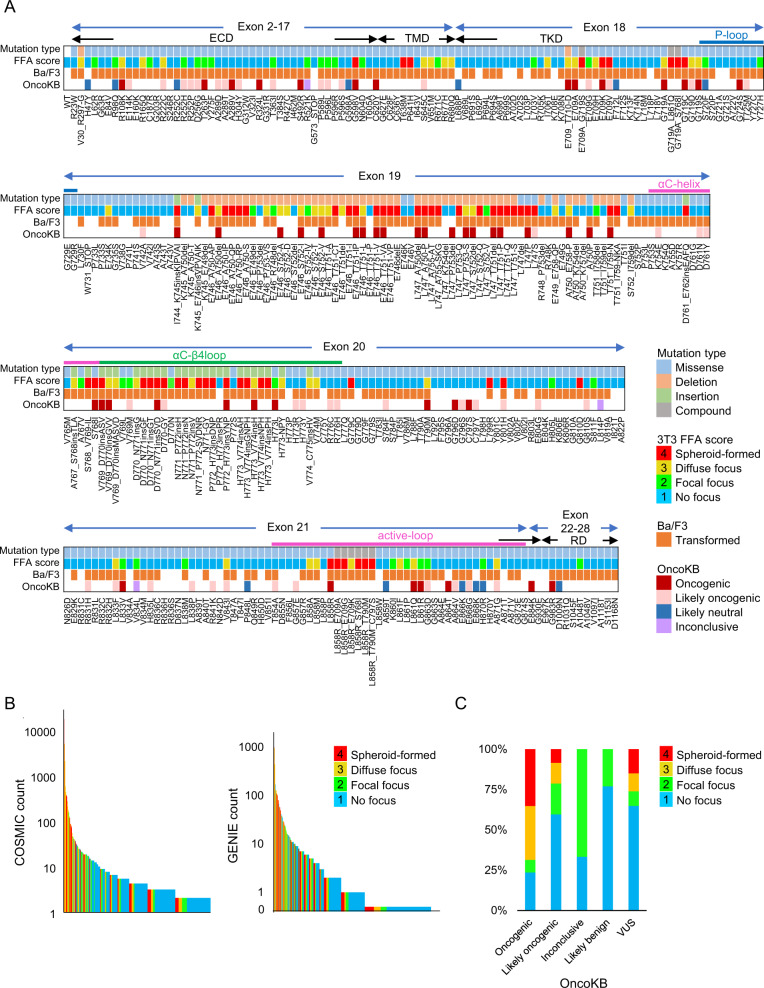
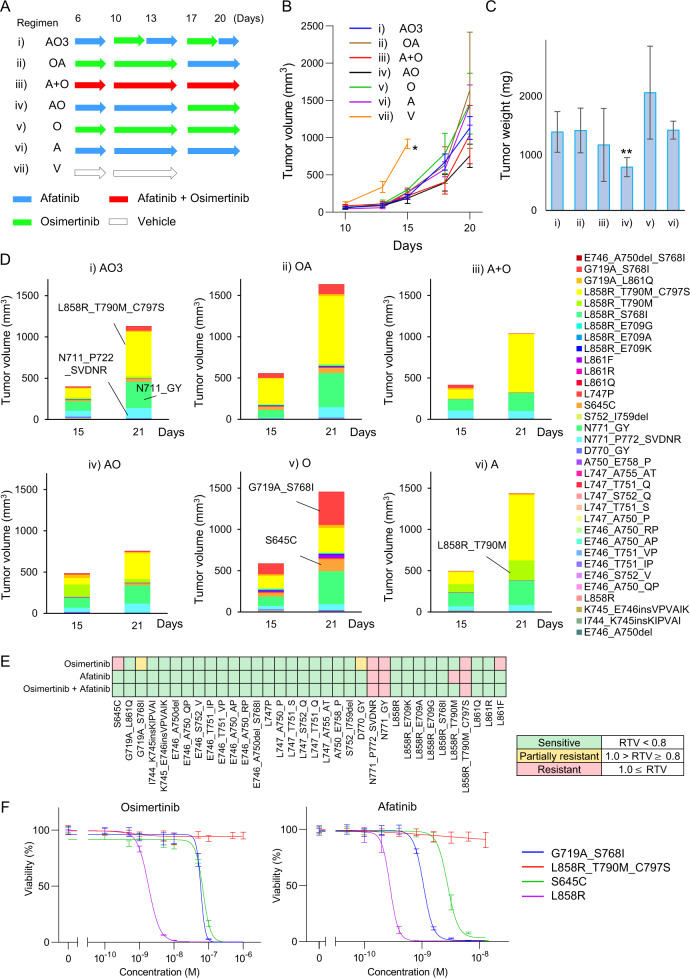
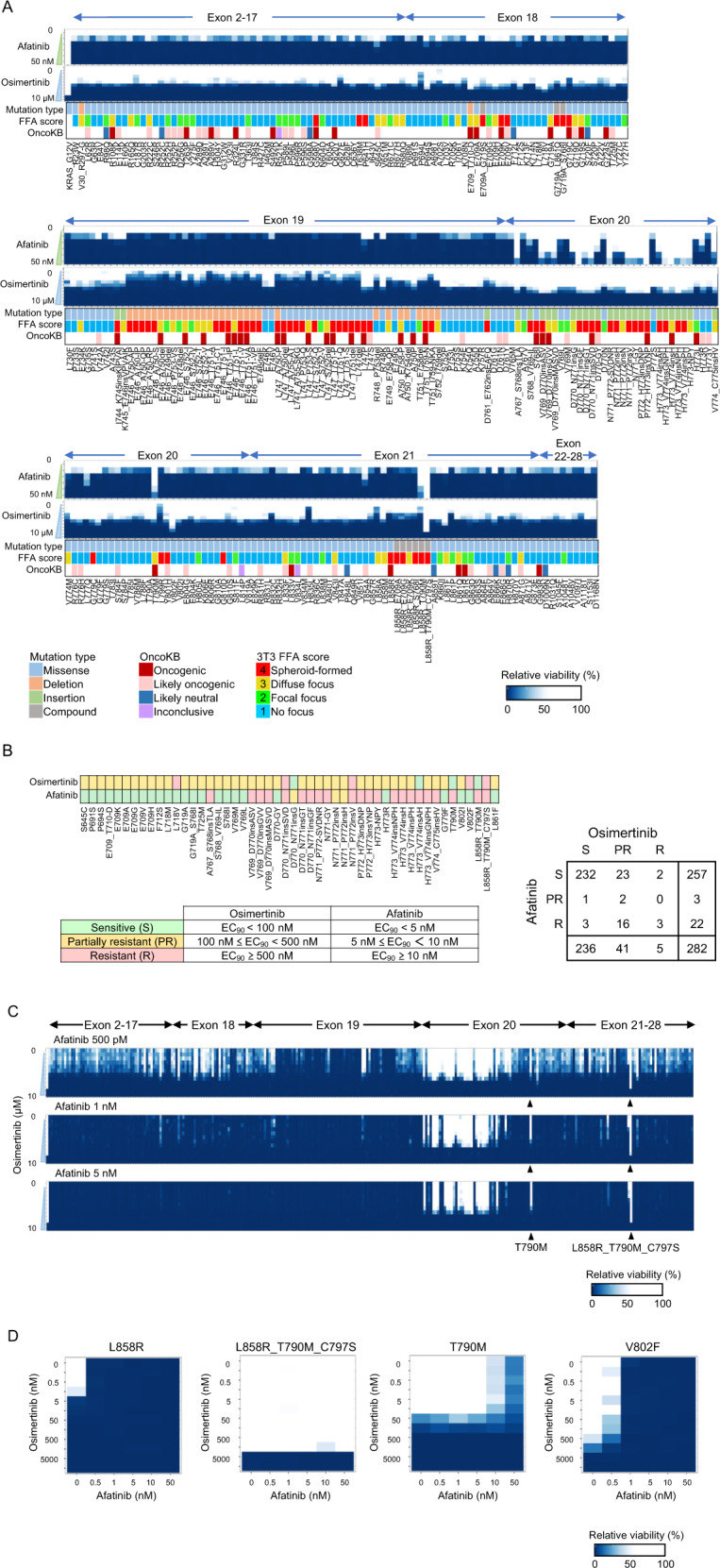
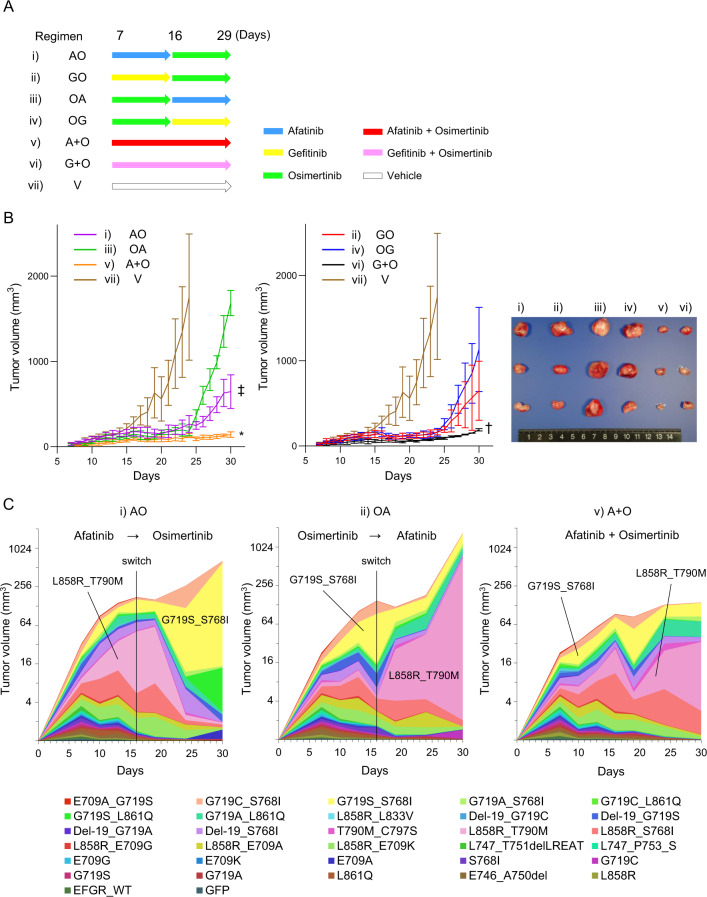
The development of tyrosine kinase inhibitors (TKIs) has improved the treatment of non-small cell lung cancer (NSCLC) with epidermal growth factor receptor (EGFR) mutations. The current research priority is to provide viable treatments for patients who have drug-resistant EGFR mutations. We evaluated the drug sensitivity of various EGFR mutants to monotherapies and combination therapies of EGFR-TKIs. In vitro, the transforming potential and drug sensitivity of 357 EGFR variants were assessed. In vivo, we tested the sensitivity of EGFR variants to different regimens of EGFR-TKIs by examining changes in the proportion of each variant within the tumor. Out of 357 variants thoroughly examined for transforming activities, 144 (40.3%) and 282 (79.0%) transformed 3T3 and Ba/F3 cells, respectively. Among the latter variants, 50 (17.7%) were found to be resistant or only partly resistant to osimertinib or afatinib. Four of 25 afatinib-resistant variants (16%) were sensitive to osimertinib, whereas 25 of 46 osimertinib-resistant variants (54.3%) were sensitive to afatinib. Despite the lack of a synergistic impact, TKI combination treatment effectively reduced in vivo the heterogeneous tumors composed of 3T3 cells with different EGFR variants. Regimens starting with afatinib and subsequently switched to osimertinib suppressed tumor development more efficiently than the opposite combination. Combination EGFR-TKI treatment may decrease tumor growth and prevent the development of resistant variants. This work created an experimental model of a heterogeneous tumor to find the best combination therapy regimen and proposes a basic notion of EGFR-TKI combination therapy to enhance the prognosis of NSCLC patients.
酪氨酸激酶抑制剂(TKIs)的发展改善了表皮生长因子受体(EGFR)突变的非小细胞肺癌(NSCLC)的治疗。目前的研究重点是为具有耐药性 EGFR 突变的患者提供可行的治疗方法。我们评估了各种 EGFR 突变体对 EGFR-TKIs 单药和联合治疗的药物敏感性。在体外,评估了 357 种 EGFR 变体的转化潜力和药物敏感性。在体内,通过检查肿瘤内每种变体比例的变化,测试了 EGFR 变体对不同 EGFR-TKI 方案的敏感性。在对转化活性进行了全面检查的 357 种变体中,有 144 种(40.3%)和 282 种(79.0%)分别转化了 3T3 和 Ba/F3 细胞。在后一种变体中,有 50 种(17.7%)对奥希替尼或阿法替尼耐药或仅部分耐药。在 25 种阿法替尼耐药变体中,有 4 种(16%)对奥希替尼敏感,而在 46 种奥希替尼耐药变体中,有 25 种(54.3%)对阿法替尼敏感。尽管没有协同作用,但 TKI 联合治疗有效地减少了由具有不同 EGFR 变体的 3T3 细胞组成的异质性肿瘤。起始用阿法替尼随后换用奥希替尼的方案比相反的组合更有效地抑制肿瘤发展。联合 EGFR-TKI 治疗可能会降低肿瘤生长并防止耐药变体的发展。这项工作创建了一个异质性肿瘤的实验模型,以找到最佳的联合治疗方案,并提出了一个基本的 EGFR-TKI 联合治疗概念,以提高 NSCLC 患者的预后。