Department of Urology, Zhejiang Hospital, #1229, Gudun Road, Hangzhou, 310030, China.
BMC Urol. 2022 Mar 19;22(1):37. doi: 10.1186/s12894-022-00991-z.
Among malignant tumors, bone metastasis is frequently associated with prostate cancer which is seen in about 80% of patients. During cancer treatments, some tumor cells switch to a "dormant mode" to help tumor cells avoid attack from the immune system and anti-tumor therapies. In this dormant mode, tumor cells can be resuscitated, causing cancer to reoccur. The generally accepted explanation for this phenomenon is that the tumor cells have spread to the bone marrow before treatment and are dormant in the bone marrow. However, the key mechanism for inducing and maintaining the dormancy of these prostate cancer disseminated tumor cells in the bone marrow is still unclear. Therefore, studying the dormancy mechanism of tumor cells in bone metastasis is of great significance for the treatment and the prevention of recurrence of prostate cancer.
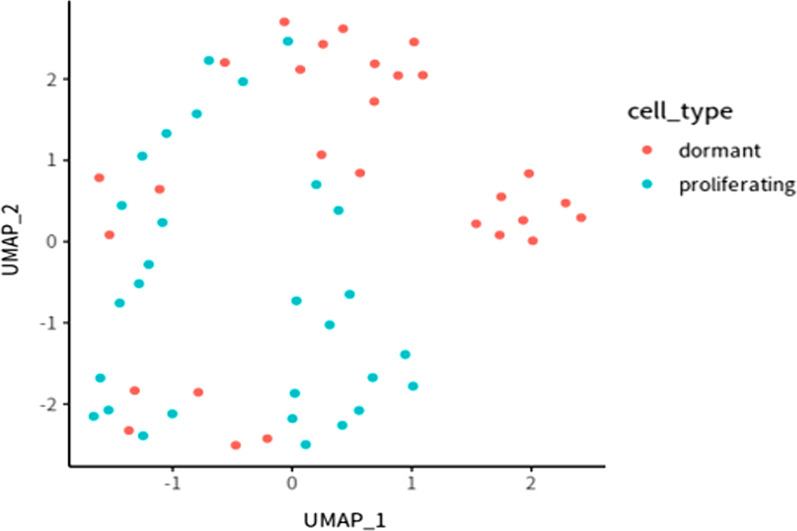
We obtained single-cell RNA-seq data of tumors from mouse models of prostate cancer bone metastasis mouse model numbered (GSE147150) from the GEO database, and obtained RNA-seq expression data and clinical information from The Cancer Genome Atlas Program (TCGA) of prostate cancer patients from the USCS Xena database. Screening of differential genes and annotation of GO functions were performed separately. Subsequently, the screened differential genes were compared and analyzed with 50 classic Hallmark signaling pathways, and the prognosis analysis of prostate cancer patients in TCGA data was performed to discover the key genes of the dormant mechanism of tumor cells in bone metastasis, and obtain new biomarkers that can be used to predict the prognosis of patients.
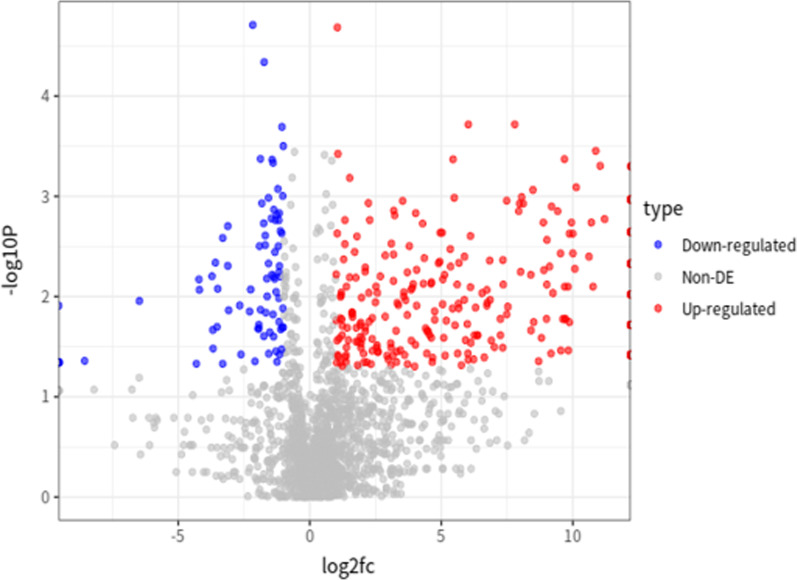
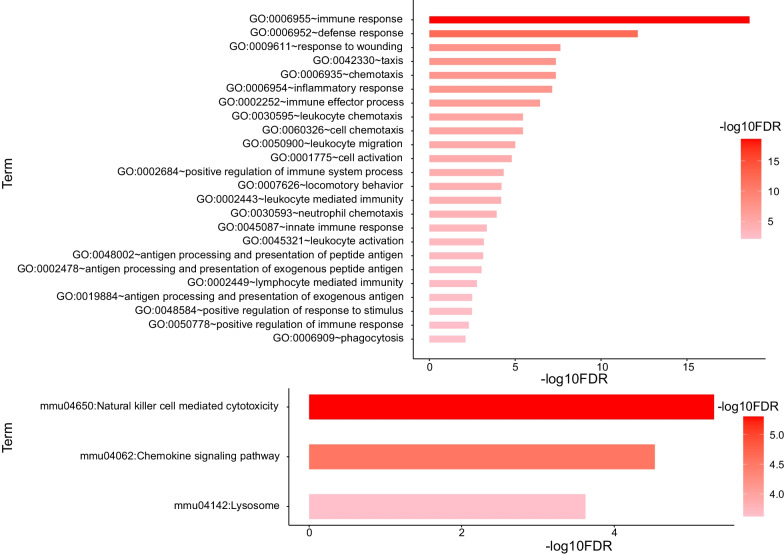
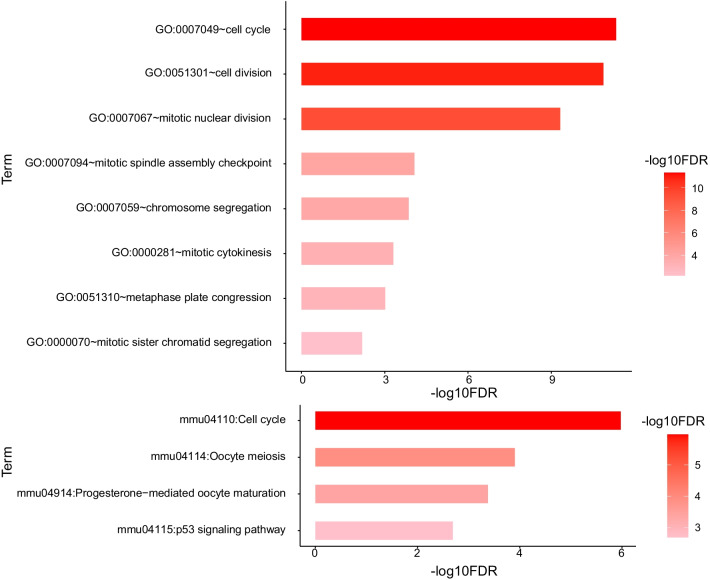
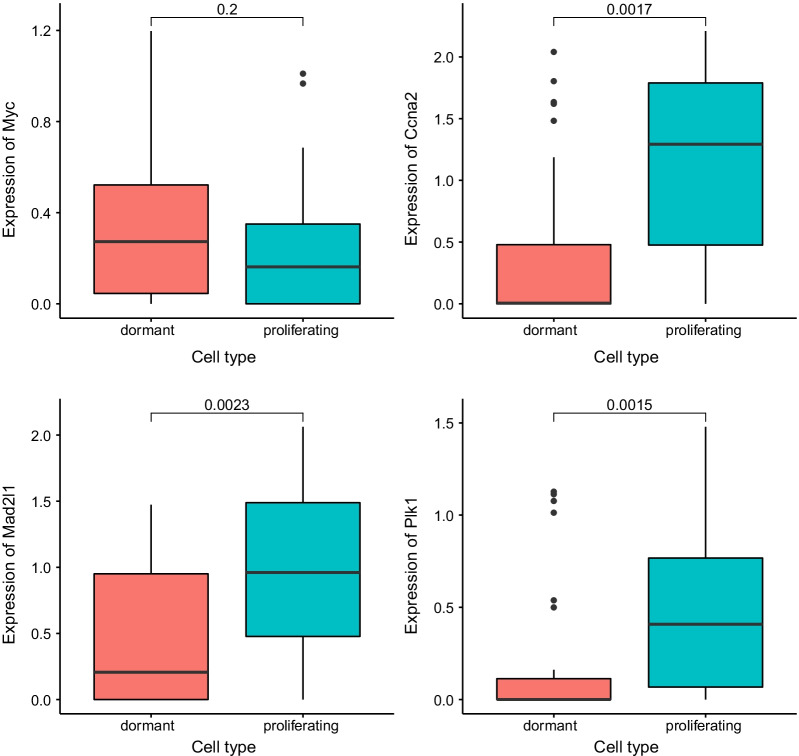
A total of 378 differentially expressed genes were screened, of which 293 were significantly up-regulated and 85 were significantly down-regulated. Among them, the up-regulated genes were mainly related to the immune response, and the down-regulated genes were mainly related to the cell cycle. Through GSVA (Gene set variation analysis), it is found that there are differences in a total of 3 signal pathways: COMPLEMENT, MYC_TARGETS_V1 and MYC_TARGETS_V2. By comparing and analyzing the significantly down-regulated genes in dormant tumor cells with MYC_TARGETS_V1, MYC_TARGETS_V2, three significantly down-regulated genes were obtained: Ccna2, Mad2L1 and Plk1.
In summary, our findings indicate that the MYC targeting gene Mad2L1 is potentially related to the dormancy mechanism of prostate cancer. At the same time, Mad2L1, a gene associated with dormant prostate cancer cells, may be used as a biomarker for prognostic survival.
在恶性肿瘤中,骨转移常与前列腺癌有关,约 80%的患者存在骨转移。在癌症治疗过程中,一些肿瘤细胞会切换到“休眠模式”,帮助肿瘤细胞逃避免疫系统和抗肿瘤治疗的攻击。在这种休眠模式下,肿瘤细胞可以复苏,导致癌症再次发生。目前普遍认为,这种现象的原因是肿瘤细胞在治疗前已扩散到骨髓中,并在骨髓中休眠。然而,诱导和维持骨髓中这些前列腺癌播散肿瘤细胞休眠的关键机制仍不清楚。因此,研究肿瘤细胞在骨转移中的休眠机制对前列腺癌的治疗和预防复发具有重要意义。
我们从 GEO 数据库中获取了编号为(GSE147150)的前列腺癌骨转移小鼠模型的肿瘤单细胞 RNA-seq 数据,并从美国加州大学圣克鲁兹分校的 Xena 数据库中获取了前列腺癌患者的 RNA-seq 表达数据和临床信息。分别进行差异基因筛选和 GO 功能注释。随后,将筛选出的差异基因与 50 个经典 Hallmark 信号通路进行比较分析,并对 TCGA 数据中前列腺癌患者进行预后分析,以发现肿瘤细胞在骨转移休眠机制中的关键基因,并获得可用于预测患者预后的新生物标志物。
共筛选出 378 个差异表达基因,其中 293 个基因显著上调,85 个基因显著下调。其中,上调基因主要与免疫反应有关,下调基因主要与细胞周期有关。通过 GSVA(基因集变异分析)发现,共有 3 个信号通路存在差异:补体、MYC_TARGETS_V1 和 MYC_TARGETS_V2。通过比较和分析休眠肿瘤细胞中与 MYC_TARGETS_V1、MYC_TARGETS_V2 显著下调的基因,得到三个显著下调的基因:Ccna2、Mad2L1 和 Plk1。
综上所述,我们的研究结果表明,MYC 靶向基因 Mad2L1 可能与前列腺癌的休眠机制有关。同时,与休眠前列腺癌细胞相关的 Mad2L1 基因可能作为预后生存的生物标志物。