INGENIO, IRCE, Institut d'Investigacions Biomèdiques August Pi i Sunyer, Barcelona, Catalonia, Spain; Centre for Biomedical Investigation in Respiratory Diseases, Barcelona, Spain.
Smell and Taste Clinic, Department of Otorhinolaryngology, Technische Universität Dresden, Dresden, Germany.
J Allergy Clin Immunol Pract. 2022 Jun;10(6):1423-1432. doi: 10.1016/j.jaip.2022.03.003. Epub 2022 Mar 17.
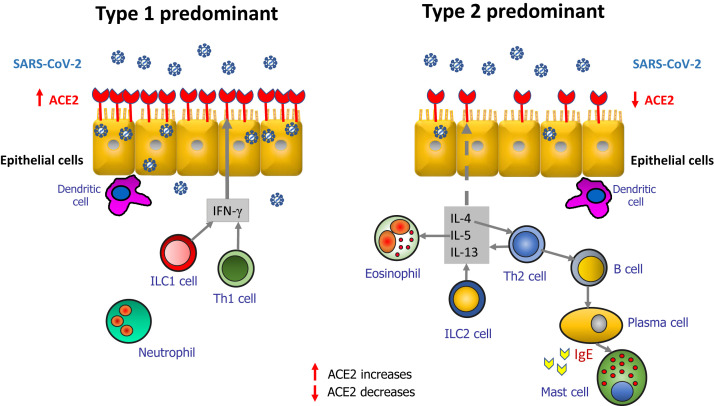
The COVID-19 pandemic has raised awareness about olfactory dysfunction, although a loss of smell was present in the general population before COVID-19. Chronic rhinosinusitis (CRS) is a common upper airway chronic inflammatory disease that is also one of the most common causes of olfactory dysfunction. It can be classified into different phenotypes (ie, with and without nasal polyps) and endotypes (ie, type 2 and non-type 2 inflammation). However, scientific information regarding CRS within the context of COVID-19 is still scarce. This review focuses on (1) the potential effects of severe acute respiratory syndrome coronavirus 2 infection on CRS symptoms, including a loss of smell, and comorbidities; (2) the pathophysiologic mechanisms involved in the olfactory dysfunction; (3) CRS diagnosis in the context of COVID-19, including telemedicine; (4) the protective hypothesis of CRS in COVID-19; and (5) the efficacy and safety of therapeutic options for CRS within the context of COVID-19.
新型冠状病毒肺炎(COVID-19)大流行提高了人们对嗅觉功能障碍的认识,尽管在 COVID-19 之前,嗅觉丧失就已经存在于普通人群中。慢性鼻-鼻窦炎(CRS)是一种常见的上呼吸道慢性炎症性疾病,也是嗅觉功能障碍的最常见原因之一。它可以分为不同的表型(即有和无鼻息肉)和内型(即 2 型和非 2 型炎症)。然而,关于 COVID-19 背景下的 CRS 的科学信息仍然很少。这篇综述重点介绍了(1)严重急性呼吸综合征冠状病毒 2 感染对 CRS 症状(包括嗅觉丧失和合并症)的潜在影响;(2)嗅觉功能障碍所涉及的病理生理机制;(3)COVID-19 背景下的 CRS 诊断,包括远程医疗;(4)COVID-19 中 CRS 的保护假说;以及(5)COVID-19 背景下治疗 CRS 的各种选择的疗效和安全性。