Liu Shasha, Yamamoto Toshiyuki
Institute of Materials and Systems for Sustainability, Nagoya University, Nagoya 4648603, Japan.
Transp Res Part A Policy Pract. 2022 May;159:1-16. doi: 10.1016/j.tra.2022.03.009. Epub 2022 Mar 11.
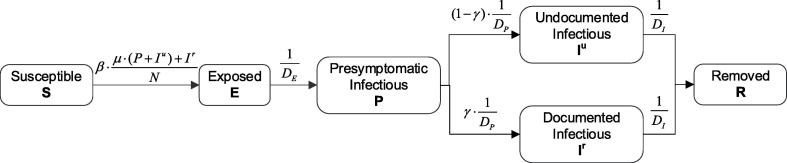
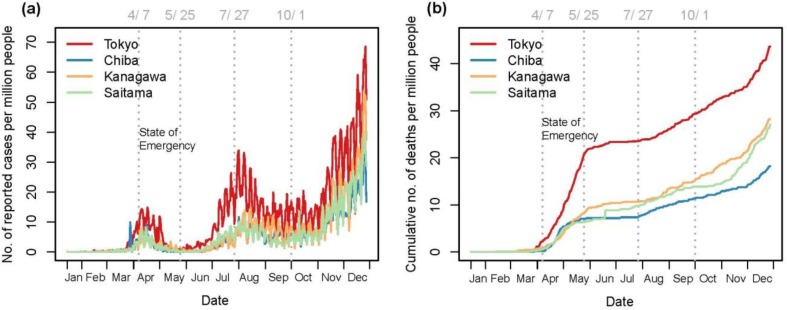
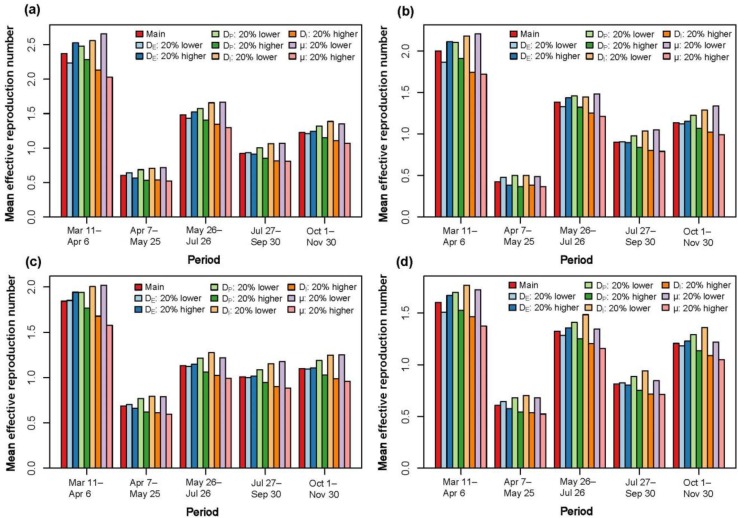
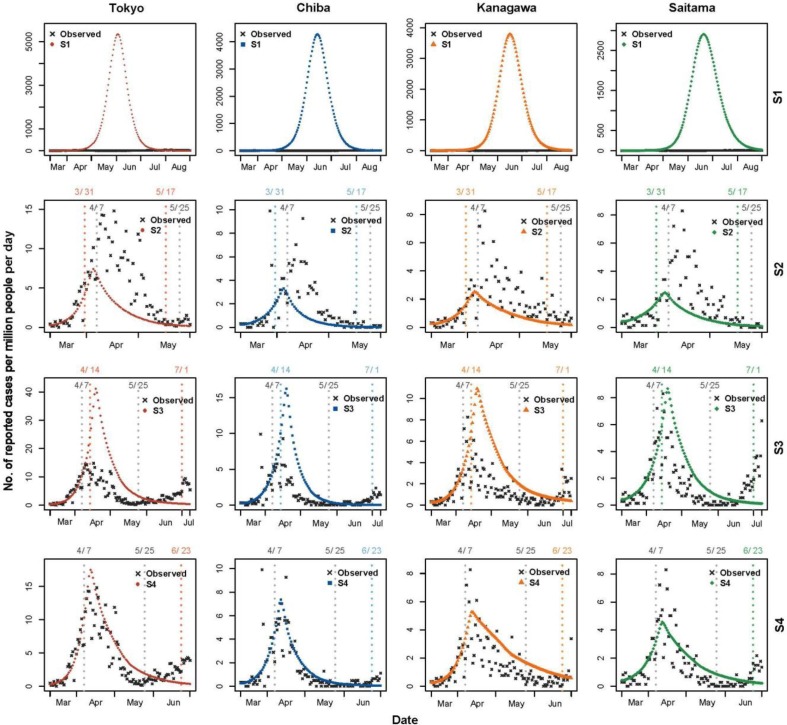
COVID-19 is one of the worst global health crises in a century. Japan confirmed its first case of COVID-19 in mid-January and declared a state of emergency in April and May 2020, urging people to stay at home and reduce travel. Using Mobile Spatial Statistics (i.e., population statistics created from operational data of mobile terminal networks), we estimated daily intra- and inter-prefectural population mobility in the Tokyo Megalopolis Region, Japan in 2020. Then, we developed a compartmental model with population mobility to explore the role of stay-at-home requests and travel restrictions in preventing the spread of COVID-19. This model describes the COVID-19 pandemic through a susceptible-exposed-presymptomatic infectious-undocumented and documented infectious-removed (SEPIR) process and incorporates intra- and inter-prefectural population mobility into the transmission process. We found that people significantly reduced travel during the state of emergency, although stay-at-home requests and travel restrictions were recommended rather than mandatory. The reduction in population mobility, combined with other control measures, resulted in a substantial reduction in effective reproduction numbers to below 1, thus controlling the first wave of the pandemic. Moreover, the relationship between population mobility and COVID-19 transmission changed over time. The dampening of the second wave of the pandemic indicated that smaller reductions in population mobility could result in pandemic control, probably because of other social distancing behaviors. Our proposed model can be used to analyze the impact of different public health interventions, and our findings shed light on the effectiveness of soft containments in curbing the spread of COVID-19.
新冠疫情是一个世纪以来最严重的全球健康危机之一。日本于1月中旬确诊首例新冠病例,并于2020年4月和5月宣布进入紧急状态,敦促民众居家并减少出行。我们利用移动空间统计数据(即根据移动终端网络运营数据生成的人口统计数据),估算了2020年日本东京大都市圈各都道府县内及之间的每日人口流动情况。然后,我们开发了一个包含人口流动的 compartmental 模型,以探究居家要求和出行限制在预防新冠疫情传播中的作用。该模型通过易感-暴露-前驱症状感染-未记录和记录感染-清除(SEPIR)过程来描述新冠疫情,并将各都道府县内及之间的人口流动纳入传播过程。我们发现,尽管居家要求和出行限制是建议性而非强制性的,但在紧急状态下人们的出行显著减少。人口流动的减少与其他控制措施相结合,使得有效繁殖数大幅降至1以下,从而控制了第一波疫情。此外,人口流动与新冠传播之间的关系随时间发生了变化。第二波疫情的缓和表明,人口流动较小幅度的减少也可能导致疫情得到控制可能是由于其他社交距离行为。我们提出的模型可用于分析不同公共卫生干预措施的影响,我们的研究结果揭示了软性防控措施在遏制新冠疫情传播方面的有效性。