Wang Min, Tokimoto Shingo, Song Ge, Ueno Takashi, Koizumi Masatoshi, Kiyama Sachiko
Department of Linguistics, Graduate School of Arts and Letters, Tohoku University, Sendai, Japan.
Department of English Language Studies, Mejiro University, Tokyo, Japan.
Front Psychol. 2022 Mar 3;13:806023. doi: 10.3389/fpsyg.2022.806023. eCollection 2022.
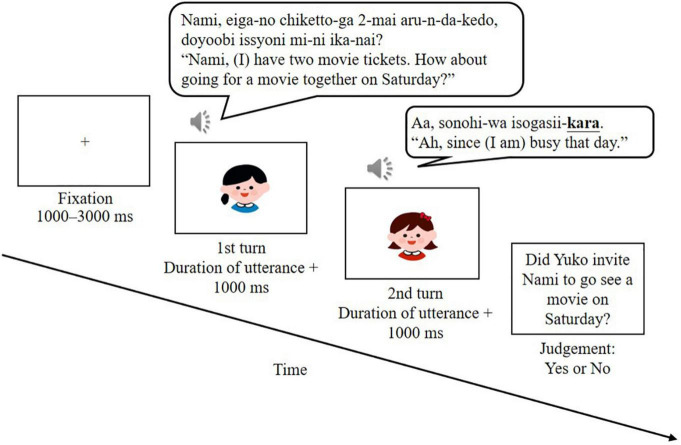
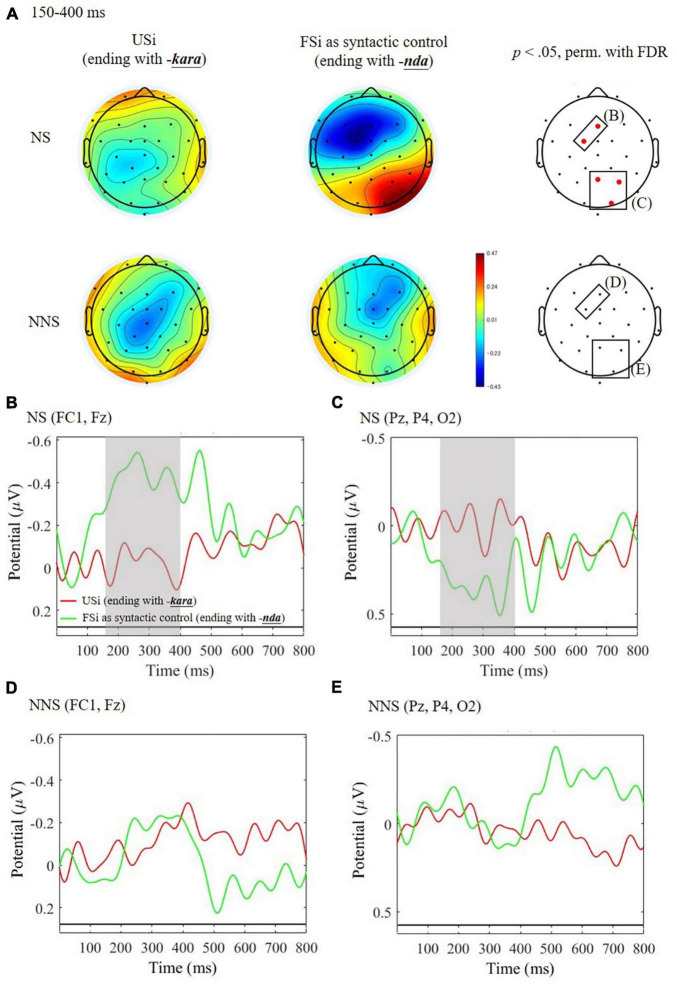
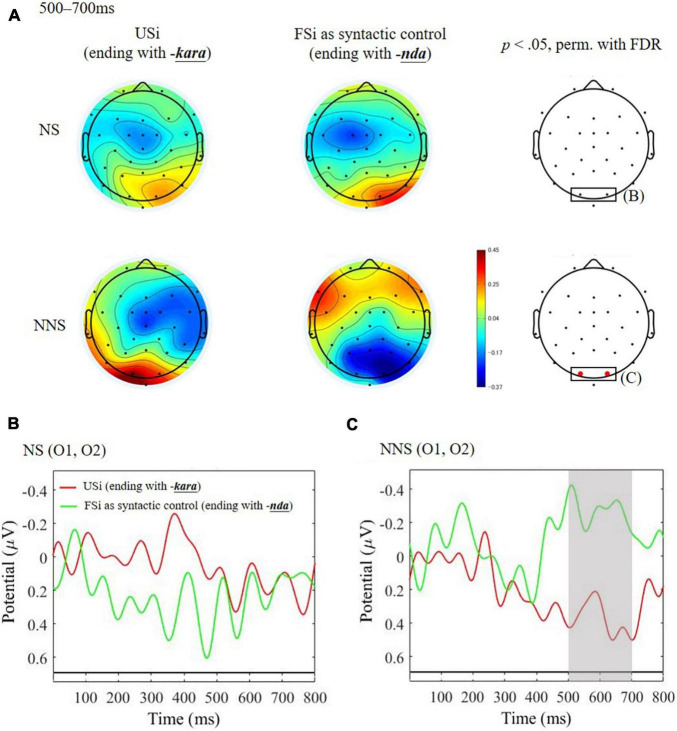
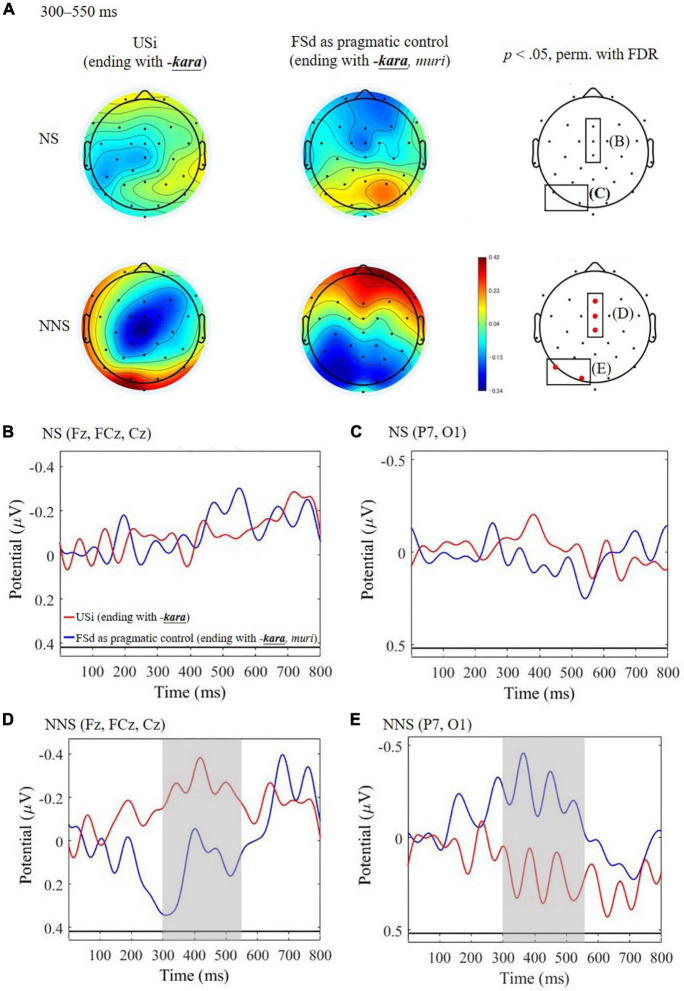
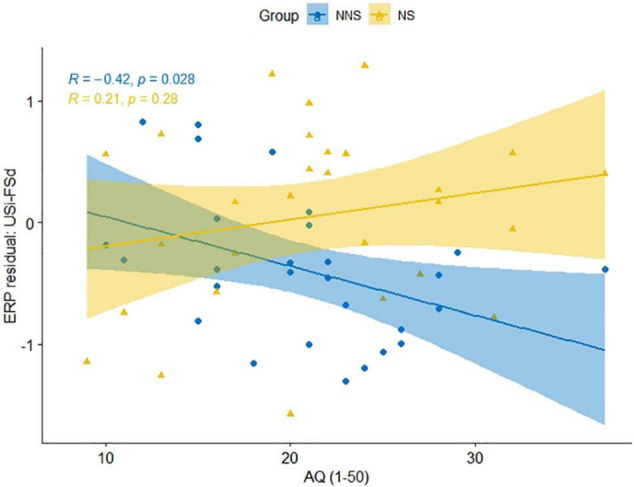
Refusal is considered a face-threatening act (FTA), since it contradicts the inviter's expectations. In the case of Japanese, native speakers (NS) are known to prefer to leave sentences unfinished for a conventional indirect refusal. Successful comprehension of this indirect refusal depends on whether the addressee is fully conventionalized to the preference for syntactic unfinishedness so that they can identify the true intention of the refusal. Then, non-native speakers (NNS) who are not fully accustomed to the convention may be confused by the indirect style. In the present study, we used event-related potentials (ERPs) of electroencephalography in an attempt to differentiate the neural substrates for perceiving unfinished sentences in a conventionalized indirect refusal as an FTA between NS and NNS, in terms of the unfinishedness and indirectness of the critical sentence. In addition, we examined the effects of individual differences in mentalization, or the theory of mind, which refers to the ability to infer the mental states of others. We found several different ERP effects for these refusals between NS and NNS. NNS induced stronger P600 effects for the unfinishedness of the refusal sentences, suggesting their perceived syntactic anomaly. This was not evoked in NS. NNS also revealed the effects of N400 and P300 for the indirectness of refusal sentences, which can be interpreted as their increased processing load for pragmatic processing in the inexperienced contextual flow. We further found that the NNS's individual mentalizing ability correlates with the effect of N400 mentioned above, indicating that lower mentalizers evoke higher N400 for indirect refusal. NS, on the contrary, did not yield these effects reflecting the increased pragmatic processing load. Instead, they evoked earlier ERPs of early posterior negativity (EPN) and P200, both of which are known as indices of emotional processing, for finished sentences of refusal than for unfinished ones. We interpreted these effects as a NS's dispreference for finished sentences to realize an FTA, given that unfinished sentences are considered more polite and more conventionalized in Japanese social encounters. Overall, these findings provide evidence that a syntactic anomaly inherent in a cultural convention as well as individual mentalizing ability plays an important role in understanding an indirect speech act of face-threatening refusal.
拒绝被视为一种威胁面子的行为(FTA),因为它与邀请者的期望相悖。就日本人而言,以日语为母语者(NS)倾向于让句子不完整,以此进行传统的间接拒绝。能否成功理解这种间接拒绝取决于受话者是否完全习惯了这种句法不完整的偏好,以便他们能够识别拒绝的真实意图。那么,那些尚未完全习惯该惯例的非母语者(NNS)可能会被这种间接方式搞糊涂。在本研究中,我们使用脑电图的事件相关电位(ERP),试图从关键句子的不完整性和间接性方面,区分以日语为母语者和非母语者将传统间接拒绝中不完整句子视为FTA时,感知这些句子的神经基础。此外,我们还研究了心理化或心理理论方面个体差异的影响,心理理论指的是推断他人心理状态的能力。我们发现,以日语为母语者和非母语者对这些拒绝的ERP效应存在一些不同。非母语者对拒绝句子的不完整性诱发了更强的P600效应,表明他们察觉到了句法异常。以日语为母语者并未出现这种情况。非母语者对拒绝句子的间接性也表现出N400和P300效应,这可以解释为他们在缺乏经验的语境流程中进行语用处理时,处理负荷增加。我们进一步发现,非母语者的个体心理化能力与上述N400效应相关,这表明心理化能力较低者对间接拒绝诱发的N400更高。相反,以日语为母语者并未产生这些反映语用处理负荷增加的效应。相反,对于拒绝的完整句子,他们诱发的早期后负波(EPN)和P200的ERP出现得比不完整句子更早,这两种波都被认为是情绪处理的指标。鉴于在日本社交场合中,不完整句子被认为更礼貌、更符合惯例,我们将这些效应解释为以日语为母语者不喜欢用完整句子来实现FTA。总体而言,这些发现提供了证据,表明文化惯例中固有的句法异常以及个体心理化能力在理解威胁面子的间接拒绝言语行为中起着重要作用。